

Introduction
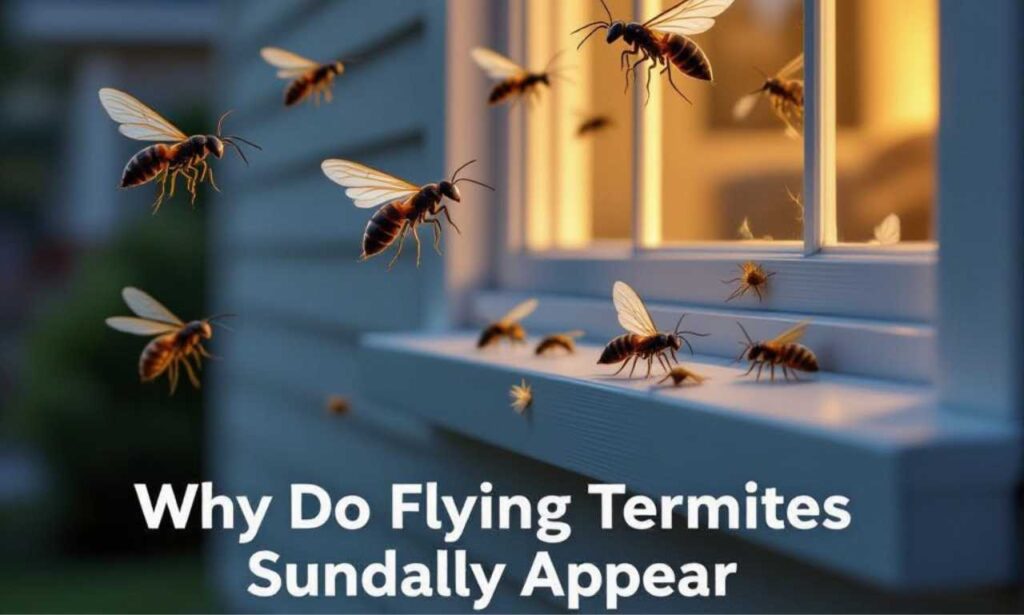
Why do flying termites suddenly appear in homes seemingly out of nowhere? These winged insects emerge during specific conditions as part of their natural reproductive cycle. When environmental factors align perfectly with temperature and moisture levels, thousands of these pests can swarm simultaneously, often catching homeowners completely off guard.
Understanding the behavior of these insects is essential for protecting your property from potential damage. This comprehensive guide explains the science behind termite swarms, how to distinguish them from other flying insects, and effective strategies to eliminate them from your living spaces.
What Are Flying Termites
Flying termites are reproductive members of a termite colony that develop wings during their maturation process. Unlike worker termites that remain underground or within wood structures, these specialized insects have a singular purpose in the colony’s lifecycle.
These winged reproductives, scientifically called alates, represent only a small percentage of the entire colony. Their bodies are typically dark brown or black, with two pairs of equal-length wings that extend beyond their abdomens. The wings appear translucent or slightly milky in color, creating a distinctive appearance that helps with identification.
Physical Characteristics of Winged Termites
The appearance of these insects differs significantly from their non-flying colony members. Their bodies measure approximately 3/8 inch in length, including the wings. The straight antennae and thick waist distinguish them from flying ants, which have elbowed antennae and pinched waists.
Their wings are fragile and designed for a single flight. After landing, these insects shed their wings almost immediately, leaving behind small piles of discarded wings near entry points. This shedding behavior serves as one of the most reliable signs of termite activity in buildings.
The Purpose of Wings in Termite Colonies
Wings serve a crucial reproductive function for termite colonies. They enable these insects to travel away from their parent colony to establish new populations. This dispersal mechanism prevents overcrowding and allows the species to colonize new territories.
The flight capability is temporary and energy-intensive. Most of these reproductives can only fly short distances, typically just a few hundred yards from their original colony. Wind patterns may carry some individuals further, but their flight skills remain limited compared to other winged insects.
Understanding Termite Swarming Behavior
Termite swarming represents a coordinated reproductive event triggered by specific environmental conditions. Colonies release their winged members simultaneously to maximize mating opportunities and improve survival chances for new colonies.
Temperature plays a critical role in initiating swarms. Most species require consistent warmth, with temperatures ranging between 70 and 80 degrees Fahrenheit. Spring and early summer months typically provide ideal conditions, though some species swarm during fall or even winter in warmer climates.
Moisture levels also influence swarming patterns significantly. Recent rainfall increases humidity and softens soil, making it easier for newly mated pairs to burrow and establish their colonies. This explains why swarms often occur within 24 to 48 hours after rain events.
Why Termites Suddenly Appear During Specific Seasons
Seasonal patterns govern when these insects emerge for their mating flights. Spring swarms are most common because warming temperatures after winter dormancy signal ideal conditions for colony establishment. The combination of moderate temperatures and spring rains creates perfect circumstances for reproduction.
Different termite species follow distinct seasonal schedules. Subterranean varieties typically swarm in daylight during spring months, while drywood species may emerge during late summer or fall evenings. Understanding these patterns helps homeowners anticipate and prepare for potential infestations.
Geographic location affects timing considerably. Southern regions with mild winters may experience swarms earlier in the year, while northern areas see activity later as temperatures rise. Coastal regions with year-round moderate climates might observe multiple swarming events throughout the year.
Why Flying Termites Suddenly Appear at Night
Some termite species prefer nocturnal swarming to avoid predators and reduce exposure to harsh sunlight. Darkness provides protection during their vulnerable flight period, when birds and other predators could easily capture them.
Artificial lighting attracts these night-flying insects to homes and buildings. Light sources near windows, doors, and outdoor fixtures draw swarms toward structures, increasing the likelihood of indoor infestations. This attraction explains why clusters often gather around porch lights and illuminated windows.
Cooler evening temperatures also benefit certain species. The reduced heat stress during nighttime hours helps conserve energy during flight and improves survival rates for reproductive pairs seeking nesting sites.
Why Flying Termites Suddenly Die After Swarming
The mass death of these winged insects after swarming events puzzles many homeowners. This phenomenon occurs naturally as part of their reproductive cycle and survival strategy.
Most swarming termites die because they fail to find suitable mates or nesting locations. Only a tiny fraction of the thousands released during a swarm successfully establish new colonies. Nature compensates for this high mortality rate by producing enormous numbers of reproductives.
Natural Mortality After Mating Flights
Physical exhaustion claims many lives during and immediately after flight. These insects store limited energy reserves specifically for their mating flight. Once depleted, they lack the resources to survive without quickly finding shelter and food sources.
Predation eliminates large numbers during swarms. Birds, spiders, ants, and other predators feast on the easy meals provided by slow-flying, inexperienced termites. This predation benefits ecosystems by transferring nutrients and controlling termite populations naturally.
Desiccation kills those that cannot find moisture quickly enough. Their soft bodies lose water rapidly in dry conditions. Without access to soil or wood with adequate moisture content, they dry out and perish within hours of landing.
Failed Colony Establishment
Successfully mated pairs face additional challenges when attempting to start new colonies. Unsuitable soil conditions, lack of food sources, or competition from established colonies often doom their efforts. The male typically dies shortly after mating, while females that cannot excavate proper nesting chambers also perish.
Environmental factors continue threatening survival even after initial establishment. Temperature extremes, flooding, or drought can destroy newly formed colonies before they mature. These vulnerable early stages explain why so few swarming pairs succeed in creating thriving populations.
How to Identify Flying Termites in Your House
Recognizing these pests quickly enables faster response and prevention of serious infestations. Several distinctive features separate them from other common household flying insects.
Size comparison provides initial clues. These insects measure roughly 3/8 inch including wings, similar to rice grains. Their uniform body color ranges from dark brown to black, lacking the segmented appearance of wasps or bees.
Wing structure offers the most reliable identification method. The four wings extend well beyond the body tip and appear nearly identical in size and shape. This symmetry differs markedly from flies, which have only two wings, or ants, whose front wings exceed rear wing length.
Differences Between Flying Termites and Flying Ants
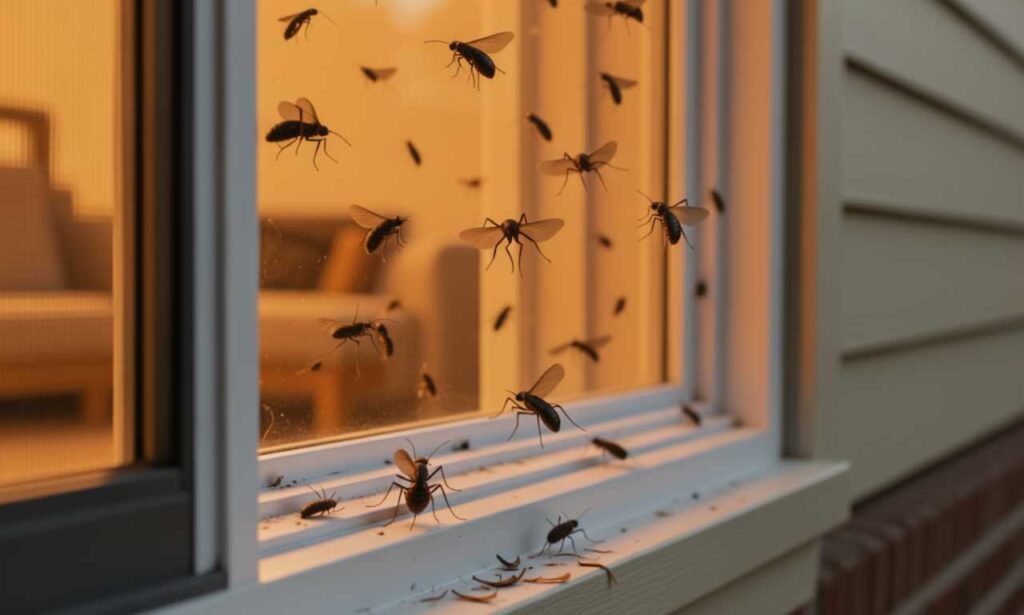
Confusion between these two insects happens frequently during spring swarms. The waist structure provides the clearest distinction. Termites display broad, straight waists connecting their thorax and abdomen, while ants show pronounced narrow, pinched waists.
Antenna shape also differs significantly. Termite antennae remain straight like small strings of beads, whereas ant antennae bend at distinct angles, resembling elbows. This characteristic remains visible even without magnification when insects land on surfaces.
Wing retention separates these species too. Termites shed wings almost immediately after landing, creating small piles near windows and doors. Ants typically retain their wings longer, often keeping them attached for hours or days after flight.
Signs of Termite Wings in House
Discarded wings accumulate near light sources and entry points. Window sills, door frames, and floor areas beneath lights often collect these translucent remnants. Finding even small quantities indicates recent swarming activity nearby or within the structure.
The wings themselves appear delicate and veined. They measure approximately 3/8 inch long and show a slightly iridescent quality when light hits them at certain angles. Their uniformity in size and shape helps confirm termite origin rather than other flying insects.
Clustered distribution patterns suggest indoor emergence. When wings concentrate in specific areas, particularly near baseboards or wall corners, termites may have swarmed from within the building rather than entering from outside. This scenario demands immediate professional inspection.
What Flying Termites Eat and Where They Live
Understanding the dietary needs and habitat preferences of these insects helps explain why they target certain structures and materials.
Do Flying Termites Eat Wood
The answer requires clarification about their life stages. During their brief winged phase, these reproductives do not actively consume wood. Their energy comes from reserves stored before flight, and their singular focus remains finding mates and nesting sites.
After shedding wings and establishing colonies, however, the reproductive pair returns to cellulose consumption. The queen and king begin feeding on wood or other cellulose materials to sustain themselves while producing the first generation of worker termites. These workers then assume all feeding responsibilities for the growing colony.
The type of wood preferred depends on species. Subterranean varieties favor softwoods and damaged timber with high moisture content. Drywood species attack sound, dry wood in structures, furniture, and timber. Both types cause significant structural damage over time as colonies mature and expand.
Natural Habitats and Indoor Hiding Places
Subterranean termites require ground contact and build their primary colonies in soil. They construct mud tubes to travel between soil and wood food sources while maintaining the moisture levels essential for survival. These tubes often appear along foundation walls, in crawl spaces, or within wall voids.
Drywood species live entirely within the wood they consume. They do not require soil contact or external moisture sources, making them particularly problematic in furniture, framing lumber, and structural timbers. Their colonies remain hidden inside wood for years before external signs become apparent.
Indoor environments provide numerous attractive nesting sites. Bathrooms, kitchens, and basements with moisture problems, leaking pipes, or poor ventilation create ideal conditions. Wood-to-soil contact points, such as porch supports or deck posts, offer easy access for subterranean colonies to enter structures.
How to Get Rid of Flying Termites
Eliminating these pests requires both immediate action against visible swarmers and long-term strategies addressing underlying colonies.
Immediate Response Methods
Vacuuming provides the fastest removal method for indoor swarmers. Use the hose attachment to capture flying and landed insects, then immediately dispose of the vacuum bag in outdoor trash containers. This prevents survivors from escaping back into living spaces.
Turning off lights reduces attraction for night-swarming species. Close curtains or blinds on illuminated windows to minimize light escape. Outdoor fixtures near entry points should remain off during known swarming seasons to discourage gathering near the home.
Sealing entry points prevents additional insects from entering. Check weather stripping around doors and windows, repair damaged screens, and fill cracks in foundations or siding. Even small gaps can admit hundreds of termites during active swarms.
How to Get Rid of Termites with Wings in House
Indoor infestations demand more aggressive approaches than simple cleanup. Locate and eliminate the source colony to prevent recurring swarms and ongoing structural damage.
Professional inspection identifies colony locations and infestation extent. Trained technicians use moisture meters, thermal imaging, and acoustic sensors to detect hidden colonies within walls, floors, or ceilings. This assessment guides treatment selection and application strategies.
Chemical treatments target active colonies directly. Liquid termiticides create barriers in soil around foundations, killing termites attempting to enter structures. Termite baits use slow-acting poisons that workers carry back to colonies, eliminating entire populations including queens.
Treatment for Fungus Gnats vs Flying Termites
Homeowners sometimes confuse these pests due to similar appearance during flight. Fungus gnats are smaller, measuring only 1/8 inch long, and congregate around houseplants and moisture sources.
Fungus gnat larvae develop in potting soil with excess moisture. Reducing watering frequency and allowing soil surfaces to dry between waterings eliminates breeding sites. Yellow sticky traps capture adult flies, while soil drenches with appropriate insecticides kill larvae.
Proper identification before treatment prevents wasted effort and expense. Fungus gnats pose no structural threat, while termites demand immediate professional intervention. Observing behavior patterns and physical characteristics clarifies which pest requires attention.
Preventing Future Termite Infestations
Long-term protection requires environmental modifications and ongoing monitoring efforts.
Moisture Control Strategies
Reducing moisture around foundations eliminates primary attractants for subterranean colonies. Ensure gutters and downspouts direct water at least six feet from building perimeters. Grade soil away from foundations to prevent water accumulation.
Fix plumbing leaks promptly throughout the structure. Even minor drips inside walls or under floors create moisture conditions that attract colonies. Regular inspection of pipes, fixtures, and appliances helps identify problems before they enable infestations.
Improve ventilation in crawl spaces and basements. Install vapor barriers over exposed soil and use dehumidifiers to maintain relative humidity below 50 percent. Proper air circulation prevents the damp conditions termites require for survival.
Structural Modifications
Eliminate wood-to-soil contact around buildings. Maintain at least six inches of clearance between soil and any wooden siding, trim, or structural members. Use concrete or metal supports for decks and porches instead of wood posts set directly in ground.
Remove wood debris, stumps, and dead trees from properties. These materials provide food sources and nesting sites for nearby colonies that may eventually spread to structures. Store firewood at least 20 feet from buildings and elevate it off the ground.
Consider treated lumber for vulnerable areas. Pressure-treated wood resists termite attack in locations prone to moisture exposure or ground contact. While not completely termite-proof, it provides additional protection for critical structural elements.
Regular Inspection Schedules
Annual professional inspections detect early signs of activity before major damage occurs. Trained inspectors examine foundations, crawl spaces, attics, and other vulnerable areas for mud tubes, damaged wood, or live insects.
Homeowners should conduct quarterly visual checks of accessible areas. Look for discarded wings near windows, mud tubes on foundations, or hollow-sounding wood when tapped. Early detection dramatically reduces treatment costs and structural repairs.
Document findings with dated photographs and notes. This record helps track changes over time and provides valuable information for pest control professionals when treatment becomes necessary.
FAQs
Why do flying termites suddenly appear in my home?
Flying termites suddenly appear when mature colonies release reproductive swarmers during specific environmental conditions. Warm temperatures combined with recent rainfall trigger synchronized emergence from nearby or internal colonies. These swarms indicate established termite populations either inside your structure or in close proximity to your property.
How long do flying termites live after swarming?
Most flying termites survive only a few hours to a few days after their mating flight. The vast majority die from exhaustion, predation, or desiccation before successfully establishing new colonies. Only mated pairs that quickly find suitable nesting sites with adequate moisture and food sources survive beyond this initial period.
Can I kill flying termites with household products?
Standard household insecticides may kill visible swarmers but do not address the underlying colony producing them. Soap and water sprays, vacuum removal, or fly swatters eliminate individual insects temporarily. However, professional termite treatments targeting the source colony are essential for preventing future swarms and structural damage.
What time of year do flying termites appear most frequently?
Spring months from March through June see the highest swarming activity for most termite species. Warm temperatures following winter dormancy combined with spring rainfall create ideal conditions for reproduction. Some species also swarm during fall months, while tropical regions may experience multiple swarming events throughout the year.
How do I know if flying termites came from inside my house?
Large numbers of discarded wings concentrated near interior walls, baseboards, or specific rooms suggest internal colony emergence. Outdoor swarmers typically gather near exterior doors and windows. Finding live swarmers emerging from walls, floors, or ceilings confirms an active infestation within the structure requiring immediate professional treatment.
Are black flying termites more dangerous than other colors?
Color variations reflect different species rather than danger levels. Both dark and light-colored species cause comparable structural damage when left untreated. The species determines habitat preferences and treatment approaches, but all established colonies pose serious risks to wooden structures over time.
Conclusion
Understanding why do flying termites suddenly appear empowers homeowners to respond effectively when swarms occur. These reproductive events signal active termite colonies nearby or within structures, demanding prompt attention to prevent extensive damage.
Recognition skills help distinguish termites from similar insects and identify warning signs early. Combined with knowledge about their biology and behavior patterns, property owners can implement appropriate prevention strategies and seek professional help when necessary.
Regular monitoring and environmental controls significantly reduce infestation risks. Maintaining dry conditions around foundations, eliminating wood-to-soil contact, and scheduling annual inspections create strong defenses against these destructive pests. Taking action at the first signs of swarming activity protects both property values and structural integrity for years to come.