

Introduction
Termite swarmers are winged reproductive termites that emerge from established colonies to mate and form new colonies. These insects often appear suddenly in homes during spring and summer months, causing alarm for property owners. Understanding what these winged insects are and how to identify them can help you take swift action to protect your property from potential damage.
Spotting winged insects indoors raises immediate questions about whether you’re dealing with termites or simply flying ants. This guide provides clear identification methods, explains the swarming behavior, and outlines effective treatment options to safeguard your home.
What Are Termite Swarmers
Termite swarmers represent the reproductive members of a termite colony. These special termites develop wings and leave their original nest when conditions are favorable, typically during warm, humid weather following rainfall.
The presence of these winged insects inside your home signals that a mature colony exists nearby. Unlike worker termites that remain hidden within wood structures, swarmers venture into open spaces seeking light sources and potential mates.
Understanding the Swarming Process
Swarming occurs when a colony reaches maturity, usually after three to five years of establishment. Thousands of winged reproductives can emerge simultaneously from a single colony, creating what appears to be a sudden infestation.
These insects are weak fliers and typically remain airborne for only a short time. After landing, they shed their wings and pair up with mates to establish new colonies. The discarded wings near windowsills or on floors serve as telltale signs of termite activity.
The Role of Swarmers in Colony Expansion
Each swarmer carries the potential to become a king or queen of a new colony. After successful mating, the pair searches for suitable nesting locations with adequate moisture and food sources.
Only a small percentage of swarmers successfully establish new colonies. Most become prey for birds, spiders, and other predators, or die from exposure before finding suitable nesting sites.
Identifying Flying Ants vs Termites
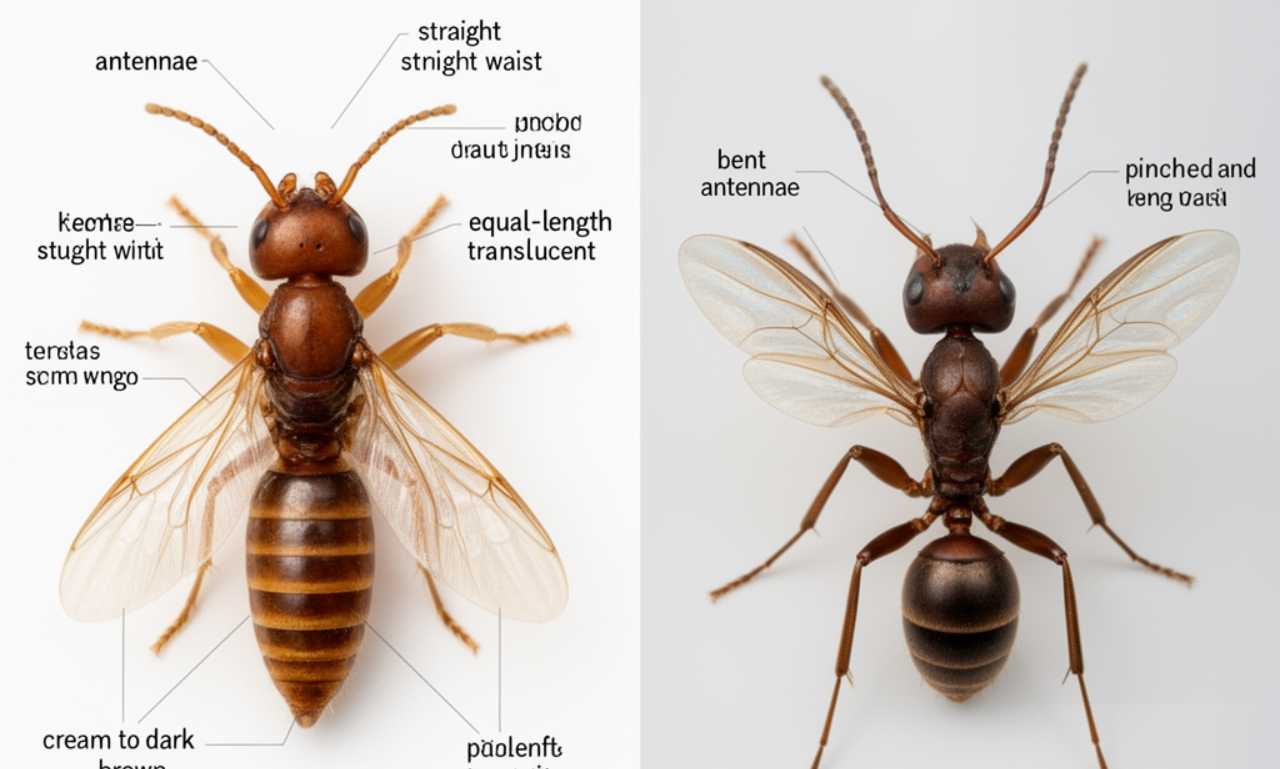
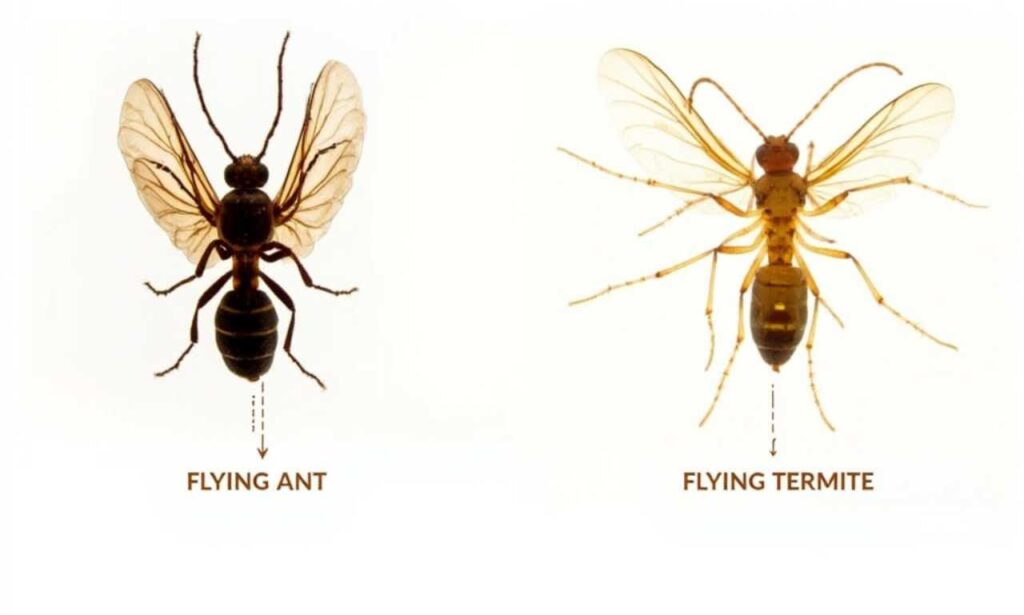
Distinguishing between flying ants and winged termites proves essential for determining the appropriate response. While both insects swarm during similar seasons, their physical characteristics differ significantly.
Body Structure Differences
Termites possess straight, broad waists connecting their thorax and abdomen. In contrast, ants have pinched, narrow waists that create a distinctive segmented appearance.
The antennae provide another clear distinction. Termite antennae are straight and bead-like, while ant antennae bend at distinct angles resembling elbows.
Wing Characteristics
Both pairs of termite wings are equal in length and extend well beyond the body. These wings appear translucent white or slightly gray with a uniform pattern of veins.
Flying ants have two sets of wings with different sizes. The front wings are noticeably longer than the hind wings, and the wing veins appear more prominent and irregular compared to termites.
Color and Size Comparison
Most termite swarmers appear creamy white to dark brown or black depending on the species. Their bodies typically measure about one quarter to three eighths of an inch in length, not including wings.
Swarming ants vary more widely in color, ranging from red to brown to black. Their size differences also tend to be more pronounced across different species compared to termites.
Life Cycle of Termites
Understanding termite development helps explain why swarmers appear and what their presence indicates about colony maturity. The complete life cycle involves several distinct stages and can span many years.
Egg Stage
Queen termites lay eggs continuously once a colony establishes itself. A single queen can produce thousands of eggs annually depending on the species and colony age.
These tiny white eggs hatch within a few weeks under optimal conditions. The emerging larvae require feeding and care from worker termites to survive and develop.
Nymph Development
Termite nymphs go through multiple molts as they grow. During this development period, the colony determines which caste each nymph will join based on colony needs and pheromone signals.
Most nymphs develop into workers or soldiers. However, when a colony reaches maturity, some nymphs develop wing buds and eventually become reproductive swarmers.
Adult Castes
Mature colonies contain three primary castes: workers, soldiers, and reproductives. Workers perform all labor including feeding other castes, maintaining the nest, and consuming wood. Soldiers defend the colony with large mandibles or chemical secretions.
The reproductive caste includes the original king and queen plus the seasonal swarmers that develop wings. Subterranean termite colonies can survive for decades with the same royal pair producing new generations continuously.
Signs of Termite Swarmers in House
Detecting swarmers indoors indicates that termites have likely been present in or near your structure for several years. Recognizing these warning signs early allows for prompt professional intervention.
Discarded Wings
Piles of translucent wings near windows, doors, or light fixtures represent one of the most obvious signs. Swarmers shed their wings shortly after landing as they no longer need them for the mating flight.
Check windowsills, countertops, and floors near entry points during spring months. These shed wings accumulate in corners and along baseboards where swarmers congregate after entering your home.
Live Swarmers Indoors
Seeing winged termites crawling on walls or flying toward light sources indicates active swarming. These insects appear clumsy and weak during flight, often landing quickly after emerging.
Interior swarming suggests the colony exists within your home’s structure rather than in the surrounding soil. This scenario requires immediate attention as it confirms established infestation.
Mud Tubes and Wood Damage
While not directly related to swarmers, mud tubes along foundations and damaged wood often accompany swarmer activity. Subterranean species build these pencil-width tunnels to travel between soil and food sources.
Tap suspected wood with a screwdriver or probe gently for soft, hollow areas. Termite-damaged wood sounds hollow and may collapse easily under pressure.
How Long Do Termite Swarmers Live
The lifespan of swarmers varies dramatically depending on whether they successfully establish a new colony. Most swarmers die within hours or a few days if they fail to find a mate and suitable nesting location.
Survival Outside the Colony
Without the protection and resources of an established colony, individual swarmers face harsh conditions. Exposure to weather, predators, and dehydration eliminates most swarmers before they can reproduce.
Studies suggest that less than one percent of swarmers successfully establish new colonies. The majority perish shortly after their mating flight ends.
Lifespan as Reproductives
Once a pair successfully mates and establishes a new colony, their roles change dramatically. The female becomes a queen capable of living fifteen to twenty-five years or longer in some species.
The male king remains with the queen throughout her life, continuing to fertilize eggs. Together, they form the foundation of a colony that can eventually house millions of termites.
Size and Physical Characteristics
Accurate identification requires understanding the typical dimensions and appearance of these winged insects. Size variations occur between species, but general patterns remain consistent.
Body Length Measurements
Worker and soldier termites typically measure one eighth to one quarter inch in length. However, termite swarmers grow slightly larger, reaching three eighths to one half inch including their bodies.
Wing length adds considerable size to their appearance. The wings extend approximately twice the body length, making swarmers appear much larger than other colony members.
Species Variations
Subterranean termite swarmers generally appear darker, ranging from dark brown to black coloration. Drywood termite swarmers tend toward lighter brown or reddish-brown hues.
Formosan termite swarmers, an aggressive subterranean species, display yellowish-brown bodies and can swarm in enormous numbers that dwarf native species populations.
Termite Swarm in House Dangerous
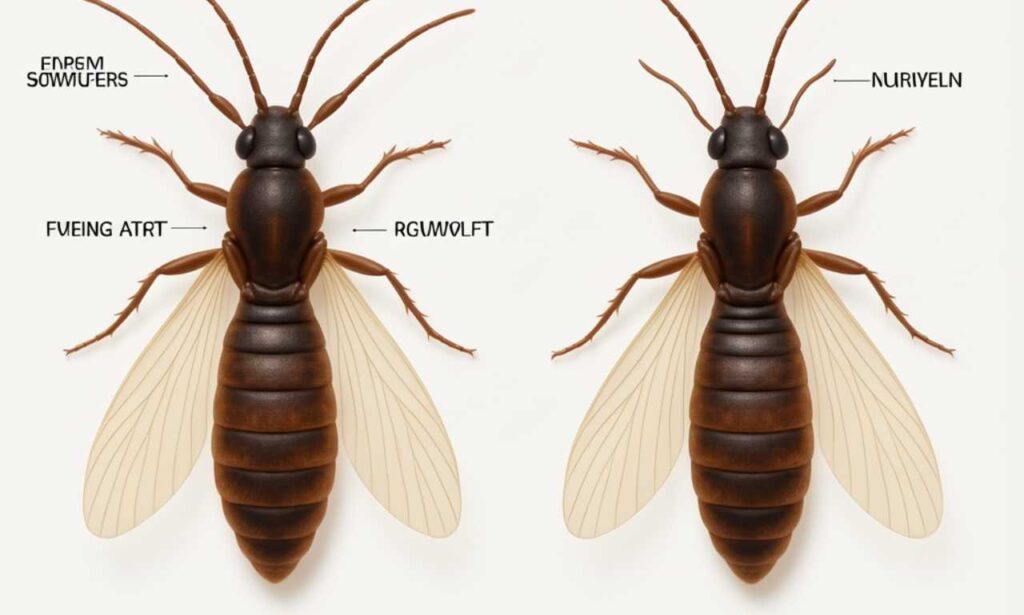
While termite swarmers themselves do not bite, sting, or transmit diseases, their presence signals serious concerns for property owners. Understanding the risks helps prioritize appropriate responses.
Structural Damage Concerns
The appearance of swarmers confirms that a mature colony has been feeding on your property for years. This extended feeding period likely caused significant hidden damage to wooden structures and support beams.
Termites consume wood from the inside out, leaving thin exterior shells that hide extensive interior damage. This feeding pattern can compromise structural integrity before visible signs appear on surfaces.
Property Value Impact
Active or previous termite infestations affect real estate transactions significantly. Many mortgage lenders require termite inspections and clearance letters before approving home loans.
Documented termite damage may require extensive repairs and treatment before a property becomes marketable. These costs can range from hundreds to tens of thousands of dollars depending on severity.
Health and Safety
Unlike the termites themselves, the conditions that attract them can promote other problems. Moisture issues that favor subterranean termites also encourage mold growth and wood rot.
Additionally, structural weakening from extensive damage poses collapse risks in severe cases. Floor joists, support beams, and wall studs can fail when termite damage goes undetected for extended periods.
Termite Swarmer Treatment Options
Addressing swarmer presence requires professional assessment and targeted treatment of the source colony. Multiple treatment approaches exist depending on termite species and infestation extent.
Liquid Termiticide Barriers
Professional pest control companies apply liquid termiticides to soil around and beneath structures. These products create protective barriers that kill termites attempting to enter treated areas.
Modern non-repellent termiticides allow termites to pass through treated zones without detecting the chemical. Contaminated termites then spread the active ingredient throughout the colony, eliminating members they contact.
Baiting Systems
Termite baiting involves installing monitoring stations around the property perimeter. Once termites discover the stations, technicians replace monitors with toxic baits that workers carry back to the colony.
This approach requires patience as colony elimination occurs gradually over several months. However, baiting systems effectively target the entire colony including the queen, providing long-term control.
Fumigation for Drywood Termites
Drywood species that nest within wood structures may require fumigation treatment. This process involves enclosing the structure in tarps and introducing gas that penetrates all wood members.
Fumigation eliminates all termite life stages present in the structure but provides no residual protection. Preventive measures and regular inspections help protect against reinfestation after treatment.
Direct Wood Treatment
For localized drywood termite infestations, direct wood injection offers a less invasive option. Technicians drill small holes into infested wood and inject termiticide directly into galleries.
This targeted approach works well for accessible infestations in furniture, trim, or isolated structural members. However, hidden colonies within walls may require more comprehensive treatment methods.
Preventing Future Termite Swarms
Proactive prevention measures reduce the likelihood of termite establishment and subsequent swarming. Combining multiple strategies provides the most effective long-term protection.
Moisture Control
Subterranean termites require moisture to survive and thrive. Eliminate standing water near foundations, repair leaking pipes promptly, and ensure proper drainage away from structures.
Use dehumidifiers in crawl spaces and basements to maintain low humidity levels. Proper ventilation in these areas prevents moisture accumulation that attracts termites.
Wood-to-Soil Contact Elimination
Remove any direct contact between wooden structures and soil. Maintain at least six inches of clearance between soil and wooden siding or structural members.
Store firewood, lumber, and other wood materials away from your home’s foundation. Elevate stored wood on concrete blocks or metal racks to prevent termite access.
Regular Inspections
Schedule annual professional termite inspections to catch problems early. Trained technicians identify conducive conditions and early warning signs before extensive damage occurs.
Inspect your property yourself between professional visits. Look for mud tubes, damaged wood, and shed wings during spring and summer months when swarming occurs.
Seal Entry Points
Caulk cracks and crevices in foundations, around utility penetrations, and along expansion joints. These sealed gaps reduce potential entry points for termites seeking new nesting locations.
Install fine mesh screens over foundation vents and attic openings. Proper screening allows necessary ventilation while preventing termite and other pest access.
When to Call Professional Help
Certain situations require immediate professional intervention rather than DIY approaches. Recognizing these scenarios ensures appropriate and timely treatment.
Confirmed Interior Swarming
Finding swarmers emerging from walls, floors, or ceilings demands urgent professional assessment. This scenario confirms that a colony exists within your home’s structure rather than simply nearby.
Professionals use specialized equipment including moisture meters, infrared cameras, and acoustic detectors to locate colonies precisely. Accurate detection ensures targeted treatment that eliminates the source problem.
Extensive Visible Damage
Obvious structural damage, sagging floors, or buckling walls indicate advanced infestation requiring comprehensive treatment. These conditions may also necessitate structural repairs beyond pest control.
Professional contractors coordinate with structural engineers when necessary to address both the termite problem and resulting damage. This coordinated approach ensures complete restoration and protection.
Recurring Infestations
If termites return after previous treatment, professional reassessment identifies whether the original colony survived or new colonies established. Different species or treatment failures require adjusted strategies.
Persistent problems may indicate conducive conditions that continue attracting termites. Professionals provide recommendations for structural modifications and preventive measures alongside treatment.
Frequently Asked Questions
What is the difference between termite swarmers and flying ants?
Termite swarmers have straight waists, straight antennae, and equal-length wings. Flying ants possess pinched waists, bent antennae, and wings of different sizes. The body structure and wing characteristics provide clear visual distinctions between these insects.
Why do termites swarm in houses?
Termites swarm when mature colonies produce winged reproductives seeking mates and new nesting sites. Indoor swarming occurs when colonies exist within structures or when outdoor swarmers enter through gaps and are attracted to interior lights. This behavior indicates established termite activity nearby or within your home.
Are termite swarmers dangerous to humans?
Termite swarmers do not bite, sting, or transmit diseases to humans. However, their presence signals potential structural damage from established colonies. The real danger lies in the hidden wood consumption that compromises building integrity over time.
How long do termite swarms last?
Individual swarming events typically last from thirty minutes to a few hours. However, a single colony may produce multiple swarms over several days or weeks during favorable conditions. The swarming season varies by region and species but commonly occurs during spring and summer months.
Can I treat termite swarmers myself?
While you can eliminate visible swarmers with vacuums or insecticides, this approach does not address the source colony. Professional treatment targeting the entire colony provides effective long-term control. DIY surface treatments leave established colonies intact to continue causing damage.
Do all termites develop wings and swarm?
No, only reproductive termites develop wings and participate in swarming. Worker and soldier castes remain wingless throughout their lives. Reproductives comprise a small percentage of the total colony population and only develop when colonies reach maturity.
Conclusion
Identifying termite swarmers accurately and understanding their significance helps protect your property from extensive damage. These winged reproductives signal established colonies that require professional treatment rather than simple surface control measures.
Distinguishing swarmers from flying ants, recognizing warning signs, and implementing preventive strategies provide comprehensive protection. Regular inspections combined with prompt professional intervention when swarmers appear ensures long-term structural integrity and peace of mind.
Taking swift action when you discover winged termites in or around your home prevents minor problems from escalating into costly repairs. Professional pest control experts offer the expertise and treatment options necessary to eliminate colonies and protect your investment effectively.