

Introduction
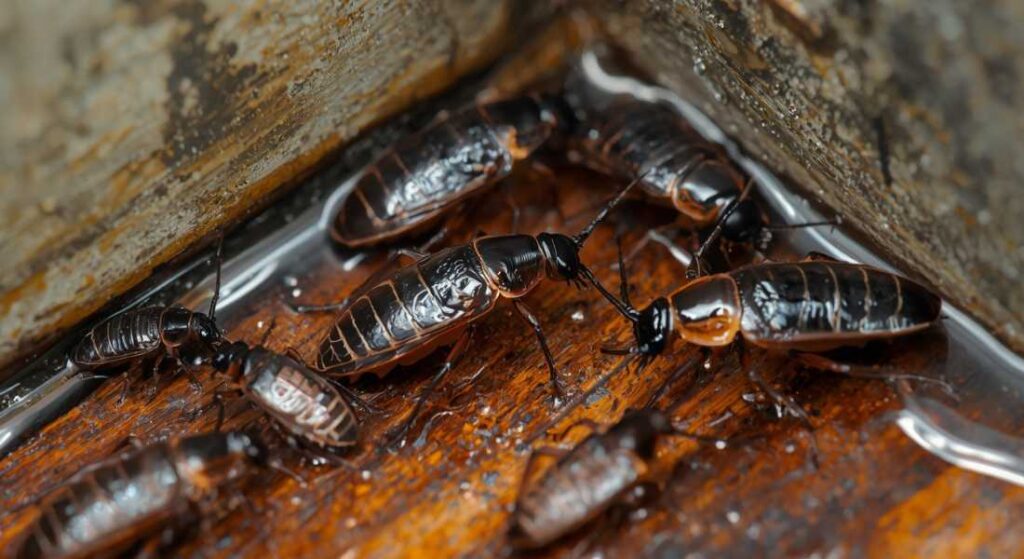
Smokybrown cockroach baby nymphs are small dark insects that emerge from egg cases and quickly develop into adult roaches if left untreated.
These young pests often appear in damp areas of homes and can indicate a growing infestation that requires immediate attention.
Understanding how to identify and control these nymphs is essential for protecting your living space from a full-scale cockroach problem.
Finding even one smokybrown cockroach baby in your home should raise concern. These nymphs are the juvenile stage of Periplaneta fuliginosa and they mature rapidly under the right conditions.
Unlike some other cockroach species that prefer indoor environments exclusively these insects often enter homes from outdoor areas seeking moisture and food sources. Their presence typically signals that adult roaches have already established breeding sites nearby.
This comprehensive guide covers everything you need to know about smokybrown cockroach nymphs including accurate identification methods, common hiding spots, health risks and effective treatment strategies.
Whether you discovered a smoky brown cockroach nymph in your bathroom or noticed multiple babies throughout your house this article provides actionable solutions based on pest control expertise and scientific research.
What Does a Smokybrown Cockroach Baby Look Like
Smokybrown cockroach babies go through several developmental stages called instars before reaching adulthood.
Newly hatched nymphs measure approximately 3 to 4 millimeters in length making them roughly the size of a small grain of rice. The smokybrown cockroach baby size increases with each molt as the insect sheds its exoskeleton and grows larger.
These nymphs display distinctive coloring that changes as they mature. First instar nymphs appear nearly black with a shiny appearance and lack the mahogany coloring seen in adults. As they progress through subsequent molts they develop a dark reddish brown coloration that gradually transitions to the characteristic smoky brown shade of mature roaches.
The body shape of smokybrown nymphs resembles miniature versions of adults but without fully developed wings. They have elongated oval bodies with six spiny legs and long thread-like antennae that are often as long as their bodies.
Their cerci or tail-like appendages at the rear of their abdomen help distinguish them from other cockroach species.
Key Physical Characteristics
Young smokybrown nymphs have a glossy dark appearance that can look almost wet or oily under light. Their antennae constantly move as they explore their environment sensing chemicals and detecting food sources.
Unlike German cockroach nymphs which have distinct light stripes running down their backs smokybrown babies maintain a more uniform dark coloration throughout their development.
The growth rate depends heavily on environmental conditions including temperature and food availability. In warm humid environments a smokybrown cockroach baby can complete its development in as little as 6 to 12 months.
During this period the nymph molts approximately 10 to 13 times with each stage bringing it closer to sexual maturity.
Where You Find Smoky Brown Cockroach Nymphs in Houses
Discovering a smoky brown cockroach nymph in house settings usually points to specific problem areas where moisture and organic matter accumulate.
These pests strongly prefer humid environments with consistent access to water making certain rooms more vulnerable to infestation than others.
Bathrooms rank among the most common locations for finding these nymphs. A smoky brown cockroach nymph in bathroom spaces typically hides behind toilets, under sinks, inside cabinets or along baseboards where condensation creates ideal moisture levels.
The combination of water sources and warm temperatures makes bathrooms particularly attractive to these insects.
Kitchens represent another high-risk area where nymphs congregate near water pipes, beneath refrigerators, inside pantries and around garbage bins.
They feed on food crumbs, grease residue and organic debris that accumulates in these spaces. Even small amounts of food waste can sustain a growing population of nymphs.
Other Common Hiding Spots
Basements and crawl spaces with poor ventilation and high humidity levels provide perfect breeding grounds for smokybrown roaches.
Nymphs hide in cardboard boxes, paper stacks, stored items and along foundation walls where moisture seeps through. These dark secluded areas allow them to develop with minimal disturbance.
Attics may harbor nymphs if roof leaks or inadequate ventilation create damp conditions. They hide in insulation, around HVAC systems and near water-damaged wood.
Laundry rooms with washing machines and utility sinks also attract these pests due to regular water exposure and occasional spills.
Outdoor entry points such as gaps around pipes, cracked weather stripping, damaged screens and foundation cracks allow nymphs to migrate indoors from exterior breeding sites.
They often live in mulch beds, woodpiles, leaf litter and tree cavities before venturing inside structures seeking food and shelter during weather changes.
Are Smokybrown Cockroach Babies Dangerous
The question of whether smokybrown cockroach baby insects pose health threats requires serious consideration. While these nymphs do not bite or sting humans directly they carry significant health risks through contamination and allergen production.
Their small size and tendency to hide in food storage areas make them particularly concerning for households.
Smokybrown nymphs carry bacteria, pathogens and parasites on their bodies and legs as they travel through unsanitary areas like sewers, drains and garbage.
When they walk across food preparation surfaces, dishes or stored food items they transfer these harmful microorganisms.
Studies have linked cockroach contamination to various illnesses including salmonellosis, E. coli infections and gastroenteritis.
The fecal matter and shed skins produced by developing nymphs contain powerful allergens that trigger respiratory problems in sensitive individuals.
Children and people with asthma face increased risks when exposed to these allergens over extended periods. Even dead nymphs and their body fragments become airborne and contribute to indoor air quality problems.
Health Implications for Vulnerable Groups
Infants and young children who crawl on floors and frequently put objects in their mouths face higher exposure risks to cockroach-related contaminants.
The presence of smokybrown cockroach baby nymphs in living spaces increases the likelihood of accidental ingestion of contaminated materials or contact with allergen-laden surfaces.
Elderly individuals and those with compromised immune systems should take cockroach infestations seriously as their bodies may struggle to fight off infections introduced through contaminated food or surfaces.
The cumulative effect of long-term exposure to cockroach allergens can worsen existing respiratory conditions and reduce overall quality of life.
Property damage represents another concern as growing nymphs feed on various materials including book bindings, wallpaper paste, fabric sizing and even electrical wire insulation.
Large populations can cause noticeable deterioration of stored items and structural materials over time.
Effective Smokybrown Cockroach Baby Treatment Methods
Addressing a smokybrown cockroach baby treatment plan requires a comprehensive integrated pest management approach that targets both nymphs and adults.
Single treatment methods rarely provide complete control because these insects reproduce quickly and hide effectively in hard-to-reach areas.
Sanitation forms the foundation of any successful treatment program. Remove all food sources by storing items in sealed containers, cleaning up crumbs immediately, taking out garbage regularly and eliminating grease buildup on stovetops and counters.
Nymphs cannot survive long without access to food and water so denying these resources significantly impacts population growth.
Moisture reduction plays an equally important role in smokybrown roach control. Fix leaking pipes, repair dripping faucets, improve ventilation in humid areas and use dehumidifiers in basements and crawl spaces.
Reducing indoor humidity below 50 percent makes environments less hospitable to these moisture-loving insects.
Chemical and Non-Chemical Control Options
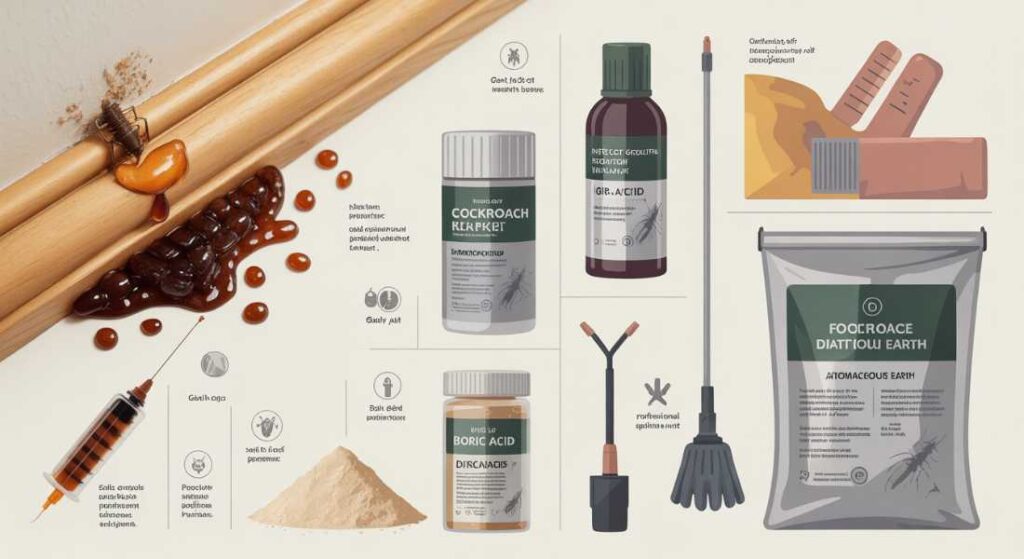
Gel baits formulated specifically for cockroaches provide effective targeted control when applied correctly.
Place small dots of bait in areas where nymphs travel including along baseboards, behind appliances, inside cabinets and near water sources. Nymphs consume the bait and die within days while also potentially spreading the toxin to other roaches through contact.
Insect growth regulators disrupt the molting process preventing nymphs from reaching adulthood and reproducing. These products mimic natural hormones and cause developmental abnormalities that eventually kill the insects.
IGRs work slowly but provide long-term population suppression when combined with other control methods.
Boric acid dust applied in wall voids, electrical outlets, under appliances and other hidden spaces kills nymphs through contact and ingestion.
The fine powder adheres to their bodies and damages their exoskeletons causing dehydration. This method provides residual control lasting several months if kept dry.
Diatomaceous earth offers a non-toxic alternative that works similarly to boric acid by abrading the waxy coating on cockroach bodies leading to moisture loss and death.
Apply food-grade diatomaceous earth in cracks, crevices and protected areas where pets and children cannot access it.
Professional pest control services may become necessary for severe infestations that resist DIY treatment efforts.
Licensed technicians have access to commercial-grade products and application equipment that provide faster more complete elimination. They also identify specific entry points and breeding sites that homeowners might overlook.
Preventing Future Smokybrown Cockroach Infestations
Prevention strategies protect homes from recurring problems after initial treatment eliminates existing nymphs and adults. Exclusion techniques that block entry points form the first line of defense against these outdoor-dwelling roaches that frequently invade structures.
Seal all cracks and gaps in the foundation, walls and around utility penetrations using caulk or expanding foam. Pay special attention to areas where pipes, wires and cables enter the building as these create convenient highways for roaches.
Replace damaged weather stripping around doors and windows and install door sweeps to eliminate gaps at thresholds.
Repair or replace torn window screens and ensure all vents have properly fitted screens that prevent insect entry. Check attic vents, crawl space openings and dryer vents for damage or missing screens that allow roaches to enter from outdoor harborage sites.
Landscape and Exterior Maintenance
Reduce outdoor populations by minimizing harborage sites near the home. Keep mulch beds at least 12 inches away from foundation walls and avoid piling mulch deeper than 2 to 3 inches.
Store firewood at least 20 feet from the structure and elevate it off the ground to prevent roaches from nesting underneath.
Trim tree branches and shrubs that touch or overhang the roof as these provide bridges for roaches to access upper levels of buildings.
Remove leaf litter, grass clippings and organic debris from around the foundation where smokybrown roaches naturally congregate and breed.
Install yellow or sodium vapor outdoor lighting instead of bright white lights that attract flying adult roaches. Position lights away from entry doors and windows to reduce the number of insects that gather near access points during evening hours.
Ongoing Monitoring and Maintenance
Place sticky traps in key monitoring locations such as under sinks, behind refrigerators, along baseboards in bathrooms and near potential entry points.
Check traps weekly to detect new activity early before populations expand. The presence of even a few nymphs suggests that treatment or prevention measures need adjustment.
Conduct regular inspections of vulnerable areas including basements, attics, crawl spaces and utility rooms.
Look for signs of cockroach activity such as fecal droppings that resemble coffee grounds or black pepper, egg cases, shed skins and unusual musty odors that indicate large populations.
Maintain consistent sanitation practices throughout the year rather than only addressing cleanliness during active infestations.
Store pet food in sealed containers, clean pet bowls nightly, avoid leaving dirty dishes in sinks overnight and vacuum regularly to remove food particles from floors and carpets.
Life Cycle and Development Stages
Understanding the complete life cycle of smokybrown cockroaches helps explain why early intervention against nymphs proves so critical. Female smokybrown roaches produce egg cases called oothecae that contain approximately 20 to 24 eggs.
Each female can produce 10 to 14 egg cases during her lifetime potentially contributing hundreds of offspring to an infestation.
Females deposit egg cases in protected locations such as cracks in wood, under bark, in mulch or inside secluded areas of structures. The eggs incubate for 30 to 50 days depending on temperature and humidity before hatching. Newly emerged nymphs immediately begin searching for food and water sources to fuel their rapid growth.
The nymphal stage represents the longest period in smokybrown cockroach development lasting anywhere from 6 to 12 months under favorable conditions.
During this time the insects remain vulnerable to treatments and environmental stresses making it an ideal window for population control efforts.
Factors Affecting Development Speed
Temperature significantly influences how quickly smokybrown cockroach baby nymphs mature into reproductive adults. Optimal development occurs between 75 and 85 degrees Fahrenheit while temperatures below 60 degrees slow growth considerably.
Extreme heat above 95 degrees can prove lethal especially when combined with low humidity.
Food availability affects both survival rates and development speed. Nymphs that consistently access protein-rich food sources grow faster and molt more frequently than those surviving on limited diets.
However these omnivorous insects can subsist on minimal nutrition including paper products, glue and even their own shed skins during food shortages.
Adults live for approximately 6 to 12 months after reaching sexual maturity though some individuals survive longer under ideal conditions.
This extended lifespan combined with high reproductive capacity means that small initial infestations can explode into major problems within a few months without intervention.
Differences Between Smokybrown and Other Cockroach Species
Distinguishing smokybrown cockroach nymphs from other common household roach species helps ensure appropriate treatment selection. While young nymphs of different species may appear similar at first glance several key characteristics aid in accurate identification.
German cockroach nymphs display two distinctive parallel dark stripes running lengthwise down their backs making them easily recognizable even at small sizes.
These indoor specialists rarely venture outside and typically infest kitchen and bathroom areas exclusively. They develop much faster than smokybrown nymphs completing their life cycle in as little as 6 weeks.
American cockroach nymphs start out grayish brown and develop reddish coloring as they mature. They grow significantly larger than smokybrown nymphs with adults reaching nearly 2 inches in length. American roaches prefer sewers, basements and other damp dark areas but show less dependence on outdoor habitats than smokybrown species.
Behavioral Distinctions
Smokybrown roaches demonstrate strong flying ability as adults and frequently fly toward lights at night. This behavior distinguishes them from German roaches which cannot fly and Oriental roaches which have reduced wing development.
The flying behavior of adults helps explain how infestations spread quickly between structures in neighborhoods.
Activity patterns also vary between species. Smokybrown cockroaches show peak activity during warm humid nights when they forage for food and mates.
They typically remain hidden during daylight hours emerging only under cover of darkness. Seeing nymphs or adults during daytime usually indicates a large population that has depleted preferred hiding spaces.
Habitat preferences further differentiate these species. While German roaches almost never establish outdoor populations smokybrown roaches thrive in tree holes, woodpiles, mulch beds and other exterior locations.
They move indoors primarily when outdoor conditions become unfavorable or when attracted by interior food sources and moisture.
Professional vs DIY Treatment Options
Deciding between professional pest control services and do-it-yourself approaches depends on several factors including infestation severity, available time, budget constraints and comfort level with pesticide application. Both methods can achieve success when implemented correctly.
DIY treatment works well for small isolated infestations caught early before populations spread throughout the structure.
Homeowners can purchase consumer-grade baits, dusts and sprays from hardware stores and apply them according to label directions. This approach offers cost savings and allows for immediate action without waiting for service appointments.
However DIY efforts face limitations when dealing with established infestations or situations requiring specialized equipment.
Reaching interior wall voids, treating inaccessible crawl spaces and applying products in optimal concentrations often requires professional training and tools. Misapplication of products can prove ineffective or create health risks for occupants.
Advantages of Professional Services
Licensed pest control technicians bring expertise in identifying species, locating breeding sites and selecting appropriate treatment methods for specific situations.
They understand cockroach biology and behavior patterns that help predict where nymphs hide and how infestations spread through structures.
Professional services typically include follow-up visits that ensure treatments achieved desired results. Technicians monitor for remaining activity and adjust strategies as needed to achieve complete elimination.
This ongoing support proves valuable when dealing with persistent problems that resist initial control efforts.
Access to commercial products unavailable to consumers gives professionals additional treatment options.
These formulations often contain higher active ingredient concentrations and employ advanced delivery systems that provide faster knockdown and longer residual control.
When to Call Professionals
Contact professional services when you notice widespread activity throughout multiple rooms or when DIY efforts fail to reduce populations after several weeks.
Severe infestations where you regularly see nymphs and adults during daytime hours require professional intervention to prevent further spread.
Situations involving health-vulnerable occupants such as infants, elderly residents or individuals with respiratory conditions warrant professional treatment to ensure complete elimination with minimal exposure risks.
Technicians can select products and application methods appropriate for sensitive environments.
Rental properties and commercial buildings often require professional documentation of pest control services for liability protection and compliance with health codes.
Property managers should establish regular service contracts that include preventive treatments and rapid response to tenant complaints.
Long-Term Management Strategies
Achieving lasting control of smokybrown cockroach populations requires commitment to integrated pest management principles that address all factors supporting infestations. Single treatments or inconsistent prevention efforts rarely provide permanent solutions.
Environmental modification remains the most important long-term strategy. By eliminating moisture sources, removing food availability and reducing harborage sites you create conditions that cannot support cockroach populations.
These changes provide benefits that last indefinitely without requiring repeated pesticide applications.
Regular monitoring helps detect new activity before populations rebound. Establish a routine inspection schedule checking vulnerable areas monthly for signs of returning roaches. Early detection allows for targeted spot treatments that prevent full-scale reinfestation.
Building a Comprehensive Program
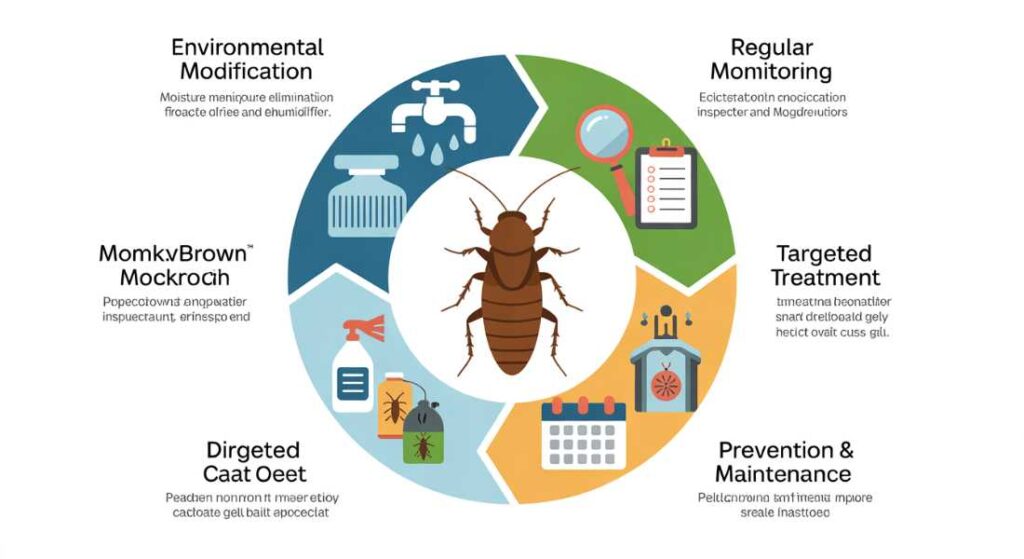
Document all treatment activities including dates, products used, application locations and results observed. This record helps identify which methods work best for your specific situation and reveals patterns in how infestations develop.
Share this information with pest control professionals to improve treatment effectiveness.
Educate all household members about prevention practices and the importance of maintaining vigilance. Everyone should understand how to store food properly, report signs of pest activity and avoid introducing conditions that support cockroach survival.
Consider seasonal factors when planning prevention efforts. Smokybrown roach activity peaks during warm humid months when outdoor populations grow rapidly and seek interior shelter. Intensify prevention and monitoring during these high-risk periods.
Frequently Asked Questions
How can I tell if I have a smokybrown cockroach baby infestation?
Signs of a smokybrown cockroach baby infestation include finding small dark nymphs in bathrooms, kitchens or basements, discovering egg cases in hidden areas, noticing a musty odor and seeing fecal droppings that resemble pepper flakes. You may also spot shed skins from molting nymphs near their hiding places.
What attracts smokybrown cockroach nymphs to homes?
Moisture represents the primary attractant for smokybrown cockroach baby nymphs along with food sources and shelter. Leaking pipes, poor ventilation, standing water and humid conditions create ideal environments.
Food crumbs, grease, pet food and organic debris provide nutrition while clutter and cracks offer hiding spaces.
How fast do smokybrown cockroach babies reproduce?
A single female smokybrown roach can produce 10 to 14 egg cases during her lifetime with each case containing 20 to 24 eggs.
The nymphs take 6 to 12 months to mature into reproductive adults meaning populations can grow exponentially within one year if conditions remain favorable for development.
Can smokybrown cockroach nymphs survive cold temperatures?
Smokybrown cockroach baby nymphs struggle in cold temperatures and rarely survive prolonged exposure to conditions below 50 degrees Fahrenheit.
This temperature sensitivity explains why infestations occur more frequently in southern regions and why northern populations typically remain confined to heated structures during winter months.
What is the most effective way to kill smokybrown cockroach babies?
The most effective smokybrown cockroach baby treatment combines sanitation, moisture control, exclusion and targeted pesticide applications.
Use gel baits in areas where nymphs travel, apply boric acid or diatomaceous earth in hiding spots and eliminate water sources. Combining multiple methods provides better results than relying on any single approach.
Do smokybrown cockroach nymphs carry diseases?
Yes, smokybrown cockroach baby nymphs carry bacteria, pathogens and parasites that can contaminate food and surfaces.
They spread organisms that cause salmonella, E. coli and other gastrointestinal illnesses. Their fecal matter and shed skins also produce allergens that trigger asthma attacks and respiratory problems in sensitive individuals.
Conclusion
Managing smokybrown cockroach baby infestations requires knowledge, persistence and a comprehensive approach that addresses both immediate elimination and long-term prevention.
These nymphs pose real health risks and property concerns that justify taking prompt action when you discover them in your home.
Success depends on accurately identifying the pest species, understanding their biology and behavior, eliminating conditions that support their survival and applying appropriate treatments to affected areas.
Whether you choose DIY methods or professional services consistency and thoroughness determine whether you achieve lasting control or face recurring problems.
Remember that even small numbers of nymphs can signal larger issues requiring attention. By implementing the strategies outlined in this guide you can protect your home from these unwanted invaders and create an environment that no longer supports cockroach populations.
Stay vigilant, maintain good sanitation practices and address moisture problems promptly to keep your living space free from smokybrown cockroaches at all life stages.