

Introduction
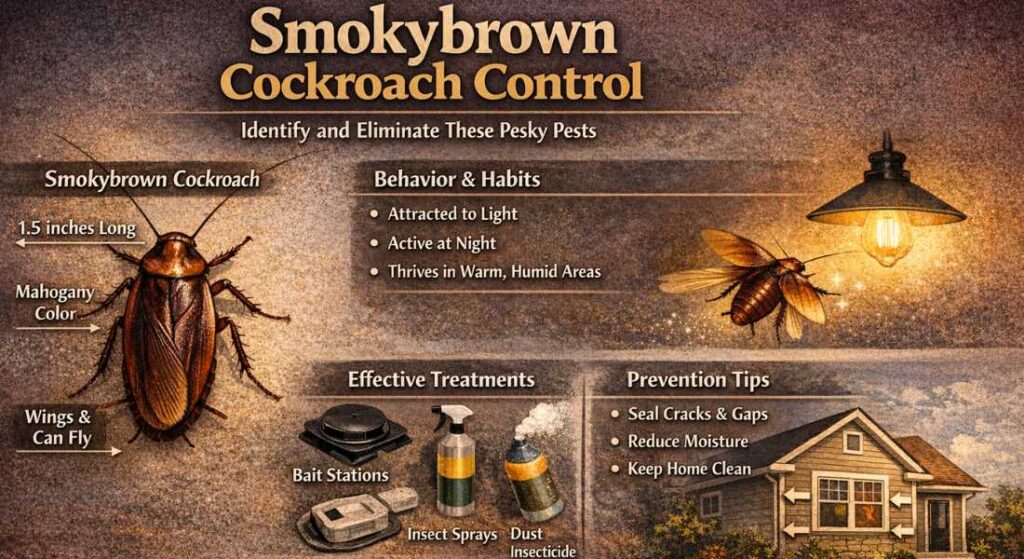
Smokybrown cockroaches are large flying insects that invade homes and create significant pest problems in warm humid climates. These distinctive mahogany-colored roaches measure over an inch long and possess wings that enable them to fly toward light sources at night.
Understanding how to identify and eliminate these persistent pests helps protect your home from the health risks and property damage they cause.
This comprehensive guide covers everything from physical characteristics and behavior patterns to effective treatment methods and long-term prevention strategies that work.
Identifying Smokybrown Cockroaches
These roaches display a uniform dark brown to mahogany coloration across their entire body. Unlike other species with marked patterns, the smokybrown cockroach maintains consistent coloring from head to wing tips.
Adult specimens reach 1.25 to 1.5 inches in length making them one of the larger cockroach species found in residential areas. Both males and females develop fully functional wings extending beyond the tip of their abdomen.
The scientific name Periplaneta fuliginosa distinguishes this species within the Periplaneta genus. This classification helps pest control professionals select appropriate treatment methods based on species-specific behaviors.
Young nymphs appear much darker than adults, almost black in color. They gradually lighten as they mature through multiple molting stages before reaching adult size and developing wings.
Smokybrown Cockroach vs American Cockroach
Physical differences between these two large species help with accurate identification. American cockroaches display a distinctive yellowish figure-eight pattern behind their head while smoky brown roaches lack this marking entirely.
The American species grows slightly larger at 1.5 to 2 inches compared to the 1.25 to 1.5 inch size of smoky browns. This size difference becomes noticeable when comparing adult specimens side by side.
Habitat preferences separate these species in many cases. American cockroaches prefer sewers and basements with consistent moisture while smoky browns favor tree canopies, gutters and attics with organic debris.
Flight behavior differs significantly between the two species. Smoky browns fly readily toward light sources during warm evenings whereas American cockroaches fly less frequently and usually only when temperatures exceed 85 degrees Fahrenheit.
Understanding Smokybrown Cockroach Behavior
These roaches exhibit strong attraction to light sources unlike most cockroach species that avoid illumination. Outdoor lighting near entry points draws them toward homes and buildings during nighttime hours.
They thrive in warm humid environments with temperatures between 70 and 80 degrees Fahrenheit. Cold temperatures below 45 degrees cause mortality making them primarily pests in southern states and coastal regions.
Outdoor populations establish colonies in tree holes, woodpiles, mulch beds and rain gutters. These areas provide shelter, moisture and decaying organic matter that serves as their primary food source.
Seasonal migration patterns bring smoky browns indoors during fall months. Dropping temperatures and reduced outdoor food sources drive them to seek warmth and sustenance inside structures.
How Smokybrown Cockroaches Enter Homes
Gaps around doors and windows provide easy access points for these mobile pests. Their flattened bodies squeeze through surprisingly small openings of just 1/16 inch width.
Damaged window screens and unsealed vents allow flying adults direct access to interior spaces. They often enter through attic vents and roof soffits in their search for suitable harborage.
Utility line penetrations through exterior walls create highways for roach movement. Openings around pipes, wires and cables need sealing to prevent entry.
Attached trees and shrubs touching the structure serve as bridges from outdoor colonies. Trimming vegetation away from the building eliminates these natural pathways.
Health Risks and Property Damage
Disease transmission occurs when these roaches walk across food preparation surfaces after crawling through contaminated areas. They carry bacteria including Salmonella, E. coli and various pathogens on their bodies and legs.
Allergen production from cast skins and droppings triggers asthma and allergic reactions in sensitive individuals. Children and elderly family members face the highest risk from these respiratory irritants.
Food contamination happens when roaches feed on stored products and leave behind feces and regurgitated material. Any food contacted by these pests requires disposal to prevent illness.
Property damage results from their feeding on book bindings, wallpaper paste and fabric sizing. Large populations can cause noticeable deterioration of paper products and natural fiber materials.
Signs of Smokybrown Cockroach Infestation
Live roach sightings during evening hours indicate active populations nearby. Finding even one or two adults suggests a larger hidden colony exists in wall voids or attic spaces.
Droppings appear as small dark specks or pellets scattered along walls, in cabinets and near water sources. These waste products accumulate in areas where roaches regularly travel and feed.
Egg cases called oothecae measure about 3/8 inch long and appear dark reddish-brown. Females attach these capsules to protected surfaces in attics, crawl spaces and storage areas.
Musty odors become noticeable in heavily infested spaces. This distinctive smell results from pheromones and waste products produced by large roach populations.
How to Get Rid of Smoky Brown Cockroaches
Inspection forms the critical first step in effective control. Check attics, crawl spaces, gutters and exterior areas where organic debris accumulates to locate colony sites.
Sanitation removes food sources and breeding sites that sustain populations. Clean gutters, remove leaf litter and eliminate woodpiles near the foundation to reduce outdoor harborage.
Exclusion prevents new roaches from entering while interior treatments eliminate existing populations. Seal all cracks, gaps and openings around the structure using caulk, weatherstripping and copper mesh.
Exterior perimeter treatments create a protective barrier around your home. Apply residual insecticides to foundation walls, door frames, window sills and other potential entry points.
Interior Treatment Methods
Gel baits work effectively for indoor control by attracting roaches to consume poison they carry back to nesting areas. Place small dots of bait in corners, along baseboards and inside cabinets.
Boric acid dust applied to wall voids and attic spaces provides long-lasting control in areas where roaches hide during daylight hours. This desiccant powder damages their protective coating causing dehydration.
Insect growth regulators disrupt the reproduction cycle preventing nymphs from maturing into breeding adults. These products break the population growth pattern when combined with adult-killing treatments.
Sticky traps monitor activity levels and help identify high-traffic areas requiring focused treatment. Place monitors along walls, under sinks and in closets to track population trends.
Outdoor Control Strategies
Remove organic debris from gutters and downspouts where moisture and decaying leaves create ideal breeding conditions. Clean these areas quarterly to eliminate attractive nesting sites.
Treat tree holes and hollow stumps with insecticidal dust to eliminate outdoor colonies. These protected spaces often harbor large populations that eventually migrate indoors.
Reduce outdoor lighting or switch to yellow bug lights that attract fewer insects. This simple change makes your property less appealing to light-seeking smoky brown adults.
Maintain proper drainage around the foundation to reduce moisture levels. Standing water and damp soil create favorable conditions that support outdoor roach populations.
Professional vs DIY Treatment Options
Minor infestations with only occasional sightings often respond well to over-the-counter products when applied correctly. Focus treatments on entry points and outdoor harborage areas for best results.
Established colonies with regular indoor sightings typically require professional intervention. Licensed pest control technicians access stronger products and specialized equipment for comprehensive treatment.
Recurring problems despite DIY efforts indicate hidden colonies or untreated harborage areas. Professionals use their training and experience to identify overlooked trouble spots requiring attention.
Cost considerations favor DIY approaches for prevention and minor issues. Professional services make financial sense when infestations spread or home treatment methods fail repeatedly.
Natural and Chemical Control Options
Diatomaceous earth provides a non-toxic option for crack and crevice treatment. This natural powder damages the roach exoskeleton through physical action rather than chemical poisoning.
Essential oils including peppermint and eucalyptus may repel roaches from treated areas. However, these natural products rarely kill established populations and work best as supplemental deterrents.
Boric acid offers low toxicity to humans and pets while remaining highly effective against roaches. Apply this tried-and-tested product as a dust in protected areas away from food contact surfaces.
Synthetic pyrethroids deliver fast knockdown and residual control of adult roaches. These chemical insecticides form the backbone of most professional exterior perimeter treatments.
Preventing Future Smokybrown Cockroach Problems
Regular home maintenance identifies and repairs potential entry points before roaches exploit them. Inspect weatherstripping, door sweeps and window screens seasonally to maintain effective barriers.
Moisture control reduces the humidity levels these tropical pests require for survival. Fix plumbing leaks, improve ventilation and use dehumidifiers in damp areas like crawl spaces.
Landscape management keeps vegetation trimmed away from the structure. Maintain at least 12 inches of clearance between plants and exterior walls to eliminate natural bridges.
Outdoor sanitation prevents population buildup around your property. Store firewood away from the house, remove dead trees and keep mulch layers thin to reduce harborage opportunities.
Smokybrown Cockroach Nymph Development
Young nymphs emerge from egg cases after about 45 days of incubation. These tiny roaches measure only 1/4 inch long and appear almost black in coloration.
Development through 10 to 12 molting stages takes approximately one year under favorable conditions. Each molt produces a slightly larger nymph with developing wing pads visible in later instars.
Environmental factors including temperature and food availability affect development rates significantly. Warm conditions with abundant food accelerate growth while cold or food scarcity extends the development period.
Finding nymphs indoors indicates an established breeding population within or very near your home. These immature stages stay close to harborage areas unlike adults that roam more widely.
Geographic Distribution and Climate Requirements
Southern states from North Carolina to Texas experience the highest populations of this warmth-loving species. Coastal regions with mild winters and high humidity provide ideal year-round habitat.
Northern range limits correspond roughly to areas where winter temperatures regularly drop below freezing. Cold snaps kill exposed roaches and prevent permanent outdoor colony establishment.
Urban heat island effects extend their range into areas slightly cooler than their natural tolerance. Cities provide warmer microclimates and abundant shelter enabling survival in marginal zones.
Climate change predictions suggest expanding ranges as winter temperatures moderate. Areas currently free from these pests may face new challenges as warming trends continue.
Life Cycle and Reproduction Patterns
Female roaches produce egg cases containing 20 to 26 individual eggs. They carry the ootheca for about 24 hours before attaching it to a protected surface in a suitable nesting area.
Complete development from egg to adult requires 10 to 12 months under optimal conditions. This relatively long life cycle means population growth occurs gradually compared to faster-breeding species.
Adult females live approximately 200 to 300 days producing multiple egg cases during their lifetime. Each female potentially contributes hundreds of offspring to the population over her lifespan.
Overlapping generations create mixed populations with eggs, nymphs and adults present simultaneously. This age diversity complicates control efforts as treatments must address all life stages.
Seasonal Activity Patterns
Peak activity occurs during warm summer months when temperatures and humidity reach optimal levels. Outdoor populations expand rapidly during these favorable conditions.
Fall migration brings increased indoor encounters as cooling temperatures drive roaches to seek warmth. September through November typically see the highest rates of home invasion.
Winter dormancy reduces activity in outdoor populations exposed to cold temperatures. Indoor populations remain active year-round wherever warmth and food exist.
Spring emergence begins when temperatures consistently exceed 70 degrees. Surviving roaches resume breeding and foraging activities as conditions improve.
Frequently Asked Questions
What makes the smokybrown cockroach different from other roach species?
The smokybrown cockroach displays uniform mahogany coloring without the patterns seen on American or Oriental roaches. These roaches fly readily toward light sources at night which distinguishes them from most other species that avoid illumination.
Their preference for outdoor tree canopies and gutters also separates them from basement-dwelling varieties.
How do I know if I have smokybrown cockroaches in my house?
Finding large mahogany-colored roaches flying around outdoor lights or discovering them in attics and upper floors indicates their presence.
Look for cast skins and dark droppings in gutters, attic spaces and areas where rooflines meet walls. Nymphs appear almost black and stay closer to harborage areas than mobile adults.
Can smokybrown cockroaches fly into my home?
Yes, these strong fliers readily enter homes through open doors, damaged screens and attic vents. Their attraction to light draws them toward illuminated windows and doorways during evening hours. This flying ability makes exclusion more challenging compared to ground-dwelling species.
Are small smokybrown cockroach nymphs dangerous?
Nymphs carry the same disease-causing bacteria as adults and produce allergens through their droppings and molted skins.
Finding small nymphs indoors signals an established breeding population requiring immediate treatment. Young stages indicate recent egg hatching and active reproduction occurring nearby.
What is the best way to prevent smoky brown roaches?
Eliminate outdoor harborage by cleaning gutters, removing leaf litter and storing firewood away from the house. Seal all entry points including gaps around doors, windows and utility penetrations. Reduce outdoor lighting or switch to yellow bulbs that attract fewer insects while maintaining adequate illumination.
Do smokybrown cockroaches die in cold weather?
Yes, temperatures below 45 degrees Fahrenheit cause mortality in exposed roaches. However, those sheltered inside heated structures or protected outdoor spaces survive winter months. This cold sensitivity limits their permanent establishment in northern climates with harsh winters.
Conclusion
Successfully managing these flying pests requires understanding their unique behaviors and habitat preferences. Focus control efforts on outdoor sources, entry point exclusion and targeted treatments in harborage areas for maximum effectiveness.
Prevention through sanitation and structural maintenance proves far easier than eliminating established colonies. Regular inspections and prompt action at the first signs of activity stop small problems before they become major infestations.
With proper identification and appropriate control methods, you can protect your home from these persistent invaders. Stay vigilant during peak seasons and maintain barriers that keep outdoor populations where they belong.