

Introduction
Signs of carpet beetles are often subtle but recognizing them early can save your home from serious damage. These small pests feed on natural fibers found in carpets, clothing, upholstery, and other household items, leaving behind destruction that can be costly to repair.
Understanding how to identify an infestation is the first step in protecting your belongings. This comprehensive guide will walk you through the warning signs, help you understand what causes these pests to invade your space, and provide practical solutions for elimination and prevention. Whether you’ve spotted unusual insects or noticed unexplained damage to fabrics, this article will equip you with the knowledge to take action.
What Are Carpet Beetles
Carpet beetles are small insects that belong to the family Dermestidae. Unlike bed bugs or other common household pests, these beetles primarily feed on natural materials rather than blood. They measure between 1 to 5 millimeters in length and come in several varieties including the varied carpet beetle, black carpet beetle, and furniture carpet beetle.
These carpet insects are attracted to homes because they provide abundant food sources. They feed on wool, silk, fur, feathers, leather, and even dead insects. While adult beetles are relatively harmless and feed on pollen and nectar outdoors, their larvae cause the most damage inside homes.
Common Signs of Carpet Beetle Infestation
Recognizing an infestation early is crucial for preventing widespread damage. The signs of carpet beetles can be easy to miss if you don’t know what to look for.
Visible Adult Beetles
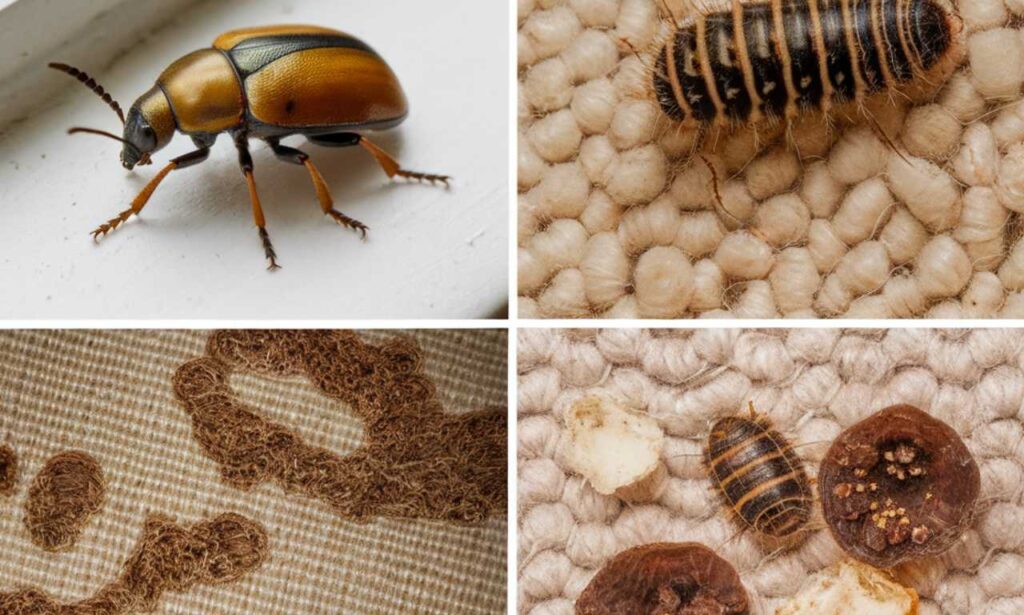
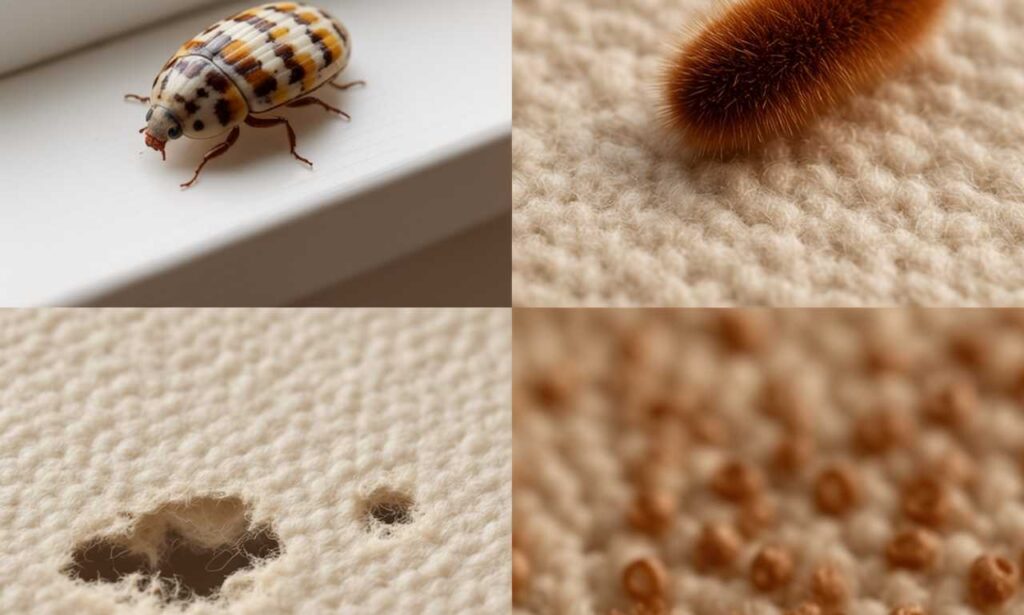
Adult carpet beetles are small, oval-shaped insects that you might notice crawling on walls, windowsills, or near light sources. They are typically active during spring and early summer when they enter homes seeking places to lay eggs. The varied carpet beetle appears mottled with white, brown, and yellow scales, while black carpet beetles are solid dark brown or black.
You might find these beetles near windows as they are attracted to light and often try to exit through glass panes.
Carpet Beetle Larvae Sightings
The larvae stage is when these pests cause the most damage. Carpet beetle larvae are small, fuzzy, and carrot-shaped with bristly hairs covering their bodies. They measure about 4 to 5 millimeters long and range in color from tan to brown with distinctive stripes.
These larvae prefer dark, undisturbed areas such as closets, under furniture, along baseboards, and inside air ducts. If you spot these crawling creatures, you likely have an active infestation.
Shed Skins and Fecal Pellets
As carpet beetle larvae grow, they molt several times, leaving behind their shed skins. These empty casings are often found in the same areas where larvae feed. They appear as small, hollow, brown shells that resemble the shape of the larvae themselves.
Additionally, you may notice tiny fecal pellets that look like small grains of sand or pepper. These droppings accumulate where larvae feed and are a telltale sign of their presence.
Fabric and Material Damage
One of the most obvious indicators is damage to natural fiber materials. Look for irregular holes in carpets, rugs, clothing, blankets, and upholstery. Unlike moths that create more uniform holes, carpet beetle damage appears scattered and uneven.
You might also notice thinning areas in carpets or bare patches where the pile has been eaten away. Woolen items, silk garments, fur coats, and leather goods are particularly vulnerable. Even mounted animal specimens, taxidermy, and insect collections can become targets.
Unexplained Skin Irritation
While carpet beetles themselves don’t bite humans, some people experience a carpet beetle rash from contact with the larvae’s bristly hairs. This reaction appears as small, red, itchy bumps similar to other insect bites but is actually a form of dermatitis.
If you notice skin irritation that resembles carpet bug bites, especially after handling stored clothing or bedding, the larvae’s hairs may be the culprit rather than actual bites.
Understanding the Carpet Beetle Life Cycle
Knowing how these pests develop helps you target them at vulnerable stages and prevent future infestations.
Egg Stage
Female carpet beetles lay between 30 to 100 eggs in dark, protected locations near food sources. These tiny white or cream-colored eggs hatch within 10 to 20 days depending on temperature and humidity. The eggs are often deposited in carpet fibers, upholstered furniture, air ducts, or inside closets.
Larval Stage
The larval stage is the longest and most destructive phase of the carpet beetle life cycle, lasting anywhere from several months to over a year. During this time, the larvae actively feed on organic materials and cause all the damage associated with infestations.
The varied carpet beetle life cycle includes multiple molting stages as larvae grow larger. They thrive in warm environments but can also survive in cooler conditions by simply developing more slowly.
Pupal and Adult Stages
After completing their growth, larvae find secluded spots to pupate. The pupal stage lasts about 10 to 20 days, after which adult beetles emerge. Adults live for several weeks, during which time they mate and the females seek out new locations to lay eggs, potentially starting the cycle over again.
Adult beetles are often found outdoors on flowers but enter homes through open windows, doors, cracks, and vents. Understanding this life cycle of carpet beetle helps you implement control measures at each stage.
What Causes Carpet Beetles in Your Home
Understanding what causes carpet beetles to invade helps you prevent future problems.
Entry Points
Carpet beetles typically enter homes through open windows and doors, especially during spring when adults are most active. They can also come in through gaps around window frames, door thresholds, vents, and utility openings. Even small cracks in foundations or walls can serve as entry points.
Sometimes these pests hitchhike into your home on cut flowers, plants, or secondhand furniture and clothing.
Attractive Food Sources
What causes carpet worms or larvae to thrive in certain homes comes down to available food. Homes with natural fiber carpets, wool clothing, fur items, feather pillows, silk curtains, and leather furniture provide ideal feeding grounds.
Even less obvious sources attract them such as pet hair accumulation, dead insects trapped in light fixtures or windowsills, and food crumbs or spills on carpets. Poor housekeeping and cluttered storage areas create perfect conditions for larvae to develop undisturbed.
Environmental Conditions
Carpet beetles prefer warm, dark, and undisturbed areas. Closets that are rarely opened, storage boxes left untouched for months, and spaces under heavy furniture become prime breeding grounds. Basements, attics, and spare rooms with infrequent activity also attract these pests.
Are Carpet Beetles Harmful or Dangerous

Many homeowners wonder about the actual risks these insects pose to health and property.
Property Damage Risks
While are carpet beetles dangerous to humans is a common question, the answer is nuanced. They don’t spread disease or pose direct health threats like some pests. However, the damage they cause to belongings can be extensive and expensive.
Irreplaceable items such as heirloom textiles, expensive wool carpets, fur coats, and antique upholstery can be ruined by carpet beetle larvae. The accumulated cost of replacing damaged clothing, repairing carpets, and treating infestations can be significant.
Health Concerns
The question do carpet beetles bite or can carpet beetles bite comes up frequently. The truth is that carpet beetles don’t bite humans. They lack the mouthparts necessary to pierce skin and feed on blood like bed bugs or fleas.
However, carpet beetles rash can occur when people come into contact with the shed hairs from larvae. These bristly hairs can cause allergic reactions in sensitive individuals, resulting in dermatitis that resembles insect bites. The carpet beetle rash typically includes red, itchy welts that appear where skin contacted infested materials.
Some people also experience respiratory irritation if they inhale the larvae’s hairs or fecal matter, especially in cases of heavy infestations.
How to Get Rid of Carpet Beetles
Effective elimination requires a multi-step approach targeting both adult beetles and larvae.
Thorough Cleaning and Vacuuming
The first step in how to get rid of carpet beetles is comprehensive cleaning. Vacuum all carpets, rugs, and upholstered furniture thoroughly, paying special attention to edges, under furniture, and in corners. Use the crevice tool to reach baseboards, closet floors, and tight spaces.
Empty the vacuum bag or canister immediately into an outdoor trash receptacle to prevent larvae from escaping back into your home. Repeat this process several times over consecutive weeks to capture newly hatched larvae.
Steam cleaning carpets and upholstery can kill eggs and larvae through heat exposure. Wash all potentially infested clothing, bedding, and curtains in hot water at temperatures above 120°F.
Treatment with Diatomaceous Earth
Diatomaceous earth is a natural, effective option for carpet beetle control. This fine powder consists of fossilized remains of tiny aquatic organisms called diatoms. When insects come into contact with diatomaceous earth, it damages their exoskeletons and causes dehydration.
What is diatomaceous earth exactly? Food-grade diatomaceous earth food grade is safe for use around humans and pets when used properly. Apply a thin layer of diatomaceous earth powder in areas where you’ve noticed activity such as along baseboards, in closets, under furniture, and around carpet edges.
Among diatomaceous earth uses, insect diatomaceous earth for pest control stands out as particularly effective. Leave the powder in place for several days before vacuuming. The benefit of is diatomaceous earth safe comes from its non-toxic nature, though you should still avoid inhaling the dust by wearing a mask during application.
Using diatomaceous earth for insect control requires patience as it works through physical action rather than chemical toxicity. Reapply after vacuuming and maintain the treatment for several weeks to catch all life stages.
Chemical Insecticides
For severe infestations, a carpet beetle insecticide may be necessary. Look for products labeled specifically for carpet beetle control that contain active ingredients like pyrethroids or pyrethrins. A targeted carpet beetle spray can be applied to affected areas following label instructions carefully.
When spraying for carpet beetles, focus on cracks, crevices, carpet edges, and other areas where larvae hide. A carpet bugs spray should never be applied directly to fabrics you wear or that come in contact with skin unless the product specifically states it’s safe for such use.
Always follow safety precautions when using chemical pest control for carpet beetles, including removing pets and children from treated areas and allowing proper ventilation.
Professional Pest Control
For persistent or widespread infestations, professional pest control for carpet beetles may be the most effective solution. Pest management professionals have access to stronger treatments and can identify all infestation sources that homeowners might miss.
Experts can also provide guidance on how do i get rid of carpet beetles permanently through integrated pest management approaches that combine treatment with prevention.
Prevention Tips to Keep Carpet Beetles Away
Preventing reinfestation is just as important as elimination.
Regular Cleaning Practices
Maintain a consistent cleaning schedule that includes vacuuming all carpets, rugs, and upholstered furniture weekly. Don’t neglect hard-to-reach areas where debris and pet hair accumulate. Regular cleaning removes potential food sources before they attract pests.
Dust windowsills, light fixtures, and baseboards regularly to remove dead insects that might otherwise feed carpet beetle larvae.
Proper Storage Methods
Store woolens, furs, and other natural fiber items in airtight containers or sealed plastic bags. Before storing seasonal clothing, wash or dry-clean items to remove any eggs or larvae that might be present.
Cedar chests or closets can help repel carpet beetles naturally, though they’re not foolproof. Adding cedar blocks or lavender sachets to storage containers provides additional protection and pleasant scent.
Home Maintenance
Seal cracks around windows, doors, and foundations to prevent adult beetles from entering. Install tight-fitting screens on windows and doors, and repair any damaged screens promptly.
Keep your home well-ventilated and reduce humidity levels, as damp conditions can attract various pests. Regularly inspect stored items, especially those kept in attics, basements, or spare closets.
Learning how to repel carpet beetles includes eliminating attractants such as bird nests near your home, as these can harbor beetle populations that eventually migrate indoors.
Carpet Beetles vs Other Common Household Pests
Understanding the differences helps ensure proper treatment.
Carpet Beetles vs Bed Bugs
A common confusion exists between these two pests. Bed bugs are parasitic insects that feed exclusively on blood, typically biting humans while they sleep. You’ll find bed bugs in bed frames, mattress seams, and other areas near where people rest.
The question how do you get bed bugs relates to travel, used furniture, or visitors bringing them from infested locations. Unlike carpet beetles, bed bugs leave actual bite marks that appear as red, itchy welts often in clusters or lines.
While both pests are tiny bed bugs and carpet beetles have different feeding habits and require different treatment approaches. Can you see bed bugs? Yes, adult bed bugs are visible to the naked eye at about 4 to 5 millimeters long, similar in size to apple seeds.
Bed bugs in bed are found in mattresses and bedding, while carpet beetles and their larvae are found in carpets, closets, and stored items. A bedbug infestation requires heat treatment or professional extermination, whereas carpet beetle control focuses on cleaning and targeted treatments.
Carpet Beetles vs Other Fabric Pests
Moths are another common fabric pest often confused with carpet beetles. While both damage natural fibers, moth larvae create more uniform holes and leave behind silken tubes or cases. Carpet beetle damage appears more scattered and irregular.
Understanding where do carpet beetles come from versus where other pests originate helps with prevention. Carpet beetles often enter from outdoors, while clothes moths typically arrive on infested items brought into the home.
FAQs
What are the first signs of carpet beetles in a home?
The earliest warning includes spotting small, oval-shaped adult beetles near windows or light sources during spring and summer. You might also notice their fuzzy, carrot-shaped larvae crawling in dark corners or closets. Shed larval skins and tiny fecal pellets in storage areas are additional early indicators that shouldn’t be ignored.
Do carpet beetles bite humans or pets?
No, carpet beetles don’t bite. They lack the necessary mouthparts to pierce skin and feed on blood. However, some people develop a skin reaction resembling bites when they contact the larvae’s bristly hairs, causing a condition called carpet beetle dermatitis that appears as red, itchy bumps.
How long does it take to get rid of carpet beetles completely?
Complete elimination typically takes several weeks to a few months depending on infestation severity. The extended timeline accounts for the varied carpet beetle life cycle, as eggs continue hatching during treatment. Consistent vacuuming, washing, and targeted treatments over 4 to 8 weeks usually achieve full control.
Can carpet beetles cause serious damage to my home?
While structural damage is unlikely, carpet beetles can cause significant harm to your belongings. They destroy carpets, clothing, upholstery, and other valuable items made from natural fibers. Without intervention, a growing population can ruin irreplaceable heirlooms, expensive textiles, and furnishings over time.
What naturally repels carpet beetles?
Cedar oil and wood naturally deter carpet beetles, making cedar chests ideal for storage. Lavender, eucalyptus, and peppermint oils also repel these pests when used in sachets or as diluted sprays. However, natural repellents work best as preventive measures rather than treatments for existing infestations.
Are carpet beetles more common in certain seasons?
Adult carpet beetles are most active during spring and early summer when they emerge to mate and seek egg-laying sites. However, larvae can remain active year-round indoors, especially in heated homes during winter. Infestations may go unnoticed until warmer months when adults become visible.
Conclusion
Identifying the signs of carpet beetles early protects your home and belongings from extensive damage. By recognizing adult beetles, larvae, shed skins, and fabric damage, you can take swift action before infestations worsen. Remember that thorough cleaning, proper storage, and preventive measures form the foundation of effective control.
Whether you choose natural solutions like diatomaceous earth or require professional pest control services, addressing the problem promptly saves money and preserves your valuables. Stay vigilant with regular inspections and maintain good housekeeping practices to keep these destructive pests away permanently. Your proactive efforts today ensure a carpet beetle-free home for years to come.