

Introduction
Roach pee is something most homeowners never think about until they spot strange stains or smell something unusual in their kitchen or bathroom.
Cockroaches are not just unsettling to look at they leave behind waste that can seriously affect your health and home environment.
This article covers everything you need to know about cockroach urine, droppings, eggs, and the real dangers they pose, along with practical steps to protect your family.
Do Cockroaches Actually Urinate
Many people wonder whether cockroaches urinate the same way mammals do. The answer is both yes and no. Cockroaches do excrete liquid waste but their biology works differently from humans or animals.
Rather than producing separate liquid urine, cockroaches excrete uric acid as a semi-solid paste mixed with their feces. This means their waste products are often combined rather than released separately.
How Cockroach Waste Differs From Other Pests
Unlike mice or rats that leave distinct liquid urine trails, cockroaches release uric acid crystals along with their droppings.
This combined waste is what creates those brownish smear marks and dark spots you sometimes find along walls, cabinet edges or behind appliances. Understanding this difference helps you identify the pest correctly before taking action.
What Does Roach Pee Look Like
When people ask what cockroach urine looks like, they are usually noticing yellowish or brownish stains on surfaces.
These appear as irregular smears or liquid splash marks that dry into a crusty residue. On light-colored surfaces they tend to look amber or tan.
On porous materials like cardboard or wood they can soak in and appear as dark spreading stains.
Identifying the Yellow Liquid From Cockroaches
The yellow liquid sometimes found near cockroach activity zones is a combination of uric acid waste and glandular secretions. Cockroaches also release pheromones that contribute to the greasy yellowish residue on surfaces they frequently travel across. This is why infested areas often have a distinctive musty or oily smell that gets stronger as the population grows.
Do Roaches Leave a Pee Smell
Yes, cockroach waste produces a noticeable odor. The smell is often described as musty, oily, or similar to spoiled food. This scent comes from the combination of pheromones, uric acid waste and the bacteria carried in their excretions. In heavily infested spaces the smell becomes quite strong and persistent. If you notice an unexplained musty odor in your home it is worth inspecting for signs of cockroach activity.
What Does Cockroach Poop Look Like
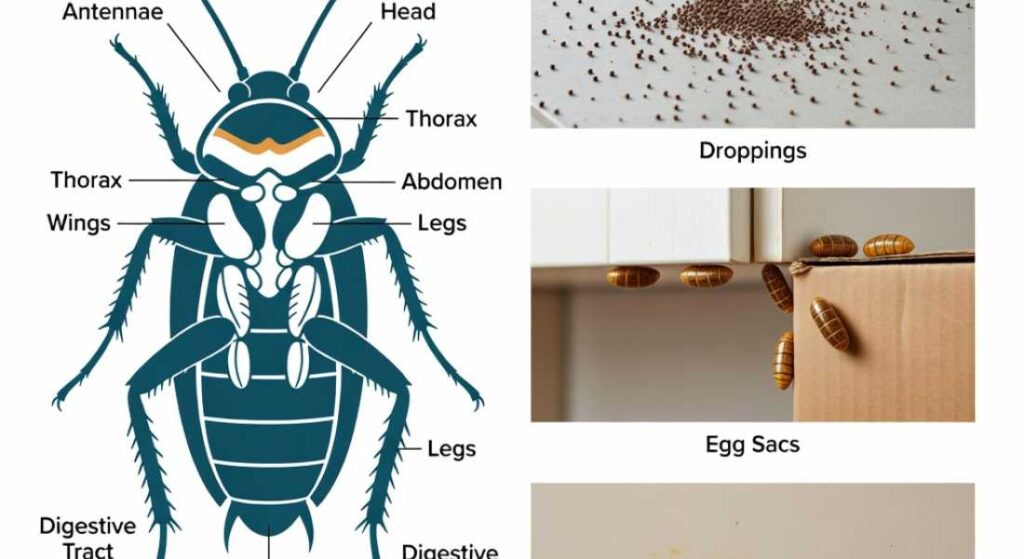
Cockroach droppings vary in appearance depending on the species. Larger species like the American cockroach leave dark cylindrical droppings with ridged edges that are roughly the size of a grain of rice. Smaller species like the German cockroach leave droppings that look like tiny black or dark brown specks resembling ground pepper or coffee grounds.
German Cockroach Droppings in Detail
German cockroach feces are particularly small and are often found in clusters inside cabinets, along countertops, or near food storage areas. Because of their tiny size they are easy to overlook or mistake for dirt. If you see dark speckling in corners of drawers or along the edges of shelves, that is a strong sign of a German cockroach presence.
Roach Droppings vs Mouse Droppings
A very common identification challenge is telling roach droppings apart from mouse droppings. Mouse droppings are typically larger (around 3 to 6mm) with pointed ends and a smooth surface. Roach droppings are smaller, have ridged or blunt ends and appear more uniform in shape when from larger roaches.
German roach feces appear as smears or granules rather than distinct pellets. Location also helps since roach droppings are more often found in kitchens and cabinets while mouse droppings tend to appear along baseboards and in storage areas.
Is Cockroach Waste Dangerous to Your Health
Cockroach waste is genuinely hazardous. The droppings, shed skin and saliva of cockroaches contain proteins that trigger allergic reactions and asthma in sensitive individuals.
Research consistently links cockroach allergens to worsening asthma particularly in children living in urban environments. Beyond allergens their waste carries pathogens including Salmonella, E. coli and other bacteria that contaminate food surfaces.
Can Cockroach Poop Make You Sick
Absolutely. Coming into contact with cockroach feces or consuming food contaminated by it can lead to food poisoning, diarrhea and stomach infections. People with existing respiratory conditions are at even greater risk because dried cockroach waste becomes airborne as fine particles that are inhaled. This is one reason cockroach control is considered a public health issue and not just a nuisance problem.
Do Cockroaches Spread Disease
Cockroaches are considered mechanical vectors of disease meaning they pick up pathogens from sewers and garbage and transfer them to food preparation surfaces. They have been linked to the spread of typhoid fever, dysentery, cholera and various intestinal infections. Keeping them out of your living space is critical for maintaining food safety and general hygiene.
What Do Cockroach Eggs Look Like
Cockroaches do not lay individual eggs. Instead the female produces an egg case called an ootheca which looks like a small brown or reddish-brown capsule with a segmented or ridged surface. This egg sac contains multiple eggs inside. Depending on the species an ootheca can hold anywhere from 10 to 50 eggs.
Identifying a Roach Egg Sac
A cockroach egg sac is roughly 5 to 10mm long and looks like a tiny purse or pill. American cockroach oothecae are dark reddish-brown and often found glued to surfaces in warm humid areas.
German cockroach females carry their egg case until just before hatching which is why you sometimes see females with an elongated capsule attached to their abdomen. Finding one of these in your home is a serious sign of an active infestation.
Where to Find Cockroach Waste in Your Home
Cockroach activity is concentrated in specific areas. The most common spots to find droppings, stains and egg cases include the insides of kitchen cabinets, behind refrigerators and stoves, under sinks, along plumbing pipes, inside bathroom vanities and behind wall panels. Cockroaches prefer dark, warm and humid spaces where they can feed and breed without disturbance.
Using Droppings to Track Infestation Severity
The volume and location of cockroach feces gives you a reliable estimate of infestation size. Light scattered specks suggest a minor problem while thick deposits covering large areas indicate a substantial and established population. Mapping where you find the most droppings helps pest control professionals target treatment zones effectively.
How to Clean Cockroach Waste Safely
Cleaning up cockroach droppings requires proper precautions because dried feces can release allergen-laden particles when disturbed. Always wear gloves and if possible a dust mask before starting.
Do not sweep or vacuum dry droppings directly as this can scatter particles into the air. Instead lightly mist the area with a disinfectant spray first to bind the particles then wipe them up with paper towels and dispose of them in a sealed bag.
Disinfecting Surfaces After Cleanup
After removing the visible waste, disinfect the surface with a solution of bleach and water or a commercial disinfectant. Pay special attention to food contact surfaces, cabinet interiors and any area where children might touch. Washing hands thoroughly after cleanup is essential. If the infestation is severe professional remediation may be needed.
How to Prevent Cockroaches From Returning
Eliminating food sources and entry points is the foundation of cockroach prevention. Keep all food sealed in airtight containers, clean up spills immediately and take out garbage regularly. Fix leaking pipes and reduce moisture under sinks as cockroaches are drawn to water sources. Seal cracks around plumbing, electrical outlets and baseboards with caulk to block their entry routes.
Ongoing Monitoring and Control
After treating an infestation, set up sticky traps in high-risk areas to monitor activity. Check behind appliances and under sinks monthly. Keep your kitchen dry at night since cockroaches are nocturnal and most active after dark. If traps consistently catch roaches despite your efforts, consulting a licensed pest control service is the smart move.
FAQs
What does roach urine look like?
Roach pee typically appears as yellowish or amber-colored smear marks on surfaces. Since cockroaches excrete uric acid combined with their feces rather than liquid urine, you will usually see stains rather than liquid puddles. These stains may look crusty when dry and are often found along walls, inside cabinets or under appliances.
Do roaches leave a pee smell?
Yes. The combination of uric acid waste, pheromones and bacteria creates a distinct musty or oily odor in areas with cockroach activity. A strong unexplained smell in your kitchen or bathroom is often one of the first signs of an infestation worth investigating.
What is the yellow liquid from cockroaches?
The yellow liquid seen near cockroach activity is a mix of uric acid secretions and pheromone compounds released through glands in their bodies. It is part of how they communicate with other cockroaches and mark their trails. This substance contributes to the greasy residue found on surfaces cockroaches frequently contact.
What does roach poop mean for your home?
Finding cockroach droppings means there is an active infestation in your space. The size, shape and quantity of the feces can tell you what species you are dealing with and how serious the problem is. Roach poop is also a health concern since it carries allergens and pathogens that can affect your family’s wellbeing.
Can cockroaches live near water sources in your home?
Cockroaches are highly attracted to moisture and will congregate near leaking pipes, drains and humid spaces. Areas like under kitchen sinks, near dishwashers and inside bathroom walls are prime habitats. Fixing leaks and reducing humidity is one of the most effective ways to make your home less attractive to them.
How do I tell roach droppings from mouse droppings?
Mouse droppings are larger with pointed ends while roach droppings from larger species are cylindrical with ridged or blunt ends. German cockroach feces look like tiny granules or smear marks. Location, size and shape together give you the clearest picture of which pest you are dealing with.
Conclusion
Understanding cockroach waste is more important than many people realize. From identifying roach pee stains and egg cases to recognizing the genuine health risks that come with an infestation, knowledge is your best tool. Cockroach droppings and secretions are not just unpleasant — they are a real concern for indoor air quality, food safety and overall health.
By staying alert to the signs, cleaning safely and addressing the root causes of infestation, you can protect your home and family effectively. If the problem feels beyond what you can manage, a licensed pest control professional is always the right call.