

Introduction
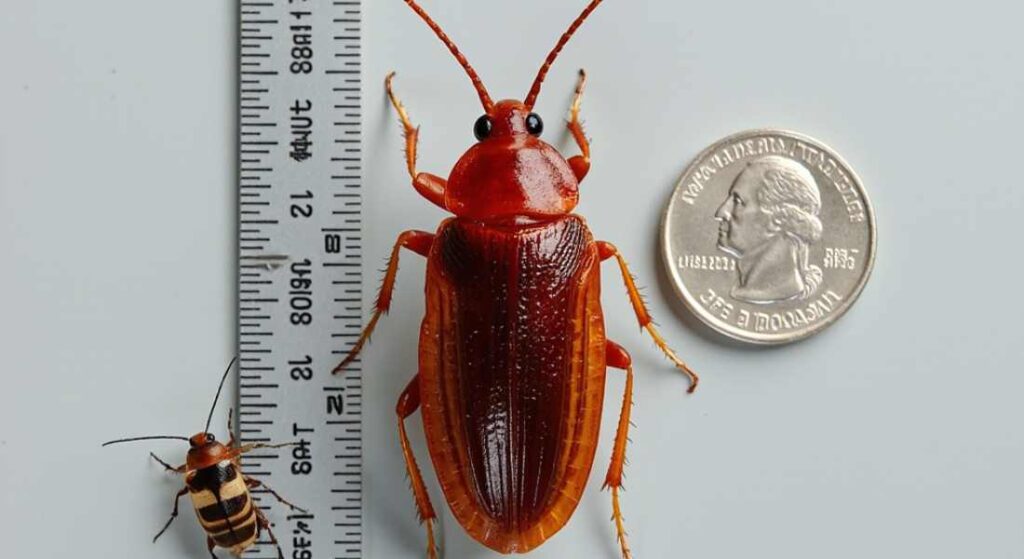
Palmetto bug size is typically between 1.5 to 2 inches in length making them one of the largest cockroach species you’ll encounter in your home. These intimidating insects are substantially bigger than most common household roaches and their sheer dimensions often startle homeowners during unexpected encounters.
Understanding the actual measurements of these pests helps you identify them correctly and take appropriate action. This guide covers everything about their physical characteristics and provides effective solutions to keep your home pest-free.
Understanding What Palmetto Bugs Really Are
What is a palmetto bug exactly? The term “palmetto bug” commonly refers to the American cockroach (Periplaneta americana) though it sometimes describes other large roach species found in warm climates. These insects earned their name from their tendency to hide under palmetto trees and brush in the southeastern United States.
Despite the regional nickname these are simply large cockroaches. They prefer warm and humid environments which explains why they’re so prevalent in states like Florida and other southern regions.
How Big Are Palmetto Bugs Compared to Other Roaches
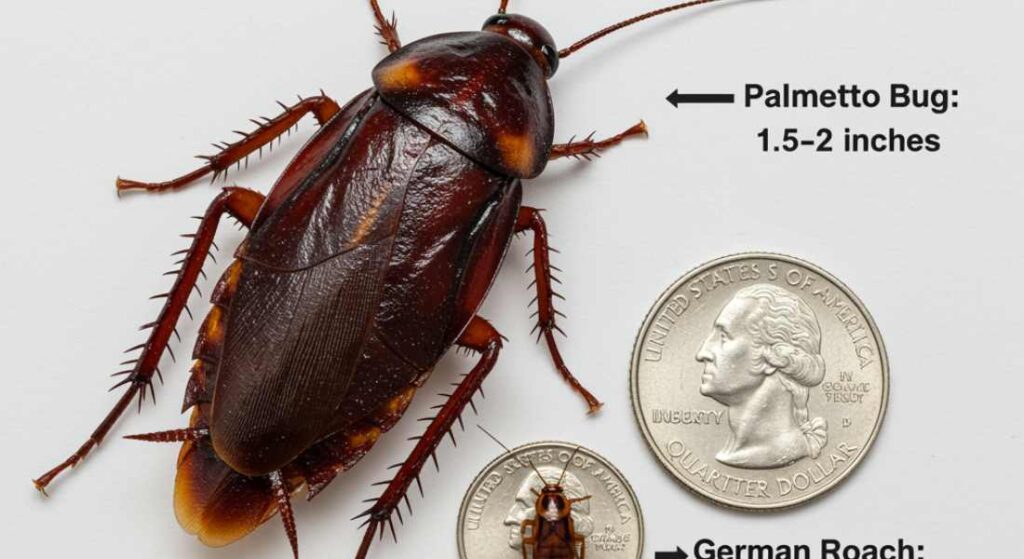
The palmetto bug size comparison reveals just how massive these insects truly are. Adult palmetto bugs measure between 1.5 to 2 inches in body length not including their long antennae. Some specimens can even reach up to 3 inches when you factor in their legs and antennae.
Their reddish-brown coloring and oval-shaped bodies make them easily distinguishable. The palmetto roach size dwarfs most other household roaches creating an unsettling sight when encountered indoors.
Palmetto Bug vs Cockroach Size Differences
When comparing palmetto bug vs cockroach size the differences become immediately apparent. Standard household roaches like German cockroaches measure only 0.5 to 0.6 inches long. This means palmetto bugs are roughly three to four times larger than their smaller cousins.
The palmetto vs german roach size difference is particularly striking. While German roaches can hide in tiny crevices and multiply rapidly palmetto bugs need larger spaces due to their bulk. Understanding these size distinctions helps you identify which pest you’re dealing with and choose the right treatment approach.
Florida Palmetto Bug Size Variations
Florida palmetto bug size tends to be on the larger end of the spectrum due to the state’s ideal climate conditions. The warm and humid weather allows these roaches to thrive and reach their maximum growth potential throughout the year.
Palmetto bugs florida residents encounter often appear larger and more robust than specimens found in cooler climates. The abundant food sources and moisture in Florida create perfect conditions for these insects to flourish.
Physical Characteristics Beyond Size
Beyond palmetto bug size these insects have other distinctive features. They possess a yellowish figure-eight pattern on the back of their heads and their wings extend beyond their body length. Both males and females have fully developed wings.
Their coloring ranges from reddish-brown to dark brown with a glossy appearance. The insects have six spiny legs that allow them to move quickly across various surfaces including walls and ceilings.
Can Palmetto Bugs Fly and How They Move
Can palmetto bugs fly? Yes they absolutely can. Adult palmetto bugs are capable fliers though they don’t fly frequently. Palmetto bugs flying typically occurs when they feel threatened or when temperatures rise significantly during summer months.
Flying palmetto bugs often glide from high places toward the ground rather than sustaining long flights. This ability to fly makes them even more alarming when encountered since they can quickly move from one area to another through the air.
Do palmetto bugs fly toward people? Not intentionally. When a palmetto bug fly toward you it’s usually because they’re disoriented or attracted to light sources near you rather than targeting you specifically.
Palmetto Bug Life Cycle and Lifespan
The palmetto bug life cycle consists of three stages: egg, nymph and adult. Female palmetto bugs produce egg cases called oothecae that contain approximately 15 eggs each. A single female can produce up to 50 egg cases during her lifetime.
Young nymphs hatch from eggs and undergo multiple molts before reaching adulthood. This development process takes about six months to over a year depending on environmental conditions.
How Long Do Palmetto Bugs Live
How long does a palmetto bug live? The lifespan of a palmetto bug averages between one to two years under optimal conditions. Adults can survive for several months even without food though they need water more frequently.
The lifespan of palmetto bug populations in your home depends on available resources. With access to food, water and shelter these pests can establish long-term infestations that span multiple generations.
Why Are There Palmetto Bugs in My House
Why are there palmetto bugs in my house? These insects enter homes searching for three basic needs: food, water and shelter. Your home provides all three in abundance especially during extreme weather conditions outside.
Palmetto bugs in the house become more common during hot summer months or heavy rain periods when outdoor conditions become less favorable. They seek the stable environment your home provides.
How Do Palmetto Bugs Get Into Your House
How do palmetto bugs get in your house? These large insects enter through surprisingly small openings. Common entry points include gaps under doors, cracks in foundations, openings around pipes and utility lines, torn window screens and gaps around air conditioning units.
How do palmetto bugs get into the house at night? They’re nocturnal creatures that become active after dark. They squeeze through openings you might think are too small for insects of their dimensions. Their flexible exoskeletons allow them to compress their bodies considerably.
What Attracts Palmetto Bugs to Your Home
What attracts palmetto bugs to residential properties? These roaches are drawn to moisture-rich environments first and foremost. Leaky pipes, standing water, damp basements and humid bathrooms create ideal conditions.
Food sources also play a major role. What are palmetto bugs attracted to includes crumbs, pet food, garbage, grease and organic matter. They’re not picky eaters and will consume almost any organic material including paper, glue and decaying plant matter.
What attracts palmetto bug populations includes cluttered storage areas, cardboard boxes, stacks of newspapers and undisturbed spaces where they can hide during daylight hours.
Signs of Palmetto Bug Infestation
A palmetto bug infestation shows several telltale signs. Live or dead roaches appearing regularly indicates an established population. Their droppings resemble small black pepper specks or coffee grounds and appear along baseboards and in cabinets.
Egg cases found in dark corners, cabinets or behind appliances signal active breeding. A musty odor becomes noticeable in heavily infested areas. Smear marks along walls and surfaces where roaches travel frequently also indicate their presence.
How to Get Rid of Palmetto Bugs Effectively
How to get rid of palmetto bugs in the house requires a comprehensive approach. Start by eliminating their food and water sources. Store food in sealed containers, fix leaky pipes, wipe down counters nightly and take out garbage regularly.
Seal entry points around your home’s exterior. Apply caulk to cracks and crevices, install door sweeps, repair torn screens and seal gaps around pipes and utilities.
Professional Treatment Methods
Most effective bed bug treatment principles also apply to palmetto bug control though these are different insects. Professional pest control services use targeted insecticides in gel bait form that roaches consume and carry back to their hiding spots.
What chemical kills bed bugs and their eggs differs from roach treatments but professional exterminators have access to commercial-grade products that homeowners cannot purchase. Bed bug treatment cost varies but roach treatments typically cost less since they don’t require the intensive heat treatments bed bugs demand.
Home Remedies and Natural Solutions
Palmetto bugs how to get rid of them naturally involves several proven methods. Diatomaceous earth sprinkled in areas where roaches travel cuts their exoskeletons and causes dehydration. This natural powder poses no threat to humans or pets.
Boric acid works similarly when applied as a fine dust in cracks and crevices. Roaches walk through it and ingest the powder while grooming themselves. This method takes several days but proves highly effective.
Essential oils like peppermint and cedarwood act as natural repellents. Mix these oils with water in a spray bottle and apply to entry points and baseboards. While not as potent as chemical treatments these provide a safer alternative for homes with children and pets.
Quick Action Solutions
What kills bed bugs instantly doesn’t necessarily work on palmetto bugs but some products deliver rapid results. Contact insecticide sprays kill roaches on sight though they don’t prevent future infestations. These work best as part of a comprehensive treatment plan.
Sticky traps placed along walls and in corners catch roaches and help monitor infestation levels. While traps alone won’t eliminate an infestation they provide valuable information about roach activity patterns and population size.
Bed bug treatment at home methods like steam cleaning can also damage palmetto bugs and their eggs. High heat from steam cleaners kills roaches in cracks and crevices where sprays cannot reach effectively.
Preventing Future Palmetto Bug Problems
Prevention proves easier than elimination. Keep your home clean and dry at all times. Address moisture issues immediately and maintain proper ventilation in bathrooms and kitchens.
Store firewood away from your home’s foundation and trim vegetation that touches exterior walls. Remove leaf litter and organic debris from around your property’s perimeter.
Inspect items before bringing them indoors. Palmetto bugs often hitchhike in cardboard boxes, grocery bags and used furniture. A quick inspection prevents unwanted guests from entering your home.
Palmetto Bugs vs Roaches: Understanding the Differences
The palmetto bug vs roach debate often confuses homeowners. Technically all palmetto bugs are roaches but not all roaches are palmetto bugs. The term “palmetto bug” specifically refers to larger roach species while “roach” encompasses over 4,000 species worldwide.
German roaches vs palmetto bugs present the most significant differences. German cockroach vs palmetto bug size alone makes identification simple. German roaches reproduce much faster and prefer indoor environments exclusively while palmetto bugs primarily live outdoors and only enter homes occasionally.
Cockroach vs palmetto bug behavior also differs. Palmetto bugs tend to be solitary wanderers while German roaches live in large colonies. This distinction affects treatment strategies and infestation severity.
FAQs
How big are palmetto bugs compared to regular roaches?
Palmetto bugs measure 1.5 to 2 inches in length making them three to four times larger than common German cockroaches which only grow to about 0.5 inches. Their substantial palmetto bug size makes them one of the largest roach species found in American homes. The dramatic size difference makes identification straightforward even for those unfamiliar with different roach species.
Do all palmetto bugs have the ability to fly?
Yes, adult palmetto bugs possess fully developed wings and can fly though they don’t do so constantly. They typically fly when startled or during particularly hot weather. Flying palmetto bug encounters often happen near outdoor lights at night since they’re attracted to illumination. Their flight appears more like controlled gliding than sustained aerial movement.
What’s the difference between palmetto bugs and German cockroaches?
The german cockroach versus palmetto bug comparison shows major differences. German roaches are much smaller, light tan colored, and reproduce extremely rapidly indoors. Palmetto bugs are larger, reddish-brown, and primarily outdoor insects. German roaches create severe infestations quickly while palmetto bugs usually appear individually or in small numbers.
How long can palmetto bugs survive in your home?
The lifespan of a palmetto bug ranges from one to two years under favorable conditions. They can survive several months without food but require water more frequently. With access to moisture, food and hiding spots, palmetto bug size and population can increase significantly as multiple generations establish themselves in your home.
Can I use bed bug treatments on palmetto bugs?
Bed bug treatment ointment and bed bug treatment for humans won’t work on palmetto bugs since these products target different pests. However, some bed bug treatment methods like heat treatment and certain insecticides prove effective against roaches too. The bed bug treatment cost typically exceeds roach treatment expenses since bed bugs require more intensive elimination methods.
What home remedies work best against palmetto bugs?
Among 15 home remedies for bed bugs several also work for roaches. Diatomaceous earth, boric acid, essential oil sprays and thorough cleaning eliminate palmetto bugs naturally. These methods take longer than professional treatments but provide safer alternatives. Combining multiple approaches yields better results than relying on a single method.
Why do palmetto bugs suddenly appear in clean homes?
Even immaculate homes attract palmetto bugs during extreme weather. Heavy rain, floods or drought drive these insects indoors seeking shelter and moisture. Small entry points you haven’t noticed allow access. Their presence doesn’t necessarily indicate poor housekeeping but rather environmental factors pushing them inside.
Are palmetto bug bites dangerous to humans?
Palmetto bugs rarely bite humans and when they do the bites cause only minor irritation. Unlike bed bugs they don’t feed on blood. The real health concern comes from bacteria and allergens they carry on their bodies. Their droppings and shed skins trigger asthma and allergic reactions in sensitive individuals.
Conclusion
Understanding palmetto bug size helps you identify these large roaches quickly and take appropriate action. These insects measure 1.5 to 2 inches long, can fly when necessary and live up to two years when conditions favor them. They enter homes through small openings while searching for food, water and shelter.
Effective elimination requires sealing entry points, removing attractants and using targeted treatments. Whether you choose professional services or natural home remedies consistency proves essential for long-term success. With proper prevention measures you can keep these oversized pests out of your living space permanently.
Remember that seeing an occasional palmetto bug doesn’t mean you have a severe infestation. These are primarily outdoor insects that wander indoors accidentally. Quick action and preventive maintenance ensure they don’t become permanent residents in your home.