

Introduction
Little red bug encounters in your home or garden can leave you wondering what these tiny creatures are and whether they pose any danger. These small red insects come in many varieties, each with different behaviors and potential impacts on your living space.
From harmless plant feeders to biting pests, identifying which type of small red insect you’re dealing with is crucial for proper treatment. This comprehensive guide will help you recognize common types, understand their behavior and learn effective methods to manage or eliminate them from your property.
Common Types of Little Red Bugs
Several species of small red insects commonly appear in and around homes. Understanding the differences helps you respond appropriately to each type.
The most frequently encountered varieties include clover mites, chiggers, red spider mites, boxelder bugs and various beetle species. Each has distinct characteristics, habitats and behaviors that set them apart.
Proper identification is your first step toward effective management. Some are completely harmless, while others require immediate attention to prevent bites or infestations.
Clover Mites: The Tiny Red Bugs in House
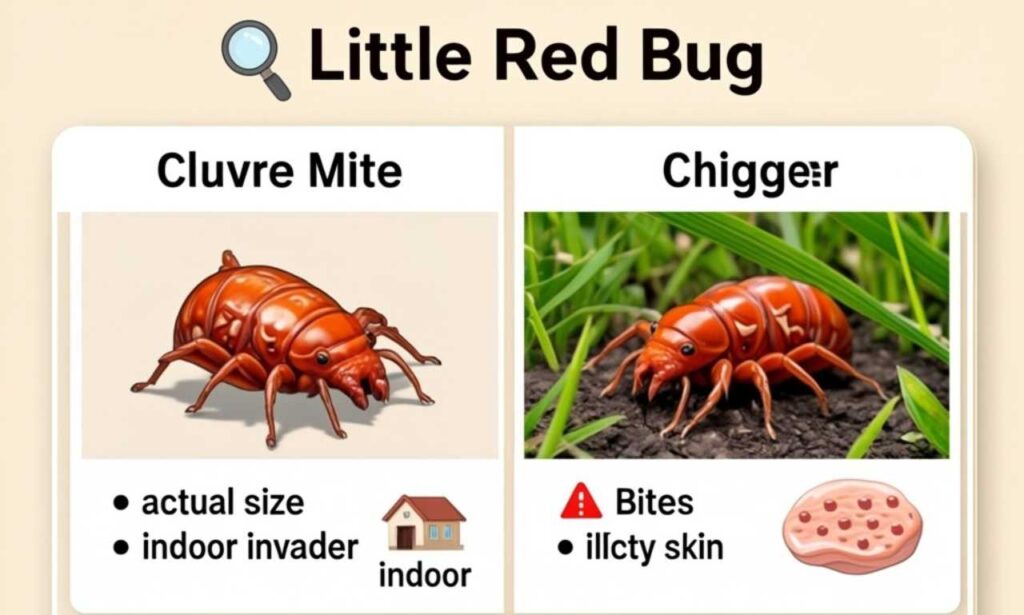
Clover mites are among the most common tiny red bugs in house settings. These extremely small arachnids measure less than 1/30th of an inch and appear as moving red or reddish-brown specks.
They typically invade homes in large numbers during spring and fall when outdoor temperatures become unfavorable. You’ll often spot them on windowsills, walls and other sunny surfaces inside your home.
These mites leave a red stain when crushed, which is one of their most recognizable features. They feed exclusively on plant matter and grass, making them harmless to humans and pets.
Are Clover Mites Harmful to Humans?
These creatures pose no threat to people or animals. They don’t bite, sting or carry diseases. Their only real nuisance is their tendency to invade homes in massive numbers and the red stains they create when accidentally crushed.
The biggest concern with clover mites is the cosmetic damage from staining on walls, curtains and furniture. Otherwise, they’re completely harmless household invaders that are more annoying than dangerous.
Identifying Tiny Red Bugs Not Clover Mites
If you’ve confirmed your little red bug isn’t a clover mite, several other possibilities exist. Chiggers are slightly larger and typically found outdoors in vegetation rather than crawling on indoor surfaces.
Red spider mites appear in gardens and on houseplants, creating fine webbing. Concrete tiny red bugs might be concrete mites or small beetles that gather on pavement and building foundations.
Brownish red tiny red bugs could be young boxelder bugs or certain beetle larvae. Each requires different identification methods and control strategies.
Chiggers: The Little Red Bug That Bites
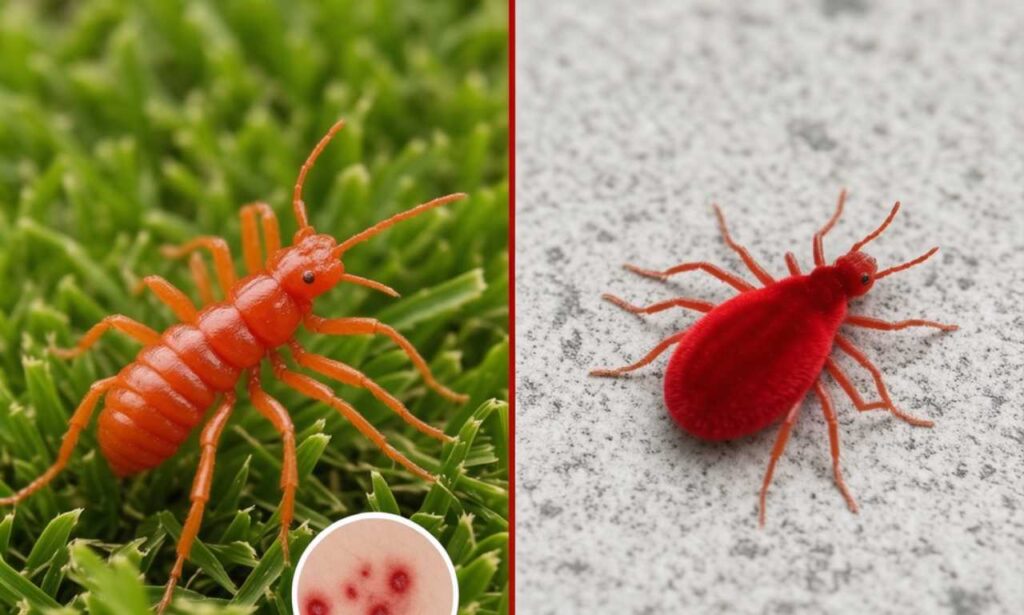
Chiggers represent one of the few small red insects that actually bite humans. These microscopic larvae of harvest mites attach to skin and cause intense itching.
Unlike clover mites that invade homes, chiggers live in outdoor vegetation. You encounter them in tall grass, wooded areas and overgrown gardens during warm months.
Their bites create red, intensely itchy welts that can last for weeks. They’re most active during spring through fall in humid environments.
Are Chiggers Harmful to Humans?
These pests cause significant discomfort through their bites but don’t transmit diseases in North America. The main harm comes from intense itching that can last one to two weeks after exposure.
Scratching bites can lead to secondary bacterial infections, which is the most common complication. Otherwise, they’re primarily a nuisance rather than a serious health threat.
How Do You Tell If You Have Chiggers?
Look for intensely itchy red bumps appearing several hours after outdoor activity. The bites typically cluster where clothing was tight against skin, such as around ankles, waistbands or underarms.
Unlike other tiny red bugs in bed or on furniture, chigger encounters always follow outdoor exposure to vegetation. They don’t infest homes or reproduce indoors.
What Kills Chiggers Immediately?
Hot soapy water eliminates them on contact. Taking a shower immediately after outdoor exposure removes larvae before they attach and begin feeding.
For outdoor areas, sulfur-based treatments effectively reduce populations. On skin, thorough washing with soap remains the most immediate and effective elimination method.
How Long Do Chiggers Stay in You?
The larvae feed for approximately three to four days before dropping off naturally. However, itching and visible bumps persist for one to two weeks after they detach.
The continued symptoms result from your body’s reaction to their saliva, not ongoing feeding. Once you’ve showered and washed clothing, you’ve likely removed all remaining larvae.
Red Spider Mites
Red spider mites are tiny arachnids that primarily affect plants rather than invading living spaces. They’re common garden and houseplant pests that create fine webbing on leaves.
These mites are barely visible to the naked eye but their damage to plants is obvious. Infested plants show yellow or brown spots, wilting and overall decline in health.
They thrive in hot, dry conditions and reproduce rapidly. A single female can lay hundreds of eggs, leading to quick infestations.
Are Red Spider Mites Harmful to Humans?
These mites pose no direct threat to people. They don’t bite humans and focus exclusively on feeding from plant cells.
The only human concern is the damage they cause to valuable plants and crops. They can destroy entire gardens or houseplant collections if left unchecked.
Boxelder Bugs and Red Beetles
Boxelder bugs are black insects with distinctive red markings that often appear as little red bugs in house that fly. They congregate in large numbers on sunny sides of buildings during fall.
These insects seek shelter indoors as temperatures drop. While they don’t bite or cause structural damage, their numbers can be overwhelming when they invade homes.
Several red beetle species also commonly enter homes. Most are harmless scavengers or accidental invaders rather than destructive pests.
Are Red Beetles Harmful?
Most red beetles found in homes pose no threat to people or property. They don’t bite, sting or damage structures.
Some species may feed on stored products or fabrics, but these cases are relatively rare. The majority are simply seeking shelter or accidentally wandered inside.
Identifying Little Red Bugs in Bed
Finding tiny red bugs in bed naturally causes concern. The first step is determining whether you’re dealing with bed bugs, clover mites or something else entirely.
Bed bugs themselves are brown, not red. However, they appear reddish after feeding on blood. They’re about the size of an apple seed and leave dark fecal spots on bedding.
Clover mites in bedrooms are usually accidental invaders that crawled in from nearby windows or walls. They don’t bite and can’t survive long without access to vegetation.
If you see a little red bug in your sleeping area, examine it closely. Bed bugs have distinct oval bodies and six legs, while clover mites are extremely tiny with eight legs.
Little Red Bugs That Fly
Several flying insects appear red and commonly enter homes. Little red bugs in house that fly typically include boxelder bugs during fall migrations.
Some small red beetles also have wings and may fly into homes attracted by lights. Most are harmless and simply seeking shelter or warmth.
Winged insects are generally easier to exclude than crawling mites. Proper window screens and door sweeps prevent most flying invaders from entering your living space.
How Do I Get Rid of Red Mites?
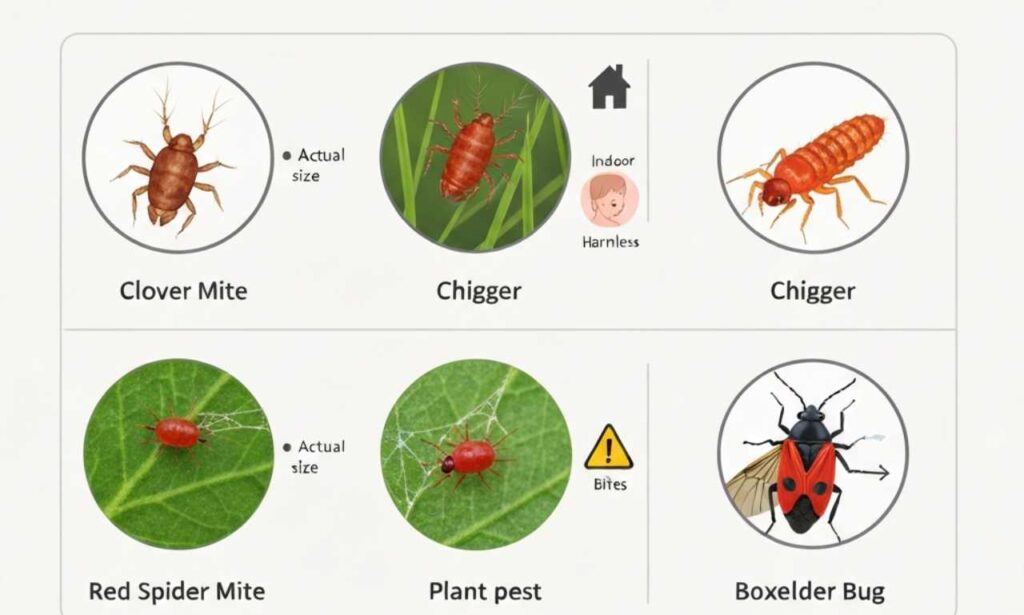
Managing these pests depends on accurate identification and understanding their habits. Different species require different approaches for effective control.
For clover mites, prevention focuses on creating barriers around your home’s foundation. Remove vegetation within 18 inches of exterior walls and seal cracks where they might enter.
Indoor clover mites can be vacuumed up and the area wiped with a damp cloth. Avoid crushing them directly on surfaces to prevent staining.
Chemical Control Methods
Pesticide applications around building foundations create barriers that prevent entry. Products containing pyrethroids are effective when applied according to label directions.
Indoor pesticide use is rarely necessary for clover mites since they don’t reproduce inside. Physical removal and exclusion methods work better and avoid chemical exposure.
For outdoor mites affecting plants, horticultural oils and insecticidal soaps provide effective control. These treatments work on contact and have minimal environmental impact.
Natural and Preventive Solutions
Diatomaceous earth creates a natural barrier that dehydrates mites attempting to cross it. Apply around foundation perimeters and entry points for ongoing protection.
Maintain a vegetation-free zone around your home’s foundation. This dry barrier discourages mites from approaching exterior walls.
Regular cleaning and vacuuming remove accidental invaders before they become noticeable problems. Pay special attention to windowsills and sunny areas where mites congregate.
Prevention Strategies for Your Home
Keeping these tiny insects out is easier than eliminating established populations. Simple maintenance and exclusion methods provide long-term protection.
Seal cracks and gaps around windows, doors and foundation. Even tiny openings allow mites and other small insects to enter by the hundreds.
Remove dense vegetation from around your home’s perimeter. Grass, mulch and plants touching exterior walls create highways for pests to access entry points.
Install or repair window screens to prevent flying varieties from entering. Make sure screens fit tightly and have no tears or gaps.
When to Call Professional Help
Most encounters with a little red bug can be managed with DIY methods. However, some situations warrant professional pest control services.
If you experience recurring infestations despite your prevention efforts, professionals can identify underlying issues and apply more comprehensive treatments.
Large-scale outdoor infestations affecting your entire property may require commercial-grade applications for effective control. Professionals have access to products and equipment not available to homeowners.
When you’re unsure about identification and concerned about biting species, pest control experts can accurately determine what you’re dealing with and recommend appropriate solutions.
Health and Safety Considerations
While most small red insects are harmless, taking basic precautions protects your health and comfort. Avoid crushing mites on surfaces to prevent staining.
Wash hands after handling infested items or cleaning affected areas. This simple habit prevents accidental transfer to your face or food preparation surfaces.
If you experience bites or skin reactions, clean the affected area with soap and water. Apply anti-itch creams as needed and monitor for signs of infection.
Store pesticides safely away from children and pets. Always follow product label instructions exactly to ensure safe and effective use.
FAQs
What is the little red bug I keep seeing in my house?
The most common little red bug found indoors is likely a clover mite. These extremely tiny arachnids invade homes in large numbers during spring and fall. They’re harmless to humans and don’t bite, but they can leave red stains when crushed. Other possibilities include young boxelder bugs or accidentally wandered beetles.
Are clover mites harmful to humans?
No, clover mites pose no threat to people or pets. They don’t bite, sting or transmit diseases. They feed exclusively on plant matter and cannot survive indoors for extended periods. Their only nuisance is invading in large numbers and creating red stains when crushed on surfaces.
Are red spider mites harmful to humans?
Red spider mites are not harmful to people. They’re plant pests that feed exclusively on vegetation and don’t bite humans. The only concern they present is the damage they cause to garden plants and houseplants. They pose no direct health risks to household members.
Are red beetles harmful?
Most red beetles found in homes are harmless to humans. They don’t typically bite or sting and cause minimal property damage. Some species may occasionally feed on stored products, but this is uncommon. The majority are simply accidental invaders seeking shelter.
How do I get rid of red mites in my home?
For clover mites, vacuum them up and wipe surfaces with damp cloths to avoid staining. Seal entry points around windows and doors to prevent future invasions. Remove vegetation from around your foundation and apply barrier treatments if needed. Indoor pesticides are rarely necessary since these mites don’t reproduce inside.
Can the little red bug that bites cause serious health problems?
Chiggers, the primary biting species among small red insects, cause intense itching but rarely lead to serious health issues. In North America, they don’t transmit diseases. The main risk is secondary infection from scratching. Most bites heal completely within two weeks with basic home care.
How can I tell if I have tiny red bugs in bed or bed bugs?
Examine the insects closely. Bed bugs are brown and apple seed-sized with oval bodies and six legs. Clover mites are much smaller, reddish and have eight legs. Bed bugs leave dark fecal spots and shed skins, while clover mites leave red smears when crushed. Bed bug bites appear on exposed skin, whereas clover mites don’t bite at all.
Conclusion
Encountering a little red bug in your home doesn’t automatically mean you have a serious pest problem. Most species are harmless nuisances that can be managed with simple prevention and removal techniques.
Accurate identification guides your response and prevents unnecessary worry or expensive treatments. Understanding whether you’re dealing with harmless clover mites, plant-feeding spider mites or biting chiggers helps you take appropriate action.
Focus on prevention through proper home maintenance, vegetation management and sealing entry points. These strategies protect against most invasions while avoiding chemical treatments. When problems persist or you’re unsure about identification, don’t hesitate to consult pest control professionals for expert guidance and peace of mind.