

Introduction
Lice or fleas are two of the most common parasites that can affect humans and pets. While both are tiny insects that feed on blood and cause intense itching, they are entirely different species with distinct behaviors and habitats.
Understanding whether you’re dealing with lice or fleas is crucial for effective treatment and prevention.
Many people confuse these parasites because they share similar symptoms like itching and irritation.
However, knowing the key differences can help you take the right action quickly. This comprehensive guide will help you identify which parasite you’re dealing with and provide practical solutions for treatment and prevention.
Understanding Lice and Fleas
What Are Lice?
Lice are wingless parasites that live exclusively on their human or animal hosts. These tiny insects cannot jump or fly and spread through direct contact.
Head lice specifically infest human scalp hair while body lice live in clothing. Pet lice are species-specific and rarely transfer to humans.
The life cycle of lice includes three stages: eggs (nits), nymphs, and adults. Female lice attach their eggs to hair shafts close to the scalp where warmth helps them develop. Without a host, lice cannot survive more than 24 to 48 hours.
What Are Fleas?
Fleas are jumping parasites that can leap up to 150 times their body length. Unlike lice, fleas don’t live permanently on their hosts but jump on for blood meals. They prefer animals like dogs and cats but will bite humans when pet hosts are unavailable.
Fleas reproduce rapidly in carpets, bedding, and furniture. A single female flea can lay up to 50 eggs per day. This makes flea infestations particularly challenging as you must treat both the host and the environment.
Key Differences Between Lice and Fleas
Physical Appearance
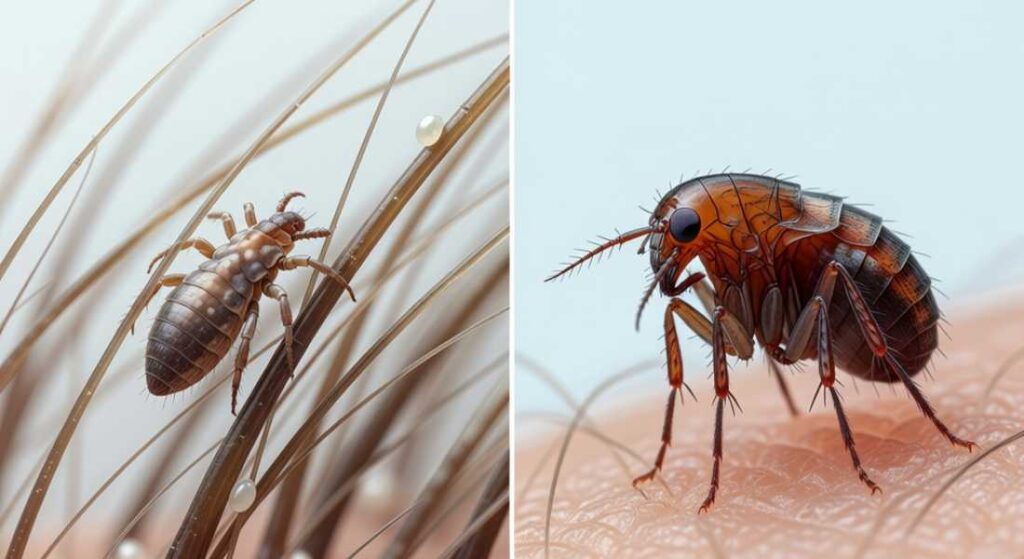
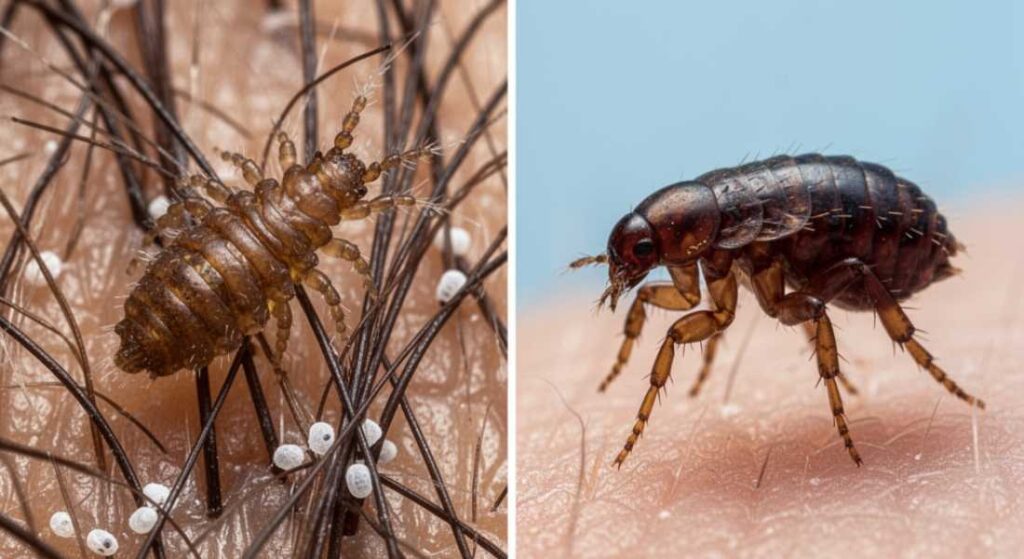
When comparing lice vs fleas, size and color are notable differences. Adult head lice measure about 2 to 3 millimeters and appear tan to grayish-white. They have six legs with claws designed for gripping hair shafts tightly.
Fleas are slightly smaller at 1 to 3 millimeters and have a dark reddish-brown color. Their bodies are flat and hardened, making them difficult to crush.
When examining flea vs lice size, fleas have powerful hind legs built for jumping while lice have crawling legs only.
Habitat and Behavior
The difference between lice and fleas becomes clear when observing where they live. Lice remain on the host constantly, crawling through hair or along skin. They cannot survive away from body heat and blood supply for extended periods.
Fleas versus lice show contrasting habits as fleas spend most of their time in the environment. They hide in carpets, pet bedding, and cracks in floors, jumping onto hosts only to feed. This makes environmental treatment essential for flea control but not for lice.
Transmission Methods
Understanding how these parasites spread helps prevent reinfestation. Head lice spread through direct head-to-head contact, sharing combs, brushes, hats, or headphones. Schools and daycare centers are common transmission sites.
Fleas infest homes when pets bring them inside or when people visit flea-infested areas. Wild animals like raccoons or stray cats near your property can introduce fleas to your yard.
Unlike the question “are lice and fleas the same,” their transmission methods are completely different.
How to Identify Lice Infestations
Recognizing Lice Symptoms
The primary symptom of head lice is intense itching on the scalp, particularly behind the ears and at the nape of the neck. This itching results from an allergic reaction to lice saliva when they feed.
You may notice small red bumps or sores on the scalp from scratching. Some people develop a tickling sensation of something moving in their hair. In severe cases, lymph nodes in the neck may become swollen.
Spotting Lice and Nits
To check for lice, part the hair in small sections under bright light. Adult lice move quickly and may be difficult to spot.
Look for nits (eggs) attached firmly to hair strands close to the scalp. Nits appear as tiny oval dots that are yellow, tan, or brown before hatching and white after hatching.
Pictures of dog lice show similar attachment patterns on pet hair. While dog lice vs fleas pictures reveal that dog lice cannot infest humans, recognizing them helps protect your pets.
Common Misconceptions
Many people wonder “can fleas turn into lice” or ask “are fleas and lice the same.” The answer is no.
These are entirely separate species that cannot transform into each other. The question “are lice and fleas related” has a biological answer: while both are insects, they belong to different orders.
Another myth is that fleas on humans hair or human fleas in hair are common. While fleas may bite the scalp, they don’t establish hair infestations like lice do. True fleas in hair situations are rare and temporary.
How to Identify Flea Infestations
Recognizing Flea Symptoms
Flea bites typically appear as small red dots surrounded by a red halo, often in clusters or lines. When comparing flea vs bed bug bites, flea bites concentrate on ankles, feet, and lower legs where fleas can easily reach from the floor.
The pattern of bed bug vs flea bites differs as bed bugs often bite exposed skin during sleep while fleas bite primarily lower extremities. Understanding flea bites vs bed bug bites helps determine which pest you’re dealing with.
Finding Fleas in Your Home
Look for tiny dark specks on pet bedding, carpets, and furniture. These are flea droppings that turn reddish-brown when moistened with water. Run a flea comb through your pet’s fur, especially around the neck, tail base, and belly.
Check your pet’s skin for actual fleas or flea dirt. White pets make spotting fleas easier due to color contrast. In severe infestations, you might see fleas jumping on floors or furniture.
Understanding Flea vs Bed Bug Confusion
People often confuse bed bugs vs fleas bites because both cause itchy red bumps. However, bed bugs vs fleas have different hiding spots. Bed bugs hide in mattress seams, headboards, and furniture cracks near sleeping areas.
When examining flea tick vs bed bug differences, remember that fleas jump while bed bugs crawl slowly. Ticks attach and remain embedded in skin for days, unlike fleas that bite and jump away.
Treatment Options for Lice
Over-the-Counter Treatments
Permethrin-based shampoos are widely available and effective against head lice. Apply the product to dry hair, wait the recommended time, then rinse thoroughly. These treatments kill live lice but may not eliminate all nits.
Pyrethrin products offer another option for killing lice. Follow package instructions carefully and repeat treatment after 7 to 10 days to kill newly hatched lice from surviving nits.
Prescription Treatments
When over-the-counter products fail, doctors can prescribe stronger medications. Malathion lotion is highly effective but requires careful application due to its flammability. Ivermectin lotion kills lice without requiring nit combing.
Spinosad suspension treats lice and their eggs in a single application for many people. Prescription treatments work faster than home remedies but cost more.
Manual Removal Methods
Wet combing with a fine-toothed nit comb removes lice and nits mechanically. Apply conditioner to damp hair to immobilize lice and make combing easier. This method requires patience and thoroughness but works when done correctly.
Comb small sections of hair from root to tip, wiping the comb on a white paper towel between strokes. Repeat daily for two weeks to catch all newly hatched lice before they mature.
Treatment Options for Fleas
Treating Your Pets
Veterinary flea treatments include topical medications applied monthly between shoulder blades. These products kill adult fleas and prevent eggs from developing. Oral flea medications work systemically and start killing fleas within hours.
Flea collars provide continuous protection for several months. Choose products containing ingredients proven effective against fleas. Always consult your veterinarian before using multiple flea products simultaneously.
Environmental Treatment
Vacuum thoroughly and frequently, focusing on areas where pets rest. Empty vacuum bags immediately into sealed trash bags outside your home. Wash all pet bedding, blankets, and removable furniture covers in hot water.
Use premise sprays containing insect growth regulators that prevent flea eggs and larvae from maturing. Treat carpets, furniture, baseboards, and under furniture where fleas hide. Repeat treatments according to product instructions to break the flea life cycle.
Professional Pest Control
Severe flea infestations may require professional exterminators who use stronger products and specialized equipment. They treat both indoor and outdoor areas where fleas breed. Professional services often include follow-up visits to ensure complete elimination.
Professionals can identify other factors contributing to infestations like wild animal nests near your home. They provide guidance on preventing future infestations through environmental management.
Home Remedies and Natural Solutions
Natural Lice Treatments
Applying thick oils like olive oil or coconut oil to hair may suffocate lice when left overnight under a shower cap. While less effective than medical treatments, some people prefer natural approaches. Essential oils like tea tree oil show limited effectiveness in studies.
The most reliable home approach combines thorough combing with washing all potentially contaminated items. Bag items that cannot be washed for two weeks to ensure any lice die from starvation.
Natural Flea Solutions
Diatomaceous earth (food-grade) sprinkled on carpets dehydrates fleas and their larvae. Leave it for several days before vacuuming thoroughly. This natural powder is safe for pets and humans when used correctly.
Washing pets with dish soap kills fleas on contact by breaking down their waxy coating. While this provides temporary relief, it doesn’t prevent reinfestation. Combining multiple approaches works best for natural flea control.
Prevention Strategies
Regular inspection of children’s heads helps catch lice early before they spread. Teach children not to share personal items like hats, hair accessories, or headphones. These simple habits significantly reduce lice transmission risk.
For flea prevention, maintain year-round flea control on all pets even during winter. Vacuum regularly and wash pet bedding weekly. Keep grass trimmed short and discourage wild animals from your yard where fleas might originate.
Understanding Bed Bug vs Flea vs Lice Differences
Comparing All Three Parasites
When examining lice vs fleas vs bed bugs, each parasite has unique characteristics. Lice live exclusively on hosts and spread through direct contact.
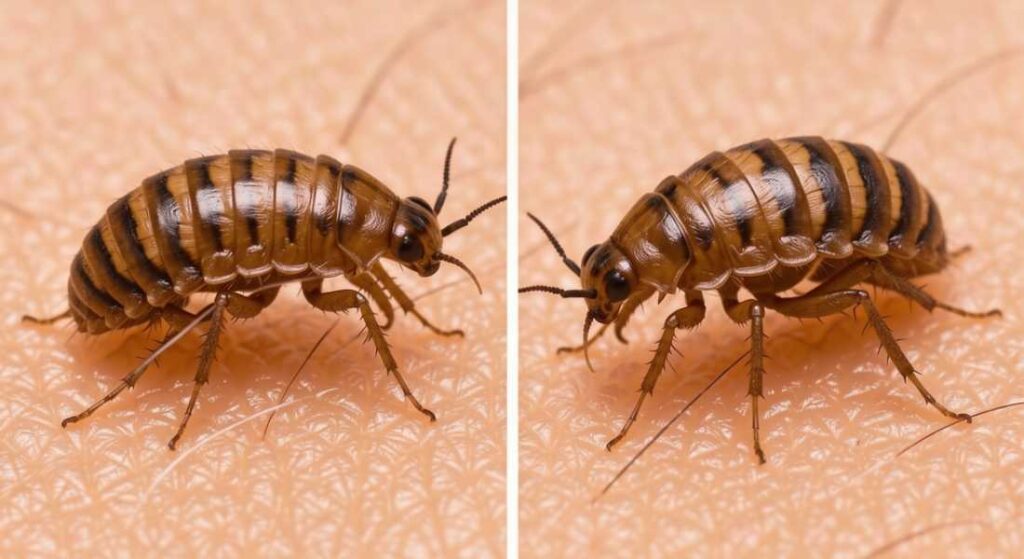
Fleas jump between environment and host, preferring animals. Bed bugs hide in furniture and feed primarily at night on sleeping humans.
The comparison of lice vs bed bugs vs fleas reveals different treatment approaches. Lice require treating the person, fleas need treating both pets and environment, while bed bugs demand extensive home treatment often requiring professional help.
Bite Pattern Differences
Examining bites helps identify the culprit. Lice bites cluster on the scalp, neck, and shoulders with eggs visible on hair shafts. Fleas vs bed bugs bites differ in location: flea bites concentrate on lower body while bed bug bites appear on exposed skin anywhere.
Understanding bed bugs ticks and fleas together helps eliminate confusion. Each pest requires specific treatment methods. Misidentifying the parasite leads to ineffective treatment and continued infestation.
Why Accurate Identification Matters
Knowing whether you have lice vs fleas on dogs prevents wasting time and money on wrong treatments. Dog lice need different products than fleas and cannot infest humans. Many ask “can fleas give you lice” but this is impossible as they are different species requiring different treatments.
Questions like “do fleas turn into lice” or “can fleas cause lice” stem from confusion about these parasites. The lice and fleas difference is biological and fundamental. Proper identification ensures you choose effective treatments from the start.
Effective Treatments for Related Pest Problems
Bed Bug Treatment at Home
When dealing with bed bugs alongside other parasites, start by thoroughly inspecting your bedroom. Look in mattress seams, bed frames, and nearby furniture. Encase mattresses and box springs in sealed covers designed for bed bugs.
Heat treatment kills bed bugs at all life stages. Wash bedding and clothing in hot water and dry on high heat for 30 minutes. Steam clean furniture, baseboards, and carpet edges where bed bugs hide.
What Kills Bed Bugs Instantly
Rubbing alcohol sprayed directly on bed bugs kills them on contact but evaporates quickly without residual effect. Diatomaceous earth kills bed bugs that crawl through it but works slowly over several days. For immediate results, professional heat treatments raise room temperature to levels that kill bed bugs instantly.
Most effective bed bug treatment combines multiple methods. Use interceptor traps under bed legs to catch bed bugs attempting to reach you. Apply bed bug treatment ointment to bites for relief while addressing the infestation.
Comprehensive Treatment Approaches
Bed bug treatment for humans includes relieving bite symptoms with antihistamines and topical creams. Some bites become infected from scratching, requiring antibiotic ointment. Severe reactions may need medical attention.
Understanding what chemical kills bed bugs and their eggs helps choose professional services. Pyrethroids, desiccants, and neonicotinoids are common active ingredients. However, bed bug treatment cost varies widely depending on infestation severity and home size.
The 15 home remedies for bed bugs include vacuuming, steaming, washing fabrics, using essential oils, applying diatomaceous earth, sealing cracks, removing clutter, freezing items, using mattress covers, applying silica gel, tea tree oil spray, lavender sachets, double-sided tape barriers, alcohol spray, and maintaining cleanliness. While helpful, severe infestations typically require professional intervention.
When to Seek Professional Help
Signs You Need Expert Assistance
Persistent infestations after multiple treatment attempts indicate the need for professional help. If lice return repeatedly despite thorough treatment and environmental cleaning, resistant strains may be present requiring prescription medications.
For flea problems, if your pets remain infested after veterinary treatments and home cleaning, professionals can identify hidden infestation sources. They access stronger products and have experience with difficult cases.
Choosing Pest Control Services
Research local pest control companies with specific experience treating your problem. Read reviews and verify licensing and insurance. Request detailed treatment plans explaining products used and expected timeframes.
Ask about guarantees and follow-up services. Reputable companies stand behind their work and return if problems persist. Compare quotes from multiple providers but consider experience and methods alongside price.
Medical Consultation Importance
Severe allergic reactions to bites require medical attention. Signs include difficulty breathing, dizziness, or swelling beyond the bite area. Infected bites with increasing redness, warmth, or pus need antibiotic treatment.
Consult doctors before using multiple treatments simultaneously, especially on children or pregnant women. Medical professionals can prescribe stronger medications when over-the-counter products fail.
Preventing Future Infestations
Household Prevention Strategies
Regular cleaning reduces pest populations before they become infestations. Vacuum frequently, focusing on areas where pets sleep and where people sit. Wash bedding and pet items weekly in hot water.
Inspect secondhand furniture carefully before bringing it home. Check hotel rooms for bed bugs when traveling. These simple habits prevent introducing pests to your clean home.
Personal Hygiene Practices
While lice don’t reflect poor hygiene, regular hair checks help catch infestations early. Teach children about not sharing personal items that touch hair. These practices reduce lice transmission in schools and group settings.
For fleas, maintain consistent pet grooming and flea prevention year-round. Check pets regularly for signs of fleas, especially after outdoor activities. Early detection makes treatment easier and less expensive.
Long-Term Monitoring
After successful treatment, continue monitoring for several weeks. For lice, check weekly for three weeks to catch any missed nits that hatch. For fleas, continue vacuuming and washing pet areas to catch any remaining eggs that develop.
Keep treatment supplies on hand for quick action if problems recur. Early intervention prevents small problems from becoming major infestations requiring extensive treatment.
Frequently Asked Questions
How do I know if it’s lice or fleas?
Check where the itching occurs and examine closely. Lice cause scalp itching with visible nits attached to hair shafts near the scalp. Lice remain on the body constantly and move slowly by crawling. Fleas cause bites primarily on ankles and lower legs with no eggs in hair. Fleas jump away quickly when disturbed and live in the environment rather than on people.
How can I tell if I have fleas in my hair?
True hair fleas in humans are extremely rare. If you feel crawling or itching on your scalp, you likely have lice rather than fleas. Fleas may briefly land on hair but don’t establish infestations there. Check for nits cemented to hair strands which indicate lice. Fleas prefer feeding on lower body areas and jump off after feeding rather than staying in hair.
Is flea the same as lice?
No, a flea vs louse comparison shows they are completely different insects. Lice are crawling parasites that live permanently on hosts and cannot jump. Fleas are jumping parasites that live in the environment and hop onto hosts for meals. The question “flea or lice” requires different answers for treatment as these parasites need separate control methods.
What kills fleas and lice?
Different products target each parasite effectively. For lice, use permethrin or pyrethrin-based shampoos applied directly to hair and scalp. For fleas on pets, use veterinary-approved topical or oral medications. Environmental flea control requires premise sprays with insect growth regulators. Never use pet flea products on humans for lice treatment as ingredients differ in concentration and safety. Understanding the chewing lice vs fleas distinction helps choose appropriate treatments.
Can I have both lice and fleas at the same time?
While uncommon, having lice and fleas simultaneously is possible, especially in households with both children and pets. Each requires separate treatment approaches. Treat lice with appropriate head lice products while addressing flea infestations through pet treatments and environmental control. The lice and fleas difference means you cannot use the same products for both parasites.
How long does it take to get rid of these parasites?
Lice treatment typically takes two to three weeks with proper medication and nit removal. You must eliminate all eggs to prevent reinfestation. Flea elimination takes longer, usually four to six weeks, because you must break the entire life cycle. Flea eggs and larvae in your environment continue developing even after treating pets. Consistency with both pet and environmental treatment ensures success.
Conclusion
Identifying whether you’re dealing with lice or fleas is the critical first step toward effective treatment. While both parasites cause itching and discomfort, they require completely different approaches for elimination. Lice infestations demand treating affected individuals and their personal items while flea problems require comprehensive treatment of both pets and the entire home environment.
Remember that accurate identification leads to faster resolution and less frustration. Don’t waste time and money on treatments designed for the wrong parasite. When home treatments don’t work after consistent effort, professional help ensures complete elimination and prevents ongoing problems.
Stay vigilant with prevention strategies even after successful treatment. Regular monitoring catches new infestations early when they’re easiest to control. With proper knowledge and prompt action, you can keep your family and home free from these troublesome parasites.