

Introduction
How do cluster flies get in the house is a common question homeowners ask when they suddenly notice large numbers of sluggish flies appearing indoors during fall and winter.
These pests enter homes through surprisingly small openings while searching for warm places to overwinter. Unlike common houseflies that breed indoors, cluster flies invade from outside and can return year after year if entry points remain unsealed.
Understanding their entry methods helps you protect your home from these unwelcome visitors. This guide explains exactly how these flies infiltrate buildings, where they hide, and what you can do to stop them from getting inside in the first place.
Understanding Cluster Flies and Their Behavior
Cluster flies are parasitic insects that differ significantly from regular houseflies. They spend their larval stage inside earthworms before emerging as adults. These large black flies are slightly bigger than typical houseflies and move more slowly, especially in cooler temperatures.
What makes them particularly troublesome is their instinct to seek shelter indoors as temperatures drop. They don’t reproduce inside homes or lay eggs indoors. Instead, they simply use your house as a hibernation spot during cold months.
What Do Cluster Flies Look Like
These insects measure about 8-10mm in length with a dark gray to black appearance. Golden hairs cover their thorax, giving them a distinctive golden sheen in sunlight.
Their wings overlap when at rest, and they fly in a characteristic sluggish, lazy manner that makes them easy to identify.
The Cluster Fly Life Cycle Explained
Adult females lay eggs in soil during spring and summer. The eggs hatch within days, and larvae seek out earthworms to parasitize. After developing inside the worm, they pupate in soil and emerge as adults. This complete life cycle takes approximately four weeks during warm weather. Adults then live for several months, seeking overwintering sites as fall approaches.
Primary Entry Points: How Cluster Flies Access Your Home
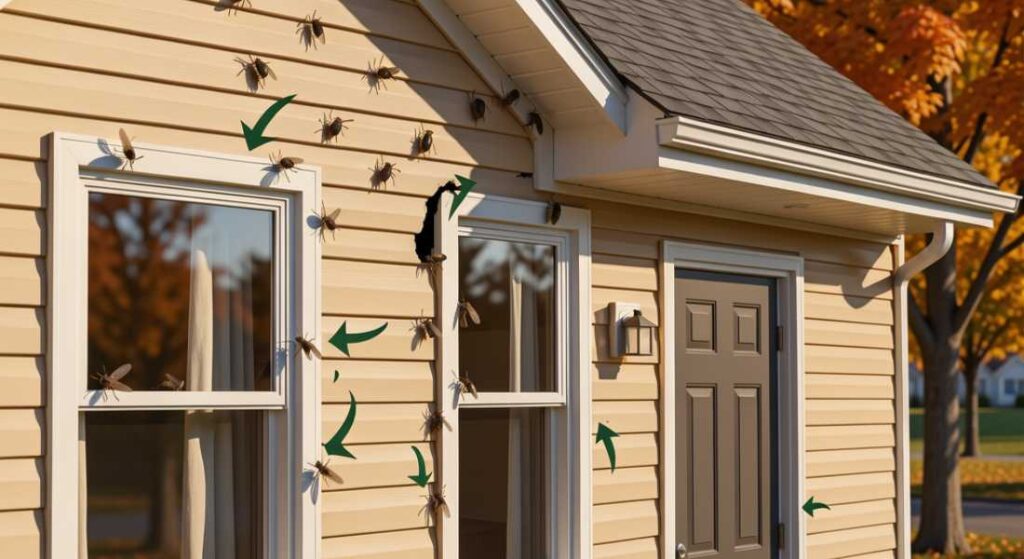
These persistent insects exploit even the tiniest gaps and cracks to enter buildings. They typically begin gathering on warm, sun-facing walls during late summer and early fall before finding ways inside.
Gaps Around Windows and Doors
Worn weatherstripping and deteriorated caulking around window frames create perfect entry routes. Even gaps as small as 3mm allow these flies to squeeze through. Door sweeps that don’t seal properly or damaged door frames also provide easy access.
Cracks in Walls and Foundation
Small cracks in exterior walls, particularly where different building materials meet, serve as highways for cluster fly infestation. Foundation cracks, gaps around utility penetrations, and damaged mortar joints all invite these pests inside.
Roof and Attic Vulnerabilities
Gaps under roof shingles, damaged soffit vents, and unsealed ridge vents are common entry points. Once in the attic space, flies settle into wall voids and other protected areas. Poorly sealed attic access doors allow them to spread throughout the house.
Ventilation Systems and Chimneys
Uncapped chimneys and damaged vent screens provide direct access to interior spaces. Dryer vents, bathroom exhaust vents, and kitchen vents without proper dampers also allow entry when not in use.
Why Cluster Flies Choose Your House
Several factors make certain homes more attractive to these overwintering pests than others. Understanding these attractants helps you reduce your property’s appeal.
Warmth and Sun Exposure
South and west-facing walls receive the most sunlight and retain heat longer into the evening. This warmth attracts flies seeking comfortable hibernation spots. Homes with dark-colored siding absorb more heat and draw even more attention.
Proximity to Earthworm Populations
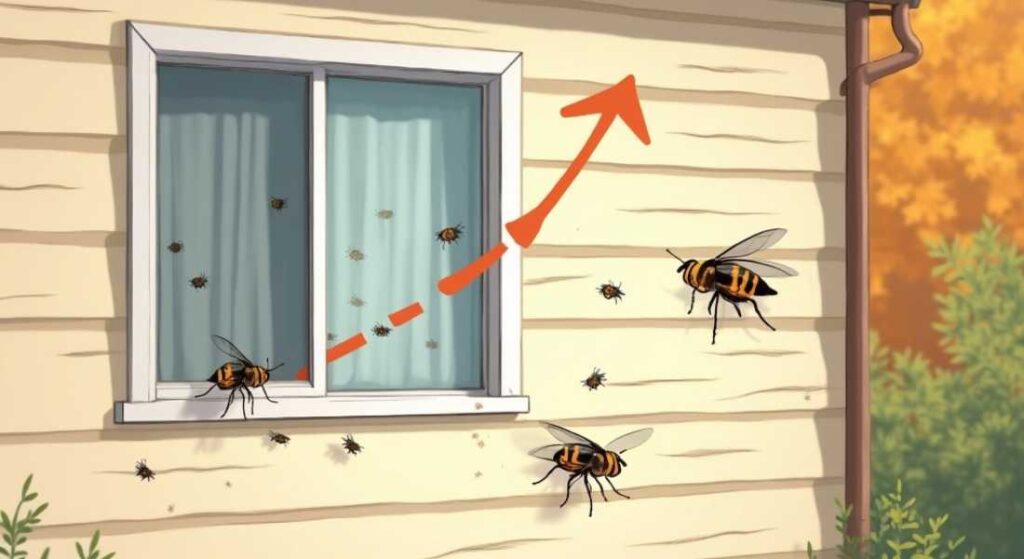
Properties with lawns, gardens, or nearby fields with healthy earthworm populations naturally attract more adult flies. The presence of their larval hosts nearby means higher adult populations searching for overwintering sites in fall.
Available Hiding Spaces
Wall voids, attic spaces, and false ceilings provide ideal protected areas where large numbers can gather. Homes with these features experience more severe problems than those without such spaces.
Seasonal Patterns of Cluster Fly Invasion
These flies follow predictable seasonal behaviors that help you anticipate and prevent problems.
Fall Migration Period
From late August through October, adult flies begin seeking overwintering sites. They first gather in large numbers on warm exterior walls before entering through available openings. This is the critical period for prevention efforts.
Winter Dormancy
Once inside, the flies enter a semi-dormant state in wall voids and attics. Warm spells or interior heat can partially wake them, causing some to emerge into living spaces. This explains why you might see big flies in house during winter months.
Spring Emergence
As temperatures warm in March and April, dormant flies wake and attempt to exit buildings. Many become disoriented and end up in living spaces instead of finding their way outside. This creates the phenomenon of cluster flies in house all of a sudden during spring.
Preventing Cluster Fly Entry
Stopping these pests requires thorough sealing of your home’s exterior before their fall migration begins.
Seal All Exterior Gaps and Cracks
Inspect your entire home exterior during summer. Apply high-quality silicone caulk around windows, doors, and utility penetrations. Fill larger gaps with expandable foam insulation. Replace damaged weatherstripping and ensure door sweeps create complete seals.
Repair and Maintain Roof Components
Check for loose or damaged shingles and repair them promptly. Install or repair soffit vent screens. Cap your chimney with proper screening that allows smoke out but keeps insects out.
Install or Upgrade Screens
Ensure all vents have intact, fine-mesh screens. Install vent dampers on exhaust vents to prevent entry when not in use. Check attic vent screens annually and replace damaged ones.
Apply Residual Insecticides
Professional pest control applications of residual insecticides to exterior walls during late summer create a barrier that kills flies before they enter. Focus on south and west-facing walls where flies first congregate.
How to Get Rid of Cluster Flies Already Inside
If flies have already entered your home, several removal methods prove effective.
Vacuum Removal Method
For cluster flies in the house, vacuuming provides immediate removal without chemicals. Use the hose attachment to reach flies on walls and windows.
Empty the vacuum bag immediately into an outdoor trash can. This works well for small numbers but may not address hidden populations.
Natural Repellents and Deterrents
What do flies hate? Strong scents like lavender, eucalyptus, peppermint, and citronella repel them. Place sachets in affected areas or use essential oil diffusers.
While not elimination methods, these what smells do flies hate approaches can discourage flies from settling in treated areas.
Professional Pest Control Treatment
Severe infestations require professional help. Pest control experts can apply targeted treatments to wall voids and attic spaces where flies hide.
They also identify and seal entry points you might miss. Professional cluster flies removal ensures thorough treatment of hidden populations.
Dealing with Attic Infestations
How to get rid of flies in attic spaces requires careful approach. Fogging treatments can reach large populations quickly. Ensure proper ventilation after treatment and seal attic access points to prevent flies from moving into living spaces.
Long-Term Solutions and Prevention Strategies
Preventing recurring problems requires ongoing attention to your home’s exterior integrity.
Annual Inspection Schedule
Conduct thorough exterior inspections each summer before migration season begins. Check all previous repair sites and look for new gaps or damage. Address issues immediately rather than waiting until flies appear.
Landscape Management
While you cannot eliminate earthworms from your property, reducing excessive moisture in soil near your foundation can help. Ensure gutters direct water away from the house. Maintain a small gap between mulch and siding.
How to Stop Cluster Flies Returning
The key to prevent cluster flies from coming back involves maintaining all seals and barriers year after year. Keep detailed records of where you found entry points and check those spots annually. Consider professional preventive treatments each late summer.
Common Myths About Cluster Flies
Several misconceptions about these pests lead to ineffective control attempts.
Do Cluster Flies Lay Eggs in Houses
No, cluster flies do not reproduce indoors. Females lay cluster fly eggs only in outdoor soil near earthworm populations.
If you see what appear to be cluster flies eggs inside, they’re likely from a different species. The flies you find indoors entered from outside as adults seeking shelter.
What Do Cluster Flies Eat Indoors
Nothing. These flies don’t feed during their indoor overwintering period. They survive on fat reserves built up during their active outdoor season. This is why you won’t find them near food sources like regular houseflies.
Can You Completely Eliminate Them
While you can make your home highly resistant to entry, completely eliminating all potential entry points proves nearly impossible. Even well-sealed homes may get occasional intruders. The goal is reducing numbers to negligible levels rather than achieving absolute zero.
FAQs
Why do I suddenly have large flies in my house?
The sudden appearance of large flies typically occurs when temperature changes wake dormant populations in wall voids. Warm winter days or heating system operation can rouse cluster flies from hibernation. Spring warming also causes mass emergence as flies attempt to exit the building.
Where do cluster flies come from originally?
Adult cluster flies spend their active season outdoors in fields and lawns where earthworms live. Females lay eggs in soil, larvae parasitize earthworms, and adults emerge seeking overwintering sites in late summer. Your home simply provides shelter they instinctively seek as cold weather approaches.
How long do cluster flies live once inside?
Cluster fly lifespan extends several months when overwintering indoors. In protected conditions with appropriate temperatures, they can survive from fall entry through spring emergence. Individual cluster fly life span varies, but the population generally persists throughout winter until warming triggers their departure.
What kills cluster flies most effectively?
Residual insecticide sprays applied to exterior walls before fall migration provide the best prevention. For flies already inside, professional treatments targeting wall voids work most effectively. Vacuuming offers chemical-free removal for visible flies. The most effective approach combines prevention and targeted treatment.
Can cluster flies damage my home?
No, these flies cause no structural damage. They don’t chew wood, damage fabrics, or harm food supplies. The main issues are nuisance from their presence, staining from their excrement on surfaces, and the unpleasant smell large numbers produce when crushed.
What smell do cluster flies hate the most?
Strong aromatic scents repel these pests. Eucalyptus, peppermint, lavender, and citronella all deter them. However, repellents alone won’t solve serious problems. Use these scents as supplementary measures alongside proper sealing and exclusion techniques.
Conclusion
Understanding how these pests access your home empowers you to take effective preventive action.
Success requires thorough exterior sealing completed before late summer migration begins. Focus on identifying and closing all gaps, applying barrier treatments to sun-facing walls, and maintaining these protections annually.
While dealing with these persistent insects can feel overwhelming, systematic prevention dramatically reduces problems.
Start with a complete exterior inspection, seal identified entry points, and consider professional help for severe situations. With proper preparation, you can significantly reduce or eliminate these unwanted winter guests from your home.