
Introduction
Hornet vs wasp vs yellow jacket identification confuses many people every summer when stinging insects become active. These three types of insects look similar at first glance but have distinct differences in appearance, behavior, nesting habits and aggression levels.
Understanding these differences can help you identify which insect you’re dealing with and respond appropriately. This guide provides clear information to help you distinguish between these common stinging insects and stay safe around them.
What Is a Wasp?
A wasp is a flying insect belonging to the order Hymenoptera, which includes thousands of species worldwide. Not all wasps are aggressive or social. Some live alone while others form colonies.
The term “wasp” serves as an umbrella category that technically includes both hornets and yellow jackets. However, when most people ask “what is a wasp,” they’re usually referring to paper wasps, which are among the most common wasp species in North America.
Paper wasps build distinctive umbrella-shaped nests from a papery material they create by chewing wood fibers mixed with saliva. These nests typically hang from eaves, branches or other protected areas. Unlike some other stinging insects, paper wasps are generally less aggressive unless their nest is threatened.
Understanding Yellow Jackets
Yellow jackets are actually a type of wasp, but they deserve special attention due to their aggressive nature and painful stings. The yellow jacket insect has distinctive bright yellow and black stripes that make it easily recognizable.
These insects are social creatures that live in large colonies, sometimes containing thousands of individuals. Yellowjacket wasps build their nests in various locations including underground cavities, wall voids and hollow trees. This hidden nesting behavior often leads to unexpected encounters.
The yellow jacket wasp is particularly attracted to sweet foods and proteins, which is why they frequently appear at outdoor gatherings and picnics. Their scavenging behavior brings them into close contact with humans more often than many other wasp species.
A yellow jacket sting is notably painful and can cause significant swelling. The yellow jacket stinger is smooth, allowing these insects to sting multiple times without dying. This makes them more dangerous than bees, which can only sting once.
Hornet Characteristics
Hornets are the largest members of the wasp family. While all hornets are wasps, not all wasps are hornets. This distinction is important when comparing different wasp types.
Hornets build large paper nests, similar to paper wasps but much bigger in size. These nests are typically enclosed and football-shaped, unlike the open umbrella nests of paper wasps. The hornet wasp constructs these impressive structures in trees, attics or under eaves.
These insects are generally less aggressive than yellow jackets but will defend their nest vigorously if threatened. A hornet or wasp can deliver painful stings, but hornets inject more venom per sting due to their larger size.
The mahogany wasp, though not a true hornet, is sometimes confused with hornets due to its size and appearance. Understanding these distinctions helps in proper identification.
Hornet vs Wasp: Key Differences
The difference between wasp and hornet lies primarily in size, behavior and nesting patterns. Hornets are significantly larger than most other wasp species, with some reaching over an inch in length.
When examining wasp and hornet difference, nest structure provides a clear indicator. The hornet and wasp difference in nesting shows that hornets create fully enclosed paper nests while many wasps build open or semi-open structures.
Body shape also varies between these insects. Hornets tend to have thicker, more robust bodies compared to the slender build of typical paper wasps. The wasp hornet difference in coloring shows that hornets often display brown or reddish markings along with yellow, while many wasps show primarily yellow and black patterns.
Behavioral patterns distinguish these insects too. The wasp vs hornet comparison reveals that hornets are generally less likely to scavenge human food, preferring to hunt other insects. Paper wasps and yellow jackets more commonly approach people seeking sweet substances or proteins.
Yellow Jacket vs Wasp: How They Differ
The yellow jacket vs wasp distinction confuses many because yellow jackets are technically wasps. However, comparing yellow jackets to paper wasps reveals several important differences.
Body shape differs noticeably between these insects. Yellow jackets have thick, compact bodies with little to no visible waist, while paper wasps display a distinctive thin waist between their thorax and abdomen. This physical characteristic makes identification easier during close encounters.
The wasp vs yellow jacket comparison in nesting behavior shows stark contrasts. Paper wasps create open, umbrella-shaped nests visible from below, while yellowjackets insect colonies build enclosed nests often hidden from view underground or in wall cavities.
Aggression levels vary significantly. When considering wasp yellow jacket temperament, yellow jackets are notably more defensive and likely to sting. Paper wasps sting only when directly threatened, while yellow jackets may attack if you simply come near their hidden nest.
A paper wasp nest remains relatively small with fewer than 200 individuals, while yellow jacket colonies can grow to thousands of members. This size difference affects encounter risks throughout the season.
Hornet vs Yellow Jacket: Distinguishing Features
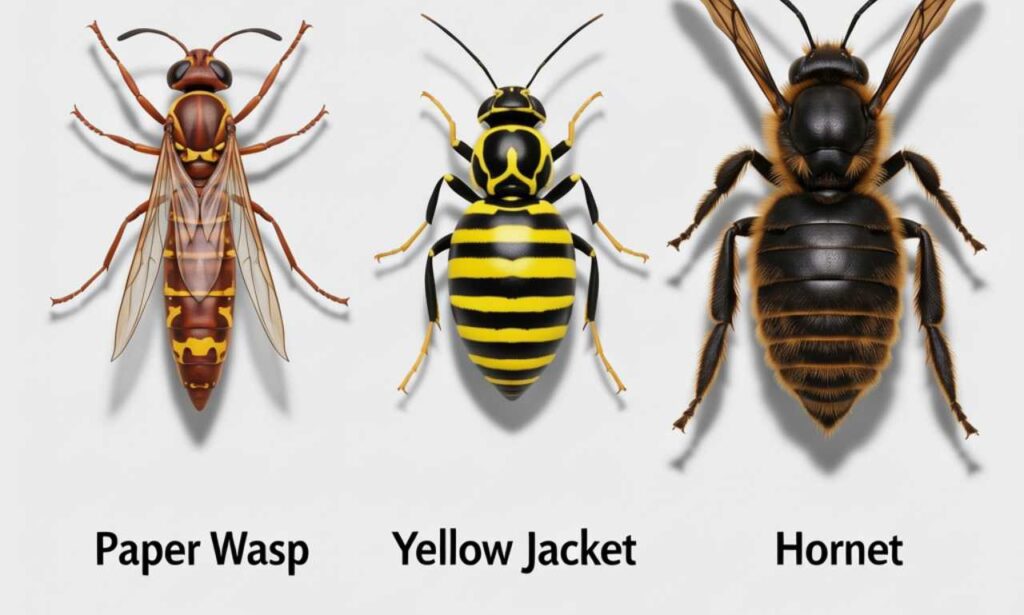
The hornet vs yellow jacket comparison highlights size as the most obvious difference. Hornets are substantially larger, often twice the size of yellow jackets. This size difference becomes immediately apparent when you see them side by side.
Color patterns help separate these species. Yellow jackets display bright, clean yellow and black stripes in distinct bands. Hornets typically show duller coloring with brown, reddish or black markings mixed with less vibrant yellow areas.
The hornet vs yellow jacket pictures available online show that hornets have smoother, more tapered abdomens while yellow jackets appear stockier. The yellow jacket hornet comparison also reveals differences in head shape and marking patterns.
Nesting habits provide another key distinction. Yellow jackets vs hornets differ significantly in where they build colonies. Yellow jackets often nest underground or in concealed spaces, while hornets typically build large aerial nests visible in trees or on structures.
When examining hornet vs yellow jacket nests, size becomes obvious. Hornet nests grow larger and can house more individuals than the average yellow jacket nest, though both can become quite substantial by late summer.
Wasp vs Hornet vs Yellow Jacket: Complete Comparison
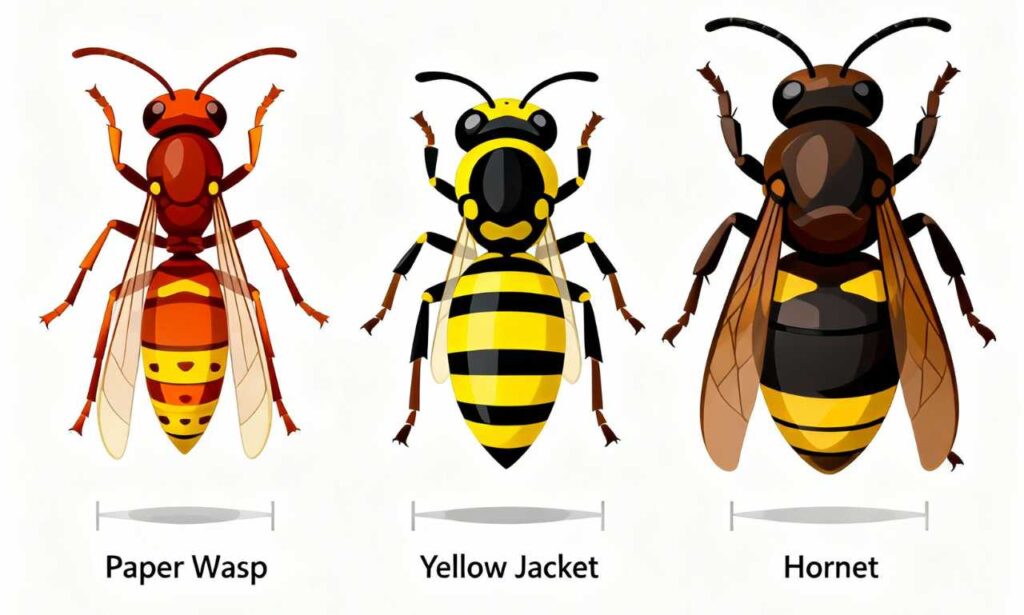
Understanding the wasp vs hornet vs yellow jacket differences requires examining multiple characteristics simultaneously. Size progression generally goes from paper wasp being smallest, yellow jacket in the middle and hornet being largest.
The yellow jacket vs wasp vs hornet comparison in aggression levels shows yellow jackets as most defensive, followed by hornets, with paper wasps being least aggressive. This ranking helps assess potential danger when encountering these insects.
Hornet vs wasp vs yellow jacket size differences are significant. Hornets can measure 1.5 inches or more, yellow jackets typically reach 0.5 inches and paper wasps fall somewhere between. These measurements help with field identification.
When comparing wasp vs hornet vs yellow jacket nest structures, each shows unique architecture. Paper wasps create open combs, yellow jackets build enclosed structures often hidden, and hornets construct large, teardrop-shaped aerial nests. The wasp vs hornet vs yellow jacket nest pictures clearly show these architectural differences.
The hornets vs wasps vs yellow jackets comparison extends to diet too. All three hunt insects, but yellow jackets are most aggressive in scavenging human food. This behavior explains why wasps vs yellow jackets vs hornets encounters differ in frequency around human activity.
Identifying Stings and Reactions
A yellow jacket sting typically causes immediate sharp pain followed by swelling and redness. The picture of yellow jacket sting reactions shows raised welts that can persist for several days. These stings often occur multiple times since yellow jackets can sting repeatedly.
Paper wasps sting less frequently but the pain level is comparable. The venom composition differs slightly between species, causing varying reactions in different people. Do paper wasps sting? Yes, but usually only when defending their nest or if accidentally touched.
Do yellow jackets sting without provocation? They are more likely than other species to sting defensively when their territory is approached, even if you don’t see their nest. This defensive behavior makes them particularly dangerous.
The wasp vs yellow jacket sting comparison shows similar pain levels initially, though individual reactions vary. Some people experience more severe swelling from one species versus another based on personal sensitivity to different venom proteins.
Comparing Related Species
The dirt dauber vs wasp comparison shows that mud daubers (often called dirt daubers) are solitary wasps that rarely sting humans. They build small mud tubes rather than paper nests. Similarly, the mud dauber vs wasp distinction highlights their peaceful nature compared to social wasps.
Brown wasp species exist in various forms, including some paper wasps with darker coloring. Not all wasps display bright yellow markings, making color alone an unreliable identification method.
When examining bee vs wasp vs hornet differences, bees have fuzzy bodies and can only sting once, while wasps and hornets have smooth bodies and can sting multiple times. The hornet vs wasp vs bee comparison also shows diet differences, with bees being vegetarian while wasps and hornets are predatory.
The wasps vs bees vs hornets distinction matters for safety. Bees are generally docile and sting only when directly threatened. The wasp bee hornet comparison shows increasing aggression levels from bees to wasps to yellow jackets.
Understanding wasp vs hornet vs yellow jacket vs bee differences helps you respond appropriately to encounters. Bees deserve protection and gentle removal, while aggressive yellow jacket colonies near homes may require professional pest control.
Regional Variations
The hornet vs wasp vs yellow jacket Texas populations show some unique characteristics. Southern states host different species than northern regions, with some variations in size and behavior patterns. Climate affects colony size and activity periods.
Some regions use “yellowjacket wasp” as the common term while others simply say yellow jacket. These naming variations don’t change the biological facts but can cause confusion when comparing information from different sources.
Different wasp types inhabit various geographic areas. The hornet vs yellow jacket vs wasp species present in your region may differ from those in other parts of the country. Local extension offices provide specific identification help for your area.
Nest Identification Guide
The wasp vs hornet vs yellow jacket nest comparison provides the clearest identification method. Paper wasps nest structures feature open, visible combs with individual cells exposed. These umbrella-shaped nests attach to surfaces by a single stem.
Yellow jacket nests are typically enclosed with a single entrance hole. The wasp vs hornet vs yellow jacket nest pictures show that these nests can be underground, in walls or hanging from protected locations. The outer covering appears papery but completely conceals the interior combs.
Hornet nests are large, teardrop-shaped structures covered in layers of paper envelope. The wasp vs hornet vs yellow jacket nest pictures demonstrate that hornet nests are usually gray or brown and hang from tree branches or building overhangs. These impressive structures can grow to basketball size or larger.
The wasp vs hornet vs yellow jacket vs mud dauber nest comparison shows mud daubers create small cylindrical tubes of mud, completely different from the paper structures of other wasps.
Safety and Prevention
Avoiding stings requires understanding behavior patterns. Yellow jackets are most aggressive in late summer when colonies peak in size. Keep food covered during outdoor activities and avoid swatting at these insects, which triggers defensive behavior.
Paper wasps are relatively docile but will defend nests. When you notice a paper wasp nest forming, early removal is safer than dealing with established colonies. Wear protective clothing if you must work near known nests.
Professional pest control is recommended for yellow jacket colonies, especially underground nests or those in wall voids. These locations make DIY removal dangerous due to limited escape routes and aggressive defense.
Hornets deserve respect and distance. While less aggressive than yellow jackets, their size and venom volume make stings particularly painful. Avoid disturbing hornet nests and call professionals for removal.
FAQs
What’s the difference between a hornet and a wasp and a yellow jacket?
Hornets are the largest species and build enclosed aerial nests. Yellow jackets are medium-sized, highly aggressive and often nest underground. Paper wasps are generally smaller with distinctive thin waists and build open umbrella-shaped nests. All three are types of wasps, but hornet vs wasp vs yellow jacket identification focuses on size, nest structure and behavior patterns.
Which sting is worse, a wasp hornet or a yellow jacket?
Hornet stings typically hurt most due to larger venom volume, followed closely by yellow jacket stings. Paper wasp stings are generally less painful but still significant. Individual pain tolerance and allergic reactions vary considerably, making personal experience different for each person. The hornet vs wasp vs yellow jacket sting severity also depends on the number of stings received.
How do you tell if it’s a wasp or hornet?
Size provides the easiest distinction. Hornets measure significantly larger than most wasp species. Nest structure also helps, with hornets building fully enclosed, teardrop-shaped nests while paper wasps create open combs. Body thickness and coloring patterns differ too, with hornets showing bulkier builds and often displaying brown or reddish tones.
Is a yellow jacket bigger than a hornet?
No, hornets are considerably larger than yellow jackets. Hornets can reach 1.5 inches or more in length while yellow jackets typically measure around 0.5 inches. This size difference makes identification easier when you can observe the insect clearly. The hornet vs yellow jacket pictures available online clearly demonstrate this substantial size variation.
Are yellow jackets and paper wasps the same thing?
No, these are different species with distinct characteristics. Yellow jackets have thick, compact bodies and build enclosed nests, often underground. Paper wasps display thin waists and create open, umbrella-shaped nests. The yellowjackets wasp species are more aggressive than paper wasps and more likely to sting when defending territory.
Can you identify these insects by color alone?
Color helps but isn’t definitive. Yellow jackets show bright yellow and black bands. Paper wasps often display brown or reddish coloring mixed with yellow. Hornets may show duller yellow with brown or black areas. Body shape, size and behavior provide more reliable identification than color patterns alone.
Conclusion
Understanding the differences between these common stinging insects helps you stay safe and respond appropriately to encounters. Hornets are largest and build enclosed aerial nests. Yellow jackets are aggressive scavengers that often nest underground. Paper wasps are relatively docile with distinctive thin waists and open nests.
Size, nest structure and behavior patterns provide the most reliable identification methods. When in doubt about nest removal or if you experience severe reactions to stings, consult professionals. Respect these beneficial insects that control pest populations while taking appropriate precautions around your home and during outdoor activities.