

Introduction
Honey bee vs bumblebee identification often confuses homeowners and garden enthusiasts alike. These two common bee species look similar at first glance but differ significantly in appearance, behavior, nesting habits, and their roles in pollination. Understanding these differences helps you appreciate their unique contributions to your garden while knowing how to interact safely with each species.
This comprehensive guide breaks down everything you need to know about distinguishing these important pollinators. You’ll learn practical identification tips, behavioral patterns, and fascinating facts that make recognizing each bee type easy and accurate.
Physical Appearance and Size Differences
The most noticeable distinction between these two bee types lies in their physical characteristics. Recognizing these visual cues makes identification straightforward even from a distance.
Body Size Comparison
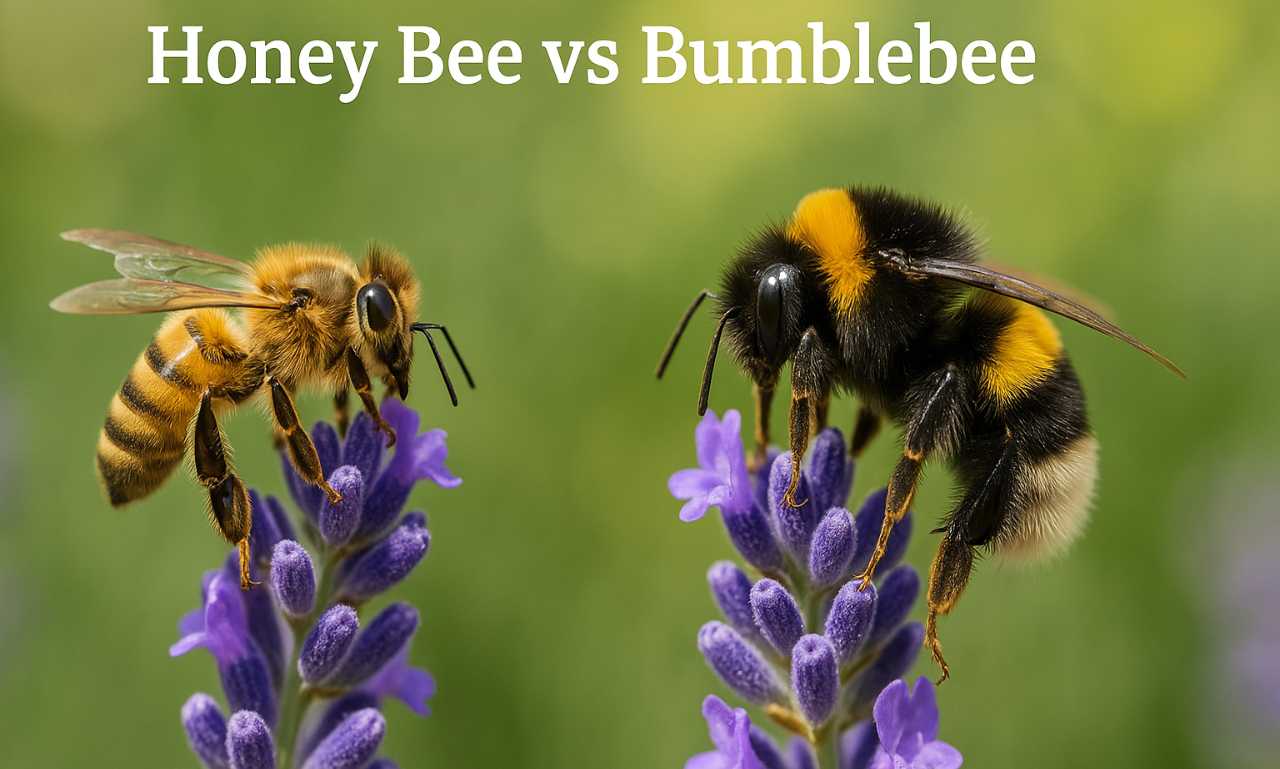
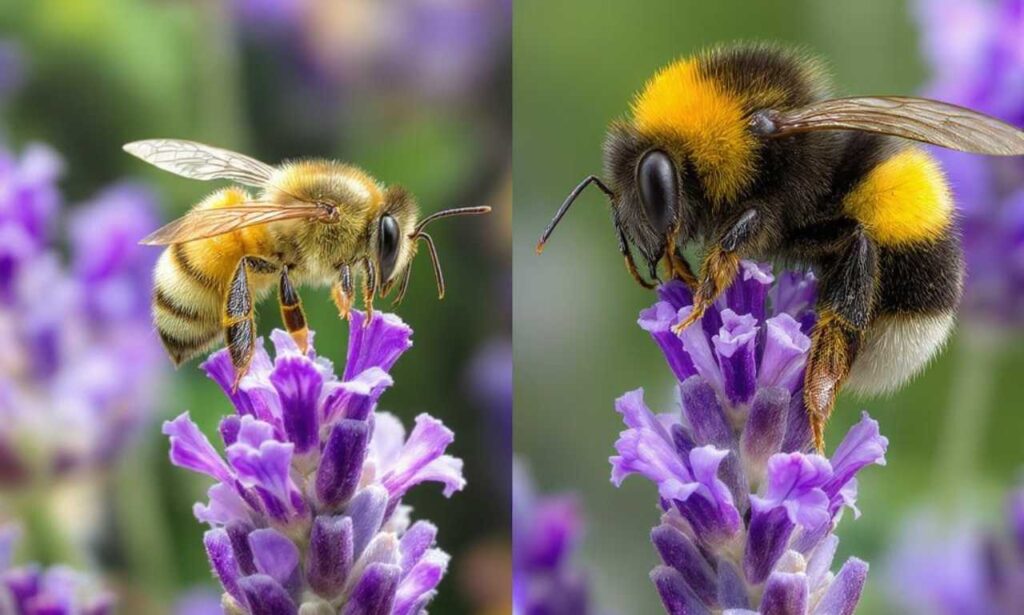
Bumblebees are noticeably larger and more robust than their honey-producing cousins. A typical bumblebee measures between 0.5 to 1 inch in length with a thick, rounded body covered in dense fuzzy hair. This hair gives them a soft, plush appearance that’s easy to spot.
Honey bees are smaller and more slender, usually measuring 0.4 to 0.6 inches long. Their bodies appear smoother and more streamlined, designed for efficient flight over long distances. The size difference becomes obvious when you observe both species visiting the same flowers.
Color Patterns and Markings
Bumblebees display bold yellow and black stripes with occasional orange or red bands near their tail end. Their coloration appears more vibrant and their fuzzy coating makes the stripes look softer and less defined.
Honey bees show more subtle coloring with amber, golden brown, and black bands. Their less fuzzy bodies reveal clearer stripe patterns. Some honey bee varieties appear almost orange-brown rather than bright yellow.
Hair Coverage
The amount and texture of body hair differs dramatically between species. Bumblebees sport thick, shaggy hair covering their entire body including legs and face. This dense coat helps them regulate body temperature and allows them to forage in cooler weather.
Honey bees have shorter, sparser hair that lies closer to their body. While they do have some fuzz, they look much sleeker and shinier compared to the plush appearance of bumblebees.
Behavioral Characteristics
Beyond physical traits, these bees behave quite differently in their daily activities and social structures.
Social Organization
Both species are social insects but organize their colonies differently. Bumblebee colonies remain relatively small, containing 50 to 400 individuals. Their colonies last only one season, with only fertilized queens surviving winter to start new colonies in spring.
Honey bee colonies are permanent and much larger, housing 20,000 to 80,000 bees. They maintain their hive year-round, storing honey to survive winter months. The complex social structure includes workers, drones, and a single queen who can live several years.
Foraging Habits
Bumblebees are excellent cold-weather foragers, capable of flying in temperatures as low as 50°F. Their larger size and fuzzy coat provide insulation. They use a technique called buzz pollination, vibrating their flight muscles to shake pollen loose from flowers.
Honey bees prefer warmer conditions and typically forage when temperatures exceed 55°F. They communicate flower locations to hive mates through intricate waggle dances. Their foraging range extends up to 5 miles from the hive, much farther than bumblebees typically travel.
Activity Levels
Bumblebees start their day earlier and work later than honey bees. You’ll often spot them on flowers in cool morning hours or cloudy days when honey bees remain in their hives.
Honey bees are most active during warm, sunny midday hours. They work efficiently in large numbers, visiting hundreds of flowers per trip to gather nectar and pollen for honey production.
Nesting and Housing Preferences
Where these bees make their homes reveals another major difference in their lifestyles.
Bumblebee Nesting Sites
Bumblebees prefer existing cavities for nest building. They commonly nest in abandoned rodent burrows, under porch decks, in compost piles, or within thick grass clumps. Some species nest above ground in old bird houses or dense vegetation.
Their nests are relatively small and disorganized compared to honey bee hives. Bumblebees produce small amounts of honey-like substance only to feed their young, not for long-term storage.
Honey Bee Hive Locations
Honey bees build elaborate wax comb structures to house their large colonies. Wild colonies typically nest in tree hollows, while managed colonies live in wooden boxes provided by beekeepers.
Their architectural precision is remarkable. Hexagonal wax cells serve multiple purposes including brood rearing, pollen storage, and honey storage. A single large colony can produce 60 to 100 pounds of surplus honey annually.
Honey Production Capabilities
One of the most significant practical differences relates to honey creation.
Do Bumblebees Make Honey?
Bumblebees produce only tiny amounts of a honey-like substance stored in small wax pots. This limited supply feeds developing larvae and provides emergency food during poor weather. The quantity is minimal and not harvested for human consumption.
Their focus is immediate colony needs rather than long-term food storage since their colonies don’t survive winter.
Honey Bee Production
Honey bees are nature’s premier honey producers. They convert flower nectar into honey through enzymatic processes and evaporation, creating a stable food source that lasts indefinitely. A strong colony can produce significant surplus honey beyond their own needs.
This honey production made them valuable to humans for thousands of years. Modern beekeeping supports both agriculture through pollination and honey harvesting for human use.
Sting Comparison and Defense Mechanisms
Understanding defensive behaviors helps you interact safely with both species.
Bumblebee Sting Characteristics
Bumblebees can sting multiple times because their stingers lack barbs. Female bumblebees possess smooth stingers that slide in and out without getting stuck. Males cannot sting at all.
Despite this capability, bumblebees are remarkably docile. They rarely sting unless directly threatened or if their nest is disturbed. Their sting causes temporary pain and localized swelling but is generally less aggressive than honey bee defense.
Honey Bee Sting Behavior
Female honey bees have barbed stingers that hook into mammalian skin. When a worker bee stings, the barbed stinger tears away from her body along with venom sacs and muscles. This proves fatal to the bee but continues pumping venom into the sting site for several minutes.
Honey bees defend their hives aggressively when threatened. Guard bees release alarm pheromones that recruit other defenders, potentially leading to multiple stings. Individual honey bees away from their hive are typically gentle unless swatted or trapped.
Venom and Pain Levels
Both stings inject venom that causes pain and inflammation. Most people experience similar localized reactions to either sting including redness, swelling, and temporary discomfort lasting a few hours to a couple days.
The perception that one sting hurts more than the other varies individually. Some people find honey bee stings more painful due to continued venom injection after the stinger detaches. Others report bumblebee stings as more intense because of the larger stinger size.
Ecological Roles and Importance
Both bee types serve critical functions in ecosystems and agriculture.
Pollination Effectiveness
Bumblebees excel at pollinating certain crops including tomatoes, peppers, blueberries, and cranberries. Their buzz pollination technique makes them essential for plants that require vibration to release pollen. They work efficiently in cool, cloudy, or rainy conditions when other pollinators stay home.
Honey bees pollinate a vast array of crops including almonds, apples, cucumbers, and countless wildflowers. Their large colony sizes and communication abilities make them incredibly efficient at mass pollination. Commercial agriculture relies heavily on managed honey bee colonies transported to fields during bloom.
Environmental Contributions
Native bumblebee species support wild plant reproduction and maintain natural ecosystem balance. Many wildflowers evolved specifically with bumblebee pollination in mind. Declining bumblebee populations threaten native plant diversity.
Honey bees, while originally from Europe, Asia, and Africa, now contribute to pollination worldwide. Their year-round presence and adaptability make them valuable in diverse climates and agricultural settings.
Comparison with Other Bee Species
Understanding how these bees relate to other common species provides fuller context.
Carpenter Bee Distinctions
Carpenter bees are often mistaken for bumblebees due to similar size. However, carpenter bees have shiny, black, nearly hairless abdomens while bumblebees are fuzzy all over. Carpenter bees are solitary, not social, and bore holes into wood to create nests.
Male carpenter bees act territorial but cannot sting. Females can sting but rarely do. Their wood-boring behavior sometimes causes structural damage to wooden buildings and furniture.
Sound Differences
Each bee species produces distinctive flight sounds. Bumblebees create a loud, deep, resonant buzz due to their larger body size and wing beat frequency. This unmistakable drone makes them easy to hear approaching flowers.
Honey bees generate a higher-pitched, lighter buzzing sound. Their smaller wings beating faster create this characteristic hum familiar around hives and blooming trees.
When to Call Professionals
Knowing when expert intervention is necessary protects both you and the bees.
Safe Distance Guidelines
If you discover a bee nest on your property, maintain a safe observation distance of at least 10 feet. Never attempt to remove or disturb nests yourself. Both species become defensive when their homes are threatened.
Watch for flight patterns indicating nest locations. Bumblebees entering ground holes or building crevices signal nest sites. Honey bee traffic in and out of wall voids or tree cavities reveals hive locations.
Professional Removal Services
Contact local beekeepers or pest control professionals experienced with bee removal. Many beekeepers happily relocate honey bee swarms or colonies rather than exterminating them. Bumblebee nests can often be left alone since they abandon sites naturally at season’s end.
Professional assessment determines the best course of action based on nest location, bee species, and safety concerns.
Conservation and Protection
Both bee types face population pressures requiring human support.
Habitat Creation
Plant diverse flowering species that bloom throughout growing seasons. Native wildflowers provide excellent nutrition for both bee types. Avoid using pesticides in your garden, especially during blooming periods.
Leave some areas of your yard slightly wild with unmowed grass, leaf litter, and brush piles. These provide potential nesting sites for bumblebees and support overall insect diversity.
Supporting Bee Populations
Provide shallow water sources with landing platforms like rocks or floating cork. Bees need water for drinking and cooling their nests during hot weather.
Consider supporting local beekeepers by purchasing local honey. Advocate for pollinator-friendly policies in your community including reduced pesticide use in public spaces and preservation of natural areas.
FAQs
What is the difference between a bumblebee and honey bee?
The main differences include size, appearance, and social structure. Bumblebees are larger, fuzzier, and have smaller seasonal colonies while honey bees are smaller, sleeker, and maintain large permanent colonies. Bumblebees produce minimal honey-like substance whereas honey bees produce abundant harvestable honey.
What is the 3 3 3 rule for bees?
The 3 3 3 rule refers to bee-friendly gardening: plant at least three types of flowers, ensure flowers bloom in three different seasons, and avoid using pesticides for three months during peak blooming. This guideline helps provide consistent food sources for pollinators throughout the growing season.
Are bumble bee stings worse than honey bees?
Pain levels are subjective and vary between individuals. Bumblebee stings can be painful but they rarely sting and can sting multiple times without dying. Honey bee stings may feel worse to some people because the barbed stinger continues pumping venom after detaching. Both typically cause similar localized reactions in most people.
Is a bumblebee bigger than a honey bee?
Yes, bumblebees are noticeably larger and bulkier than honey bees. Bumblebees measure 0.5 to 1 inch long with thick, robust bodies covered in dense fuzzy hair. Honey bees are smaller at 0.4 to 0.6 inches with more slender, streamlined bodies and less dense hair coverage.
Can you keep bumblebees like honey bees?
Bumblebees are more challenging to keep than honey bees because their colonies are seasonal and much smaller. Specialized bumblebee nest boxes exist primarily for agricultural pollination purposes. Most backyard beekeeping focuses on honey bees due to their perennial colonies, honey production, and well-established management practices.
Which bee is better for garden pollination?
Both species excel at pollination but in different ways. Bumblebees work better in cool weather and pollinate certain vegetables like tomatoes more effectively through buzz pollination. Honey bees visit more flowers per day and work efficiently in warm weather. Having both species in your garden provides optimal pollination coverage across conditions and plant types.
Conclusion
Learning to distinguish between these two important pollinator species enriches your understanding of garden ecology and bee behavior. While they share the bee family name, their differences in size, social structure, nesting habits, and honey production are substantial.
Both species deserve protection and support through habitat preservation and thoughtful gardening practices. Whether you encounter the fuzzy bumblebee buzzing past on a cool morning or watch honey bees working flowers on a sunny afternoon, you can now appreciate each species’ unique characteristics and contributions.
Respect their space, provide flowering plants, and enjoy observing these remarkable insects as they perform their essential pollination services in your garden and community.