

Introduction
Earwigs Arizona homeowners frequently discover in their homes are small nocturnal insects that often cause unnecessary alarm due to their intimidating appearance.
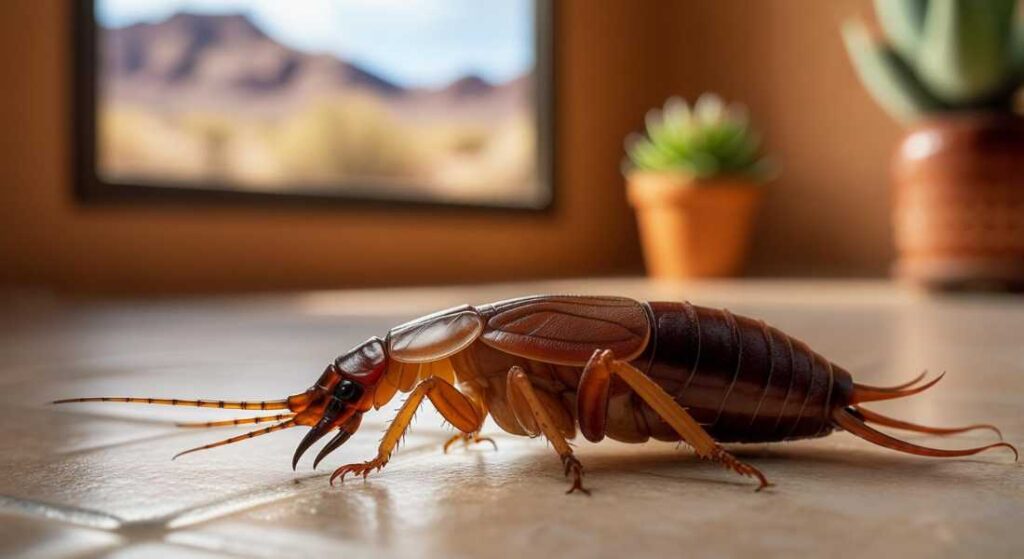
These reddish-brown creatures with distinctive pincers at their rear end typically measure about half an inch to one inch long and prefer dark, moist environments.
While their name suggests a frightening habit of crawling into human ears, this is simply an old myth with no scientific basis.
Understanding the true nature of these insects, their behavior patterns, and effective management strategies can help Arizona residents coexist peacefully with these generally harmless creatures or eliminate them when they become a nuisance.
What Are Earwigs and Why Are They Common in Arizona
Earwigs belong to the insect order Dermaptera and are characterized by their elongated, flattened bodies and prominent cerci or pincers.
The most common species found in Arizona is the European earwig, scientifically known as Forficula auricularia, which was introduced to North America in the early 1900s.
Arizona’s climate creates favorable conditions for earwig populations despite the state’s reputation for dry heat. These insects thrive in areas with moisture, which makes irrigated landscapes, gardens, and homes with water sources particularly attractive to them.
Physical Characteristics of Arizona Earwigs
The common earwig has a distinctive appearance that makes identification relatively straightforward. Adults display a dark reddish-brown coloration with lighter brown legs and antennae.
Their most notable feature is the pair of forceps-like pincers extending from their abdomen, which are curved in males and straighter in females.
These pincers serve multiple purposes including defense, capturing prey, and courtship rituals. Despite their menacing appearance, earwigs rarely use these appendages against humans, and when they do, the pinch is generally harmless and causes only minor discomfort.
Are Earwigs Dangerous to Humans
One of the most common questions Arizona residents ask is whether these insects pose any health risks. The straightforward answer is that earwigs are not dangerous to humans and are considered one of the more harmless household pests.
These insects do not carry diseases, do not bite in the traditional sense, and their pincers are too weak to cause significant injury to human skin.
While they can technically pinch if handled roughly or trapped against skin, such incidents are rare and result in nothing more than a slight pinch sensation.
The Myth About Earwigs and Human Ears
The persistent myth about earwigs crawling into human ears while people sleep has caused unnecessary fear for generations. This folklore likely originated from the insect’s name and its tendency to seek small, dark crevices for shelter.
In reality, earwigs have no attraction to human ears whatsoever. They do not deliberately enter ear canals, and documented cases of any insect found in human ears are extremely rare and typically accidental.
These creatures simply seek moisture and darkness, which could theoretically include any small opening, but human ears are not a target or preferred habitat.
Common Arizona Bugs and Where Earwigs Fit In
Arizona’s unique desert climate hosts a diverse array of insects that commonly find their way into homes. Understanding the broader context of common insects in Arizona helps residents properly identify and address pest concerns.
The state’s household bugs include various species such as cockroaches, ants, scorpions, and spiders alongside earwigs. Among common bugs in Arizona, earwigs are actually among the less problematic species when it comes to health risks and property damage.
Identifying Arizona Household Bugs
When dealing with arizona household bugs, proper identification is the first step toward effective management. Earwigs can sometimes be confused with other insects, particularly the little black pincher bug variations or certain beetle species.
Key identifying features of earwigs include their segmented, flexible abdomen, thread-like antennae with multiple segments, and of course, their characteristic pincers. Unlike silverfish in Arizona, which have a fish-like appearance with three tail-like appendages, earwigs have a more robust body structure.
Why Earwigs Enter Arizona Homes
Understanding what attracts these insects indoors helps homeowners implement effective prevention strategies. Earwigs typically enter homes seeking three primary things: moisture, food, and shelter from extreme temperatures.
During hot Arizona summers or cold winter nights, earwigs may migrate indoors seeking more comfortable conditions. They often enter through small cracks in foundations, gaps around windows and doors, or through openings where utility lines enter the home.
Common Entry Points and Attractants
Homes with excessive moisture problems are particularly susceptible to earwig invasions. Leaking pipes, poor drainage around foundations, or overwatered gardens near the house create ideal conditions that draw these moisture-loving insects.
Outdoor lighting can also inadvertently attract earwigs and other phoenix az bugs. These insects are drawn to lights at night, and outdoor fixtures near entry points may lead them directly to access points into your home.
Signs of an Earwig Infestation
Recognizing the early signs of an earwig problem allows homeowners to address the issue before it escalates. The most obvious indicator is simply seeing live earwigs in your home, particularly in bathrooms, kitchens, laundry rooms, or basements where moisture levels are higher.
Finding multiple earwigs regularly, especially during daytime hours when they normally hide, suggests a more significant infestation. You might also notice these insects in potted plants, under rugs, or in stacks of newspapers or cardboard.
Damage Caused by Earwigs
While earwigs pose no threat to humans, they can damage certain household items and plants. Indoor houseplants may show irregular holes in leaves or flowers if earwigs are feeding on them at night.
Outdoors, gardens may suffer more noticeable damage as earwigs feed on seedlings, flowers, and soft plant tissue. However, they also provide some benefit by consuming aphids, mites, and other small pests, making them something of a mixed presence in garden ecosystems.
Effective Prevention Strategies
Preventing earwigs from entering your home is far easier than dealing with an established population. The foundation of earwig prevention lies in moisture control and eliminating entry points.
Start by addressing any water issues around your property. Fix leaking faucets and pipes, ensure proper drainage away from your foundation, and avoid overwatering plants near the house. Reduce mulch depth near foundations to less than two inches and keep firewood stored away from the structure.
Sealing Entry Points
Conduct a thorough inspection of your home’s exterior to identify potential entry points. Seal cracks in the foundation with appropriate caulking material and install or repair weatherstripping around doors and windows.
Pay special attention to areas where utilities enter the home, as these often provide convenient access routes for various arizona pests. Use expanding foam or other appropriate sealants to close these gaps.
Natural Control Methods for Earwigs
Many homeowners prefer to start with non-chemical approaches when dealing with earwigs bugs in house situations. Several natural methods can effectively reduce earwig populations without introducing pesticides into your living space.
Creating traps is a simple and effective strategy. Roll up damp newspaper, place it in areas where you’ve seen earwig activity, and dispose of it the next morning when earwigs have crawled inside seeking shelter. Similarly, slightly crumpled damp cardboard can serve the same purpose.
Environmental Modifications
Reducing outdoor harborage sites significantly decreases the earwig population around your home. Remove debris piles, excess mulch, leaf litter, and any items lying directly on the ground where earwigs might hide during the day.
Create a dry barrier around your home’s foundation by ensuring good drainage and minimizing irrigation near the structure. This makes the immediate area around your house less attractive to these moisture-seeking insects.
Professional Treatment Options
When prevention and natural methods prove insufficient, professional pest control treatments offer more comprehensive solutions. Understanding what options are available helps homeowners make informed decisions about managing persistent earwig problems.
Professional exterminators typically use targeted insecticide applications in areas where earwigs harbor and enter the home. These treatments create a protective barrier that prevents new insects from gaining access while eliminating existing populations.
Cost Considerations
The earwig extermination cost varies depending on the severity of the infestation, the size of your property, and whether you opt for one-time treatment or ongoing pest management services.
Single treatments typically range from moderate to higher pricing, while comprehensive pest control plans that address multiple arizona insects throughout the year may offer better long-term value.
Many pest control companies serving the Phoenix and surrounding areas offer free inspections and quotes, allowing you to compare options before committing to a treatment plan.
DIY Treatment Approaches
For homeowners who prefer to handle the problem themselves, several effective products and methods are available.
Diatomaceous earth, a natural powder made from fossilized algae, can be applied in areas where earwigs travel, creating a barrier that damages their exoskeletons.
Insecticidal soaps and botanical insecticides offer lower-toxicity options for treating earwigs directly or creating barrier treatments. These products work best when applied in the evening as earwigs become active after dark.
Application Tips for Best Results
When applying any treatment product, focus on likely entry points and areas where earwigs hide during the day. Treat along foundations, around door frames and window sills, and in crawl spaces or basements where moisture accumulates.
Always follow product label instructions carefully regarding application rates, safety precautions, and reapplication intervals.
Proper timing of treatments, typically in late spring or early summer when earwig populations are building, provides better control than waiting until populations peak.
Comparing Earwigs to Other Common Arizona Pests
Understanding how earwigs compare to other arizona bugs helps put the problem in perspective.
Unlike bed bugs, which require immediate professional attention and treatments such as bed bug treatment for humans or bed bug treatment at home solutions, earwigs are far less concerning.
Bed bugs feed on human blood and can cause significant discomfort and psychological distress.
People often search desperately for information on what kills bed bugs instantly or the most effective bed bug treatment. In contrast, earwigs require no such urgent response as they pose no health threat.
Treatment Complexity Differences
While homeowners dealing with bed bugs must consider factors like bed bug treatment cost, bed bug treatment ointment for bites, and what chemical kills bed bugs and their eggs, earwig management is considerably simpler.
There are no needs for specialized treatments like the 15 home remedies for bed bugs that desperate homeowners research when facing infestations.
The contrast between managing earwigs and dealing with truly problematic pests like bed bugs highlights why proper identification of household bugs arizona residents encounter is so important. Misidentifying a pest can lead to inappropriate and unnecessarily expensive treatment approaches.
Long-Term Management Strategies
Successfully keeping earwigs out of your home requires ongoing attention to the factors that attract them. Developing a routine maintenance schedule ensures that preventive measures remain effective throughout the year.
Quarterly inspections of your home’s exterior allow you to identify and address new entry points before they become problems.
Regular cleaning of gutters, maintenance of proper grading around your foundation, and management of landscape irrigation all contribute to long-term earwig control.
Seasonal Considerations in Arizona
Earwig activity in Arizona typically peaks during the warmer months when they are most active and reproducing. However, they may seek indoor shelter during temperature extremes in both summer and winter.
Adjusting your prevention and monitoring efforts seasonally provides more efficient management. Increase vigilance and preventive treatments in spring before populations build, and ensure all entry points are sealed before the hottest summer months when insects seek cooler indoor environments.
When to Call a Professional
While many earwig situations can be handled with DIY approaches, certain circumstances warrant professional assistance.
If you’re finding dozens of earwigs in your home daily despite your prevention efforts, the infestation may be too established for home treatment methods.
Professional pest control specialists have access to more effective products and possess the expertise to identify hidden harborage areas and entry points that homeowners might miss.
They can also determine whether the creatures you’re seeing are actually earwigs or might be a different pest requiring different treatment approaches.
Comprehensive Pest Management
Many Arizona homeowners benefit from comprehensive pest management programs that address multiple pest species throughout the year. These programs typically provide better value and more consistent results than treating individual pest problems as they arise.
Professional services often include regular inspections, preventive treatments, and responsive service for unexpected pest issues, providing peace of mind and freeing homeowners from constant pest management concerns.
FAQs
Do earwigs actually crawl into human ears?
No, this is a persistent myth with no basis in fact. Earwigs Arizona residents encounter do not seek out or deliberately enter human ears.
While theoretically any small insect could accidentally enter an ear canal, this is extremely rare and earwigs show no particular attraction to ears whatsoever.
The name likely originated from old folklore and the insect’s tendency to hide in small, dark spaces, but human ears are not a target habitat.
Are earwigs harmful to pets or children?
Earwigs pose no significant threat to pets or children. They do not bite, sting, or transmit diseases. In the rare event an earwig pinches a curious pet or child, it causes only momentary minor discomfort similar to being pinched by tweezers.
These insects are far less concerning than many other common arizona house bugs and should not cause alarm if discovered in the home.
What attracts earwigs to my Arizona home?
Earwigs are primarily attracted to moisture, making homes with water issues, leaky pipes, or excessive irrigation near the foundation particularly vulnerable.
They also seek shelter from extreme temperatures and may enter homes during very hot summer days or cold winter nights. Outdoor lighting near entry points and organic debris close to your home’s foundation also increase the likelihood of earwig invasions.
How can I tell if I have an earwig infestation?
Regular sightings of multiple earwigs, particularly during daytime when they normally hide, indicate a significant population.
Finding them repeatedly in the same areas, especially moisture-rich locations like bathrooms, kitchens, and laundry rooms, suggests an infestation. Damage to indoor houseplants with irregular holes in leaves may also indicate earwig feeding activity.
Can earwigs cause damage to my home?
Unlike termites or carpenter ants, earwigs do not cause structural damage to homes. They may damage houseplants and garden plants by feeding on leaves and flowers, but they pose no threat to wood, fabrics, or building materials.
Their primary impact is the nuisance factor of having insects in living spaces rather than any actual property damage.
Where do earwigs come from originally?
The European earwig, the most common species in Arizona, originated in Europe and was accidentally introduced to North America in the early 1900s. Since then, it has spread throughout much of the continent, adapting to various climates including Arizona’s desert environment.
They thrive particularly well in areas with human habitation where irrigation and landscaping provide the moisture they require.
What is the best time to treat for earwigs in Arizona?
The optimal time for earwig treatment in Arizona is late spring before populations peak during summer months. Preventive treatments applied in April or May can significantly reduce population growth throughout the warmer season.
However, addressing moisture issues and sealing entry points should be year-round maintenance activities for best results.
Are there any benefits to having earwigs around?
Despite being unwelcome house guests, earwigs do provide some ecological benefits outdoors. They feed on aphids, mites, and other small garden pests, acting as natural pest control in some situations.
They also help break down decaying organic matter. However, these benefits are best appreciated when earwigs remain in outdoor garden areas rather than inside homes.
Conclusion
Managing earwigs Arizona homeowners discover in their properties requires understanding these insects’ true nature rather than reacting to myths and misconceptions. While their appearance may be unsettling, earwigs are among the most harmless pests you might encounter, posing no health risks and causing minimal property damage.
Effective control focuses on moisture management, sealing entry points, and maintaining a clean environment around your home’s foundation. Whether you choose natural prevention methods, DIY treatments, or professional pest control services, consistent attention to the factors that attract earwigs provides the best long-term results.
Remember that occasional earwigs are normal in Arizona’s diverse ecosystem, and perfect elimination is neither necessary nor realistic. Focus instead on keeping populations manageable and preventing them from establishing themselves indoors where they become a nuisance.