

Introduction
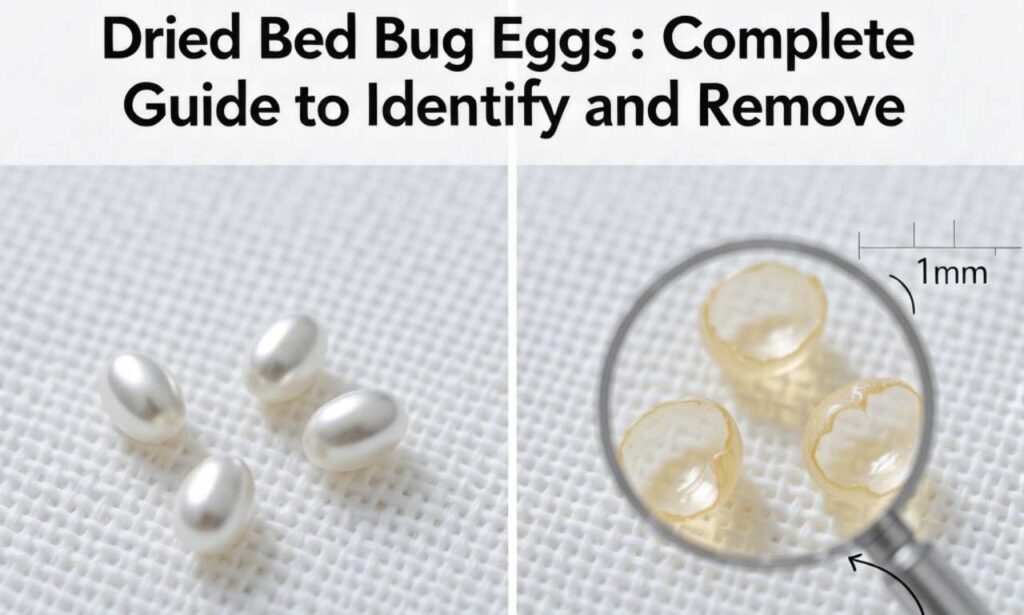
Dried bed bug eggs are the hardened shells left behind after bed bug nymphs have hatched or when unhatched eggs have died and desiccated over time. These tiny remnants often indicate a previous or ongoing bed bug problem in your home. Understanding what these eggs look like and how to deal with them is crucial for maintaining a pest-free sleeping environment.
Many homeowners discover these dried casings during cleaning or when inspecting their mattresses and wonder whether they still pose a risk. This guide will help you identify dried eggs, understand their significance, and take appropriate action to protect your home from future infestations.
What Are Bed Bug Eggs and How Do They Appear
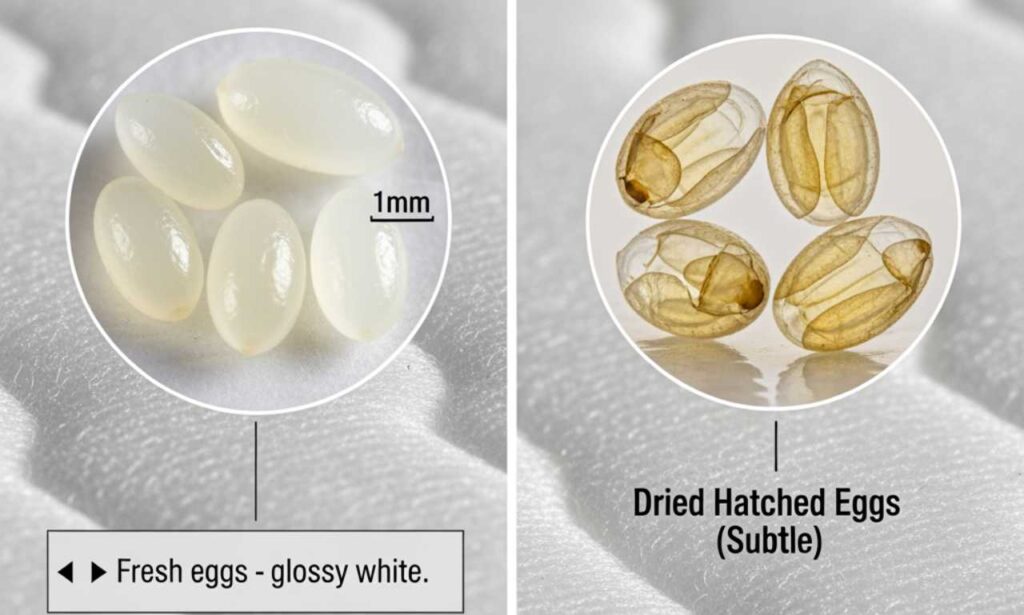
Bed bug eggs are tiny, pearl-white capsules that measure about 1mm in length. Female bed bugs lay these eggs in protected areas close to their feeding sources. Fresh eggs have a slightly glossy appearance and are sticky, allowing them to adhere firmly to surfaces like mattress seams, bed frames, and furniture crevices.
When eggs are viable and ready to hatch, they appear plump and milky white. However, when bed bug eggs become dried out or after the nymphs emerge, they change in appearance significantly.
Characteristics of Fresh Versus Dried Eggs
Fresh bed bug eggs look like tiny grains of rice with a shiny surface. They’re positioned in clusters and firmly attached to fabrics or wood. The hatched bed bug eggs leave behind empty shells that appear translucent or slightly yellowish.
Old dried bed bug eggs lose their glossy sheen and become more brittle. These dried casings often have a hollow appearance since the nymph has already emerged. The color shifts from bright white to a dull, off-white or cream shade.
Where Dried Eggs Typically Accumulate
These remnants commonly gather in mattress seams, box spring corners, and along bed frame joints. You might also find them behind headboards, in electrical outlets, under loose wallpaper, and within upholstered furniture folds.
Bedroom bugs prefer dark, undisturbed locations close to sleeping areas. Inspecting these hiding spots regularly helps you catch infestations early.
How to Identify Dried Bed Bug Eggs
Recognizing dried egg casings requires careful observation. Unlike active eggs, dried shells don’t pose an immediate hatching threat, but they confirm that bed bugs have been present in your space.
Visual Inspection Techniques
Use a flashlight and magnifying glass to examine suspicious areas closely. Look for clusters of tiny white or cream-colored specks stuck to surfaces. Bed bugs eggs pictures available online can help you compare what you find.
The early stage bed bug eggs on sheets appear as small white dots, often in groups. After hatching occurs, the shells remain attached but look deflated and transparent.
Distinguishing From Other Household Debris
Many people confuse dried casings with other materials. Bed bug eggs look like miniature rice grains, whereas dandruff or lint appears more irregular. Mold spots are typically darker and spread differently than egg clusters.
Dried bed bug eggs images show that these shells maintain their oval shape even after desiccation. They’re firmly glued to surfaces, unlike dust or fabric fibers that brush away easily.
Size and Color Indicators
Each egg measures approximately 1mm, about the size of a pinhead. When fresh, they’re bright white. As they dry or after hatching, they become translucent with a slight yellow tint.
The tiny bed bugs that emerge are also extremely small, making both eggs and newly hatched nymphs difficult to spot without proper lighting.
Understanding the Life Cycle
Knowing how bed bugs develop helps you understand the significance of finding dried egg shells in your home.
From Egg to Adult
Female bed bugs lay between 200 to 500 eggs during their lifetime. These eggs take about 6 to 10 days to hatch under optimal conditions. The time for bed bug eggs to hatch depends on temperature, with warmer environments speeding up development.
Once bed bug eggs hatched, tiny nymphs emerge and immediately seek their first blood meal. These bed bug larvae go through five molting stages before reaching adulthood, a process taking about five weeks.
How Long Eggs Remain Viable
Viable eggs must be kept in suitable conditions to hatch successfully. Extreme temperatures can kill unhatched eggs, causing them to dry out without producing nymphs.
When bed bug egg hatch doesn’t occur due to environmental factors or treatment interventions, the eggs eventually desiccate and leave behind the dried casings you might discover during inspection.
Environmental Factors Affecting Eggs
Temperature plays a critical role in egg viability. Eggs exposed to temperatures below 32°F or above 120°F for extended periods will not hatch. Low humidity also contributes to egg desiccation.
Professional heat treatments exploit this vulnerability, raising room temperatures high enough to kill both live bugs in beds and their eggs.
Health and Safety Concerns
While dried casings themselves don’t bite or spread disease, their presence indicates past bed bug activity that requires attention.
Do Dried Eggs Pose Direct Threats
Empty shells from hatched bed bug eggs don’t present immediate health risks. However, they serve as evidence that bed bugs have reproduced in your space. This means nymphs have already emerged and may be actively feeding nearby.
The real concern isn’t the dried shells but the possibility of remaining live bugs or additional viable eggs in hidden locations.
Allergic Reactions and Skin Issues
Some individuals experience allergic reactions to bed bug saliva from bites. Repeated exposure can cause skin rashes, itching, and psychological distress. While the dried egg cases themselves don’t cause these reactions, they indicate conditions that led to bug bed problems.
Maintaining a clean, bug-free sleeping environment is essential for preventing these health complications.
Psychological Impact
Discovering evidence of bedroom bugs can cause significant anxiety and sleep disturbances. Many people report feeling stressed or uncomfortable in their own beds after finding signs of infestation.
Addressing the problem promptly and thoroughly helps restore peace of mind and sleeping comfort.
Effective Removal Methods
Getting rid of dried casings and preventing new infestations requires systematic cleaning and preventive measures.
Manual Cleaning Techniques
Start by vacuuming all mattress surfaces, paying special attention to seams and tufts. Use the crevice attachment to reach into bed frame joints and furniture gaps. Dispose of the vacuum bag immediately in a sealed plastic bag outside your home.
Washing bed bug eggs on sheets requires hot water cycles. Launder all bedding, curtains, and washable items at the highest temperature setting, then dry on high heat for at least 30 minutes.
Steam Treatment Application
Professional-grade steamers produce temperatures high enough to kill both live bedbug and their eggs. Apply steam slowly to mattress seams, box springs, and furniture edges where bed bugs eggs on mattress typically cluster.
The heat penetrates fabrics and crevices, effectively destroying any remaining viable eggs and eliminating adult bugs.
Chemical Solutions
Several insecticides specifically target bed bug eggs and nymphs. Look for products containing desiccants like diatomaceous earth or silica gel, which damage the protective shell of eggs and insects.
What chemical kills bed bugs and their eggs includes pyrethroids, neonicotinoids, and insect growth regulators. Always follow label instructions carefully and consider professional application for severe infestations.
Prevention Strategies
Preventing future infestations is more manageable than dealing with active problems.
Protective Mattress Covers
Invest in certified bed bug-proof encasements for your mattress and box spring. These covers trap any remaining bugs inside and prevent new ones from establishing colonies.
Quality encasements have tight zippers and are made from materials that bugs cannot penetrate or escape through.
Regular Inspection Routines
Schedule monthly inspections of your sleeping areas. Check mattress seams, bed frames, nearby furniture, and baseboards for signs of activity. Early detection makes treatment significantly easier.
Knowing how to find bed bugs through regular monitoring helps you catch problems before they escalate.
Travel Precautions
How do you get bed bugs often traces back to travel. Inspect hotel rooms before settling in, keeping luggage off beds and floors. Upon returning home, immediately wash all clothing in hot water and vacuum suitcases.
These simple habits dramatically reduce the risk of bringing unwanted guests home.
Professional Treatment Options
Sometimes DIY methods aren’t sufficient, and professional intervention becomes necessary.
When to Call an Exterminator
If you continue finding evidence of active bugs despite your efforts, or if the infestation covers multiple rooms, contact a licensed pest control professional. They have access to stronger treatments and specialized equipment.
Professionals can also identify hidden harborage areas you might miss during self-inspection.
Heat Treatment Services
Whole-room heat treatments raise temperatures throughout your space to levels that kill all life stages of bed bugs. This method effectively addresses what kills bed bugs instantly without relying solely on chemicals.
Heat penetrates into cracks, furniture, and belongings that sprays might miss.
Chemical Treatment Programs
Professional exterminators often combine multiple approaches for maximum effectiveness. They know what kills bed bugs and their eggs through targeted applications and follow-up treatments.
Most professional programs include initial treatment, follow-up visits, and monitoring to ensure complete elimination.
Common Myths and Misconceptions
Separating fact from fiction helps you make informed decisions about treatment.
Myth About Visibility
Many people believe you cannot see bed bugs or their eggs without magnification. While tiny bed bugs and eggs are small, they’re visible to the naked eye under good lighting. Adults are about the size of an apple seed.
Can you see bed bugs? Yes, especially when you know what to look for and where to search.
Misconceptions About Cleanliness
Bed bugs aren’t attracted to dirt or clutter specifically. They’re drawn to carbon dioxide and body heat from sleeping humans. Even immaculate homes can experience infestations.
However, reducing clutter makes inspection and treatment easier by eliminating hiding spots.
Treatment Effectiveness Myths
Some believe that over-the-counter sprays alone can eliminate entire infestations. While these products help, comprehensive treatment addressing all life stages and hidden locations is essential.
What kills bedbugs and eggs most effectively combines multiple methods: cleaning, heat, chemicals, and prevention.
Long-Term Monitoring
Successfully eliminating an infestation requires ongoing vigilance.
Setting Up Monitoring Systems
Install bed bug interceptor traps under bed legs. These devices catch bugs attempting to climb up to reach you while sleeping. Check traps weekly for any captured insects.
Monitoring helps you detect new activity quickly before it becomes a full-blown problem.
Documentation and Record Keeping
Keep records of when you find evidence, treatments applied, and results observed. This documentation helps track progress and provides valuable information if professional help becomes necessary.
Photographs of bed bugs eggs images and other evidence can assist pest control professionals in developing effective treatment plans.
Signs of Reinfestation
Watch for new bites appearing in clusters or lines on your body. Look for fresh dark spots on bedding, which are bed bug excrement. Finding new eggs or seeing live bugs during inspections indicates reinfestation.
Addressing these signs immediately prevents small problems from becoming major infestations.
Frequently Asked Questions
What does a bed bug egg look like?
A bed bug egg appears as a tiny, pearl-white capsule about 1mm long, roughly the size of a pinhead. Fresh eggs have a glossy surface and are sticky to help them adhere to surfaces. After hatching or drying, they become translucent with a hollow appearance and may turn slightly yellowish or cream-colored.
Can dried bed bug eggs still hatch?
No, dried bed bug eggs cannot hatch. When eggs dry out completely due to extreme temperatures, low humidity, or age, the developing nymphs inside die. However, the presence of dried eggs indicates past infestation and suggests that hatched nymphs may be living nearby.
What kills bed bugs and their eggs most effectively?
Heat treatment is one of the most effective methods, as temperatures above 120°F kill all life stages. Combined approaches work best, including what chemical kills bed bugs and their eggs like desiccants and insect growth regulators, along with thorough vacuuming, steam treatment, and professional-grade pesticides applied by licensed exterminators.
How long does it take for bed bug eggs to hatch?
Under optimal conditions with temperatures between 70-80°F, bed bug eggs typically take 6 to 10 days to hatch. Cooler temperatures slow development, while extreme heat or cold prevents hatching entirely. This relatively short incubation period is why infestations can grow quickly without intervention.
Where do bed bugs hide their eggs on mattresses?
Bed bugs typically lay their eggs in mattress seams, tufts, and folds where fabric creases together. They also deposit eggs along the mattress edge piping, in box spring corners, and under attached labels. These protected locations keep eggs close to feeding sources while shielding them from disturbance.
What do bed bug eggs feel like to touch?
Fresh bed bug eggs feel slightly sticky due to the adhesive substance females secrete when laying them. They’re firm but delicate, like tiny grains stuck to fabric. Dried or hatched eggs feel more brittle and may crumble when touched, though they remain firmly glued to surfaces.
Conclusion
Discovering dried bed bug eggs in your home signals past activity that demands attention. While these empty shells don’t pose immediate threats, they confirm that bed bugs have reproduced in your sleeping areas. Taking swift action through thorough cleaning, heat treatment, and chemical applications protects your home from ongoing problems.
Regular inspection and preventive measures help you maintain a bug-free environment. Remember that complete elimination requires addressing all life stages and hidden locations where these pests hide. Whether you choose DIY methods or professional services, persistence and comprehensive treatment ensure long-term success in keeping your bedroom safe and comfortable.