
Introduction
Diatomaceous earth for ants is a natural powder made from fossilized algae that effectively eliminates ant colonies without harsh chemicals. This remarkable substance has become increasingly popular among homeowners seeking safe and eco-friendly pest control solutions. Whether you’re dealing with common household ants or aggressive species invading your property, understanding how this natural mineral works can help you reclaim your space.
Many people struggle with recurring ant problems despite trying various chemical treatments. This guide explores why this natural alternative has gained recognition as an effective solution and walks you through everything from selecting the right product to proper application techniques.
What Is Diatomaceous Earth
This natural substance consists of microscopic fossilized remains of diatoms, which are tiny aquatic organisms. When these organisms died millions of years ago, their skeletal remains accumulated and formed deposits of sedimentary rock. Today, this rock is mined and ground into a fine powder that serves multiple purposes.
The powder appears white or off-white and feels similar to talcum powder to the touch. Under a microscope, each particle has sharp edges that create the product’s unique pest-control properties. These microscopic edges are harmless to humans and pets but deadly to insects with exoskeletons.
Food grade diatomaceous earth is the safest option for household use. This version has been purified and contains less than 1% crystalline silica, making it safe for use around families and pets when applied correctly.
How Does Diatomaceous Earth Kill Ants
The elimination process works through physical rather than chemical means. When ants crawl across the powder, the sharp microscopic edges pierce their protective exoskeleton. This creates tiny cuts that allow moisture to escape from the insect’s body.
Ants rely on maintaining proper moisture levels to survive. Once their exoskeleton is damaged, they begin losing vital fluids through the wounds. This dehydration process continues until the ant dies, typically within 24 to 48 hours of contact.
The powder also sticks to the ant’s body as it walks through treated areas. When ants groom themselves, they ingest particles that cause internal damage. This dual-action approach makes it particularly effective compared to other natural remedies.
Unlike chemical pesticides, insects cannot develop resistance to this mechanical killing method. The physical nature of how it works ensures long-term effectiveness without the need to rotate products or increase application rates.
Types of Ant Infestations You Can Control
Carpenter Ants
Diatomaceous earth for carpenter ants provides excellent results when applied correctly. These wood-destroying insects create galleries inside wooden structures, making them particularly challenging to eliminate. The powder works well because it can be applied directly into wall voids and other hidden areas where these ants nest.
Carpenter ants are larger than most household species and can cause significant structural damage if left untreated. Using this natural powder around baseboards, window frames, and other entry points creates a protective barrier. For existing colonies inside walls, applying the product through small holes drilled near the infestation site delivers treatment directly to the source.
Fire Ants
Does diatomaceous earth kill fire ants? Yes, it effectively controls these aggressive insects when applied to their mounds and surrounding areas. Fire ants build distinctive raised mounds in yards and can deliver painful stings when disturbed.
Treating fire ant colonies requires thorough coverage of the mound and the area immediately around it. The powder should be applied during cooler parts of the day when ants are most active near the surface. Multiple applications over several weeks may be necessary to eliminate the entire colony since fire ants can have extensive underground tunnel systems.
Will diatomaceous earth kill fire ants completely? Success depends on reaching the queen and disrupting the colony’s ability to reproduce. Consistent application and patience yield the best results.
Red Ants
Diatomaceous earth for red ants works similarly to treatment for other species. Red ants often invade homes searching for food and water, leaving trails that other colony members follow. Breaking these trails with the powder discourages continued invasion.
Does diatomaceous earth kill red ants on contact? While not instant, the powder begins working as soon as ants walk through it. Applying it along ant trails, near entry points, and around potential food sources creates an effective defense system.
Application Methods for Maximum Effectiveness
Indoor Application
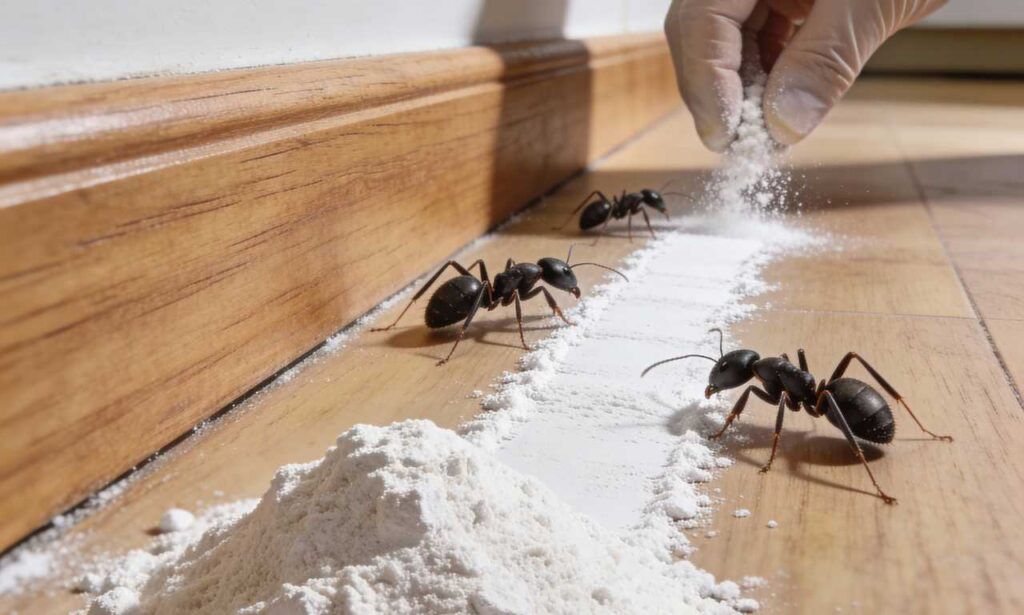
Using the powder indoors requires strategic placement in areas where ants travel. Focus on cracks, crevices, baseboards, and behind appliances. A light dusting works better than thick piles since ants will simply walk around large deposits.
Apply the product with a hand duster or similar applicator for even distribution. Target areas behind refrigerators, under sinks, around pipe penetrations, and along window sills. These locations serve as common entry points and travel routes for various ant species.
Keep applications dry since moisture reduces effectiveness. Avoid using it in areas that get wet frequently or have high humidity levels. Reapply after cleaning or if the powder gets disturbed.
Outdoor Application
How to use diatomaceous earth for ants outdoors involves creating barrier treatments around your home’s foundation. Apply a band approximately 6 to 12 inches wide around the entire perimeter. This prevents ants from finding easy access points into your living spaces.
How to spread diatomaceous earth for ants in your yard requires covering ant trails, mounds, and areas where you’ve observed high activity. Garden beds, along fence lines, and near outdoor eating areas are prime locations for treatment.
Rain and irrigation wash away outdoor applications, so reapplication becomes necessary after wet weather. Some homeowners apply the powder weekly during peak ant season to maintain protection. Wind can also disperse the product, so apply it on calm days for best results.
Safety Considerations and Proper Handling
For Humans
Diatomaceous earth for humans poses minimal risk when used as directed. The food grade version is even approved for consumption as a dietary supplement, though pest control applications don’t require this grade for effectiveness.
Wear a dust mask when applying large amounts to avoid inhaling fine particles. While not toxic, breathing any fine dust can irritate respiratory passages. Eye protection prevents particles from causing irritation if winds pick up during outdoor application.
Wash hands after handling the product and avoid creating dust clouds during application. The powder can dry out skin with repeated exposure, so wearing gloves provides an extra layer of protection.
For Pets
Food grade products are safe for use around cats and dogs. Pets may walk through treated areas without harm, though you should prevent them from eating large amounts. Store the product in sealed containers away from curious animals.
The powder won’t harm beneficial insects like bees when applied in targeted locations. Avoid spreading it on flowering plants or areas where pollinators actively feed. Responsible application protects helpful garden visitors while controlling unwanted pests.
Effectiveness Timeline and What to Expect
How long does it take diatomaceous earth to kill ants? Individual insects typically die within 24 to 48 hours of contact. However, eliminating an entire colony takes longer since not all members encounter the powder immediately.
How fast does diatomaceous earth kill ants depends on several factors including colony size, powder coverage, and environmental conditions. Small infestations may resolve within a week while larger colonies require several weeks of consistent treatment.
Patience is essential when using natural pest control methods. Unlike chemical sprays that kill on contact, this approach works gradually. You should notice reduced ant activity within three to five days of initial application.
How quickly does diatomaceous earth kill ants also depends on maintaining dry conditions. Wet powder loses effectiveness, so indoor applications typically work faster than outdoor treatments in humid climates.
Comparing Treatment Options
Diatomaceous Earth vs Borax
Many homeowners wonder about diatomaceous earth vs borax for pest control. Both products offer effective natural solutions but work through different mechanisms. Borax is a mineral salt that acts as a poison when ingested by ants, while the powder works through physical contact and dehydration.
Borax vs diatomaceous earth comparisons often focus on speed and safety. Borax typically works faster since ants carry it back to colonies where it poisons other members including the queen. However, borax presents greater toxicity risks for children and pets.
Is borax diatomaceous earth? No, they are completely different substances. Some people combine borax and diatomaceous earth for enhanced effectiveness, using borax as bait and the powder as a barrier treatment.
Boric Acid Comparison
Diatomaceous earth and boric acid serve similar purposes but have distinct characteristics. Boric acid works as a stomach poison while the natural powder uses mechanical action. Both can be effective when applied correctly.
Boric acid diatomaceous earth combinations are sometimes used in professional pest control. Each product addresses different aspects of ant behavior, creating a comprehensive treatment approach.
Common Mistakes to Avoid
Applying too much powder creates piles that ants simply walk around rather than through. A light dusting that remains barely visible works far better than thick deposits. Think of it as creating a thin layer rather than building a wall.
Using wet powder or applying it before rain wastes product and money. Always check weather forecasts before outdoor applications and wait for dry conditions. Indoor applications should avoid areas that get splashed or wiped down frequently.
Expecting instant results leads to disappointment. This natural approach requires time to work through an entire colony. Consistent application and patience deliver better outcomes than switching products too quickly.
Failing to identify ant species can reduce effectiveness. Different ants nest in different locations and have varying behaviors. Understanding what type of ant you’re dealing with helps target treatments more precisely.
Long-Term Prevention Strategies
Sealing entry points prevents new infestations after eliminating existing colonies. Caulk cracks in foundations, repair damaged screens, and weatherstrip doors to reduce access. The powder works best as part of an integrated pest management approach.
Eliminating food sources discourages ants from invading your space. Store food in sealed containers, clean up spills promptly, and manage garbage carefully. Removing attractions makes your home less appealing to foraging insects.
Maintaining dry conditions around your home’s foundation reduces ant-friendly habitats. Fix leaky faucets, improve drainage, and remove standing water. Many ant species need moisture to survive, so reducing available water sources helps control populations.
Regular monitoring helps catch new infestations early. Check common problem areas weekly during warm months when ant activity peaks. Early detection allows for smaller, more targeted treatments.
Frequently Asked Questions
Does Diatomaceous Earth Kill Ants Effectively?
Yes, when applied correctly this natural powder effectively eliminates various ant species. The physical action of dehydrating insects through their damaged exoskeletons provides reliable results. Success requires proper application techniques, adequate coverage, and patience while the product works through the colony.
Will Diatomaceous Earth Kill Ants Outside?
Outdoor applications work well for controlling ant populations around your home. The powder creates effective barriers when applied along foundations, around mounds, and in garden beds. Reapplication after rain or irrigation maintains protection since water washes away the product.
How to Use Diatomaceous Earth for Ants Outdoors?
Apply a thin, even layer around your home’s foundation and in areas with high ant activity. Focus on creating barriers between ant colonies and entry points to your house. Treat mounds directly by sprinkling powder on and around them. Reapply weekly during active seasons and after wet weather for continued control.
Does Diatomaceous Earth Kill Carpenter Ants?
This powder provides excellent control for wood-destroying carpenter ants when applied to their nesting areas. Apply it inside wall voids, around baseboards, and near damaged wood where these insects create galleries. The treatment reaches hidden colonies that sprays might miss.
What Kills Fire Ants Naturally?
Several natural methods control aggressive fire ant colonies. Diatomaceous earth fire ants treatment ranks among the most effective options. Pouring boiling water on mounds, using orange oil products, and applying beneficial nematodes also provide chemical-free solutions. Combining methods often yields the best results.
Will DE Kill Ants Permanently?
Does DE kill ants long-term? The powder remains effective as long as it stays dry and in place. However, new colonies can move into treated areas, requiring ongoing maintenance. Using it as part of a comprehensive prevention strategy provides the most lasting protection against recurring infestations.
Conclusion
Natural pest control using this fossilized mineral powder offers homeowners a safe and effective alternative to chemical treatments. Understanding proper application methods, maintaining realistic expectations about timelines, and combining treatments with prevention strategies creates the most successful outcomes.
Whether you’re dealing with carpenter ants damaging your home’s structure, fire ants threatening your yard, or common household species invading your kitchen, this versatile powder provides reliable control. Its physical mode of action ensures insects cannot develop resistance, making it a sustainable long-term solution.
Start with small test applications to understand how the product works in your specific situation. Observe ant behavior, track results, and adjust your approach based on what you learn. With patience and consistent effort, you can create an ant-free environment using this remarkable natural substance.