

Introduction
Cockroach nymph vs baby cockroach is a common question that confuses many homeowners dealing with pest problems. Here’s the truth: these terms actually refer to the same stage of roach development.
A cockroach nymph is simply the scientific name for a baby cockroach. Understanding this distinction and learning how to identify these young pests is crucial for effective pest control in your home.
When you spot small roaches scurrying across your floor, knowing whether you’re dealing with young roaches or a different insect altogether can save you time and money on treatment.
This guide will walk you through everything you need to know about identifying these juvenile pests, what their presence means for your home and the most effective ways to eliminate them before they mature into a full infestation.
Understanding the Truth About Cockroach Nymphs and Baby Roaches
The confusion between cockroach nymph vs baby cockroach stems from terminology rather than actual differences.
In entomology, a nymph describes the immature stage of insects that undergo incomplete metamorphosis. Baby cockroach is the common term people use when they see small roaches in their homes.
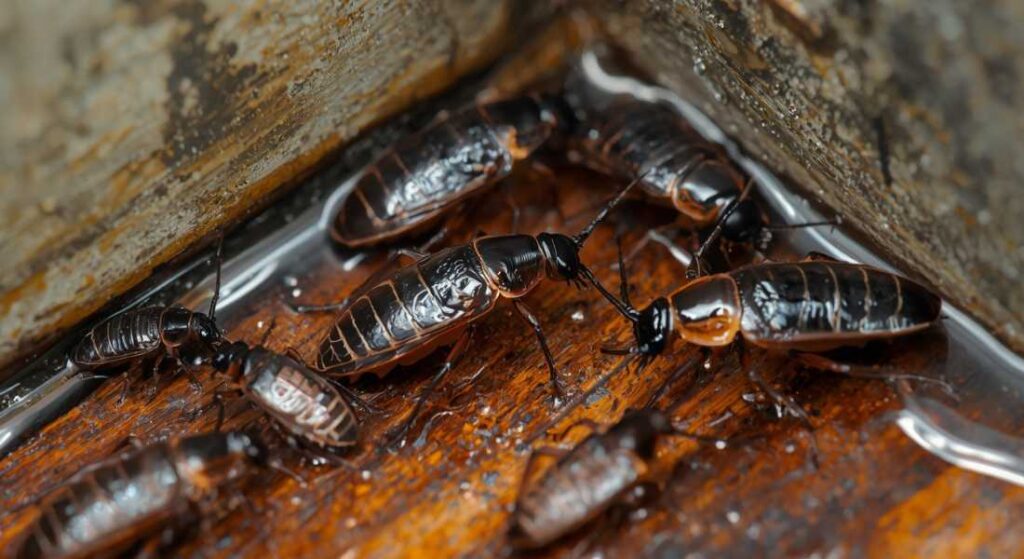
These young roaches look remarkably different from their adult counterparts. They emerge from egg cases called oothecae and immediately begin searching for food and water.
Unlike many insects, cockroaches don’t have a pupal stage. Instead, nymphs gradually grow and molt multiple times before reaching adulthood.
Physical Characteristics of Young Roaches
Baby roaches start incredibly small, sometimes measuring just a few millimeters in length. Their bodies appear darker or lighter depending on the species, and they lack the fully developed wings that adult cockroaches possess.
German cockroach nymphs often display distinctive stripes running down their backs, while American cockroach nymphs appear reddish-brown with a different body shape.
The molting process occurs between five to eight times during their development. Each time they shed their exoskeleton, they emerge slightly larger and their coloring may temporarily appear white or cream before darkening again.
This growth period can take anywhere from a few weeks to several months depending on environmental conditions and species.
Why the Terminology Matters for Pest Control
Understanding that cockroach nymph vs baby cockroach refers to the same life stage helps you communicate more effectively with pest control professionals.
When you report seeing nymphs or baby roaches, exterminators know you’re dealing with an active breeding population rather than just wandering adults.
This distinction is critical because the presence of young roaches indicates that eggs have hatched in your home. Adult female cockroaches can produce multiple egg cases throughout their lifetime, with each case containing dozens of eggs.
Spotting even one nymph suggests there may be many more hiding in walls, cabinets or other dark spaces.
Visual Identification Through Pictures and Size Comparison
Recognizing baby roaches requires knowing what features to look for. Many homeowners struggle with identification because nymphs can resemble other common household insects at first glance.
German cockroach nymphs measure approximately 3 millimeters when they first hatch. They grow to about 10 to 12 millimeters before reaching adulthood.
Their bodies are dark brown to black with two parallel stripes behind the head. These stripes remain visible throughout all nymph stages and are the most reliable identification marker.
American cockroach nymphs start around 6 millimeters and can grow up to 35 millimeters before their final molt.
They appear grayish-brown initially and develop a more reddish-brown coloration as they mature. Unlike German roach nymphs, they have a distinct band around the edge of their body that looks lighter than the rest.
Size Progression Through Development Stages
The size of baby roaches changes dramatically as they molt. First-stage nymphs are barely visible to the naked eye. By their third or fourth molt, they become noticeably larger and easier to spot during daylight hours when they venture out searching for food.
Comparing their size to common objects helps with identification. A newly hatched German roach nymph is roughly the size of a sesame seed.
A mature nymph ready for its final molt measures about the length of a grain of rice. American cockroach nymphs grow much larger, with late-stage nymphs reaching the size of a penny in length.
Taking Clear Photos for Identification
If you’re unsure about what you’re seeing, capturing clear photos can help with proper identification. Use your smartphone camera with good lighting to photograph the insect from above and from the side. Try to capture any distinctive markings, stripes or color patterns.
Close-up shots revealing the body segments, legs and antennae provide the most useful information.
Compare your photos with verified images from university extension services or entomology departments rather than relying solely on random internet sources. Professional pest identification often depends on these fine details.
Common Bugs That Look Like Baby Roaches
Several household insects bear a striking resemblance to cockroach nymphs, leading to frequent misidentification. Learning to distinguish between these look-alikes prevents unnecessary panic and helps you apply the right treatment methods.
Bed bugs rank among the most commonly confused insects with baby roaches. Both are small, brown and found in homes.
However, bed bugs have a distinctly oval, flattened body shape that looks almost apple seed-like. They also lack the long antennae and prominent legs that even the smallest roach nymphs possess.
Bed Bug vs Baby Roach Comparison
Bed bug vs baby roach identification comes down to several key differences. Bed bugs move slowly and deliberately, while baby cockroaches scurry quickly when disturbed. Bed bugs feed exclusively on blood and are typically found near sleeping areas.
Baby roaches eat almost anything organic and prefer kitchens, bathrooms and areas with moisture.
The body shape provides the clearest distinction. Bed bugs appear more rounded and flatter, designed to hide in mattress seams and cracks.
Baby roaches have an elongated body with visible segmentation, longer legs and antennae that extend well beyond their head. When you squash a bed bug, it often leaves a blood stain, while crushing a baby roach does not.
Other Insects Mistaken for Cockroach Nymphs
Carpet beetle larvae sometimes get confused with baby roaches, though they look quite different upon close inspection. These larvae have a fuzzy or hairy appearance with a carrot-shaped body. They move much slower than cockroaches and curl up when disturbed.
Ground beetles and certain species of wood-boring beetles also cause confusion. These insects have a harder, shinier exoskeleton compared to the softer body of cockroach nymphs.
Their movement patterns differ significantly, with most beetles moving in a more deliberate manner rather than the frantic scurrying associated with roaches.
Booklice represent another commonly misidentified insect. These tiny pests are much smaller than even first-stage roach nymphs and have a pale, almost translucent appearance. They lack the distinctive shape and coloring of baby cockroaches.
What Seeing Baby Roaches Means for Your Home
Discovering baby roaches in your living space signals a serious concern that requires immediate attention. Unlike seeing a single adult roach that may have wandered in from outside, finding nymphs confirms active reproduction within your home’s structure.
Seeing baby roaches but no adults doesn’t mean you don’t have adult cockroaches present. Adult roaches are incredibly skilled at hiding and typically only come out at night when you’re asleep.
The nymphs you spot during the day likely represent a fraction of the total population living in your walls, under appliances or in other hidden areas.
Why Nymph Sightings Indicate Breeding Activity
Female cockroaches lay their eggs in protected areas where they won’t be disturbed. These egg cases remain hidden until the nymphs emerge, which means by the time you see baby roaches, eggs were laid in your home weeks earlier. Each egg case can contain 15 to 40 eggs depending on the species.
The reproductive rate of cockroaches is alarmingly fast. A single German cockroach female can produce several egg cases in her lifetime, potentially leading to thousands of offspring under ideal conditions.
When you spot multiple nymphs, especially in different areas of your home, you’re likely dealing with an established infestation rather than a recent introduction.
Time-Sensitive Nature of the Problem
Acting quickly when you discover cockroach nymphs prevents a minor problem from becoming a major infestation.
These young roaches will reach reproductive maturity in just a few weeks to a few months. Once they begin breeding, the population can explode exponentially.
The presence of different-sized nymphs suggests multiple generations are already living in your home. This indicates the infestation has been developing for at least several weeks, possibly longer.
Professional intervention becomes increasingly important as the infestation matures and spreads throughout your property.
Should You Worry If You See One Baby Roach
Finding a single cockroach nymph might not seem like an emergency, but it should definitely concern you. That one visible baby roach likely has numerous siblings hiding nearby in cracks, crevices and dark spaces throughout your home.
The general rule in pest control states that for every roach you see, dozens more remain hidden. This principle applies even more strongly to nymphs because they tend to stay closer to their hatching site and food sources initially.
Their small size allows them to squeeze into spaces that adult roaches cannot access.
Assessing the Severity of Your Situation
Several factors help determine how worried you should be after spotting one baby roach. Consider when and where you saw it.
Daytime sightings suggest overcrowding in hiding spots, pushing some roaches out into the open despite the risks. Nighttime sightings are more common but still indicate their presence.
The location matters significantly. Finding a nymph in your kitchen or bathroom points to readily available food and water sources that support a breeding population.
Discovering one in a bedroom or living area suggests the infestation may be more widespread than initially thought.
Immediate Steps to Take
Don’t wait to see if more baby roaches appear before taking action. Begin by thoroughly cleaning the area where you spotted the nymph.
Remove all food sources, fix any water leaks and eliminate clutter that provides hiding spots. Vacuum cracks and crevices to remove any eggs or additional nymphs.
Inspect your home carefully with a flashlight, checking behind appliances, under sinks, in cabinets and anywhere dark and humid.
Look for roach droppings that appear as small black specks or smears. These signs help you identify the extent of the problem and where the roaches are concentrated.
Set up monitoring traps in strategic locations to track activity levels. These sticky traps won’t eliminate the infestation but will show you where roaches are most active and whether your control efforts are working.
Document what you find with photos and notes to track progress or share with pest control professionals.
Can Baby Cockroaches Fly and Movement Patterns
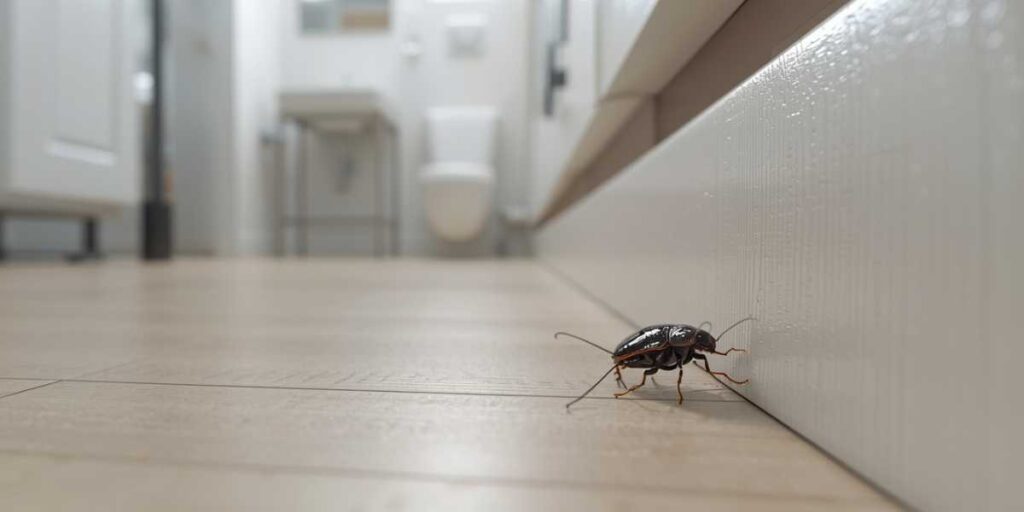
Baby cockroaches cannot fly because they lack fully developed wings. Even species where adults are capable fliers, like American cockroaches, go through their entire nymph stage without flight capability.
This limitation affects how they move through your home and where you’re likely to encounter them.
The absence of wings doesn’t slow these pests down significantly. Cockroach nymphs are incredibly fast runners, capable of covering considerable distances quickly when threatened.
Their speed and agility make them difficult to catch or swat, which is why prevention and treatment methods focus on baits and residual insecticides rather than physical elimination.
How Nymphs Navigate Your Home
Without the ability to fly, baby roaches rely entirely on crawling to move between locations. They prefer traveling along edges where walls meet floors or countertops, using these pathways as highways throughout your home.
Their behavior is strongly influenced by thigmotaxis, which means they feel more secure when their bodies touch surfaces on multiple sides.
This preference for tight spaces explains why you often find cockroaches in cracks, behind picture frames or squeezed into narrow gaps.
Baby roaches are even more dependent on these protected pathways than adults because of their vulnerability to predators and environmental hazards.
Developmental Stages and Wing Formation
Wings begin forming during the later nymph stages but remain as small, non-functional pads until the final molt into adulthood. You can sometimes see these wing buds on larger nymphs as small flaps on their back segments.
The progression of wing development helps experts determine which stage of development a particular nymph has reached.
The molting process gradually builds the wing structure over multiple stages. Each time a nymph sheds its exoskeleton, the wing pads grow slightly larger and more defined.
Only after the final molt does the cockroach emerge as a fully winged adult capable of flight or gliding, depending on the species.
Effective Methods to Get Rid of Baby Cockroaches
Eliminating baby cockroaches requires a comprehensive approach that addresses both the visible nymphs and the hidden breeding population.
Single treatment methods rarely succeed against established infestations because cockroaches reproduce quickly and hide effectively.
How to get rid of baby cockroaches starts with understanding their biology and behavior. These young roaches need the same basic resources as adults: food, water and shelter.
Denying them access to these necessities creates an inhospitable environment that reduces population growth and makes other control methods more effective.
Immediate Sanitation and Prevention Steps
Deep cleaning represents your first line of defense against cockroach infestations. Focus on kitchens and bathrooms where food debris and moisture accumulate.
Wipe down all surfaces, sweep and mop floors thoroughly and clean behind and under all appliances where grease and food particles collect.
Store all food in airtight containers made of glass or thick plastic. Never leave pet food out overnight, and promptly clean up any spills or crumbs.
Take out garbage daily and ensure trash cans have tight-fitting lids. These simple steps eliminate the food sources that sustain growing nymph populations.
Fix all water leaks immediately, including dripping faucets, leaking pipes and condensation issues. Dry out sinks and tubs before bed, and repair any areas where water accumulates.
Cockroaches can survive for weeks without food but only days without water, making moisture control particularly effective.
Targeted Treatment Options
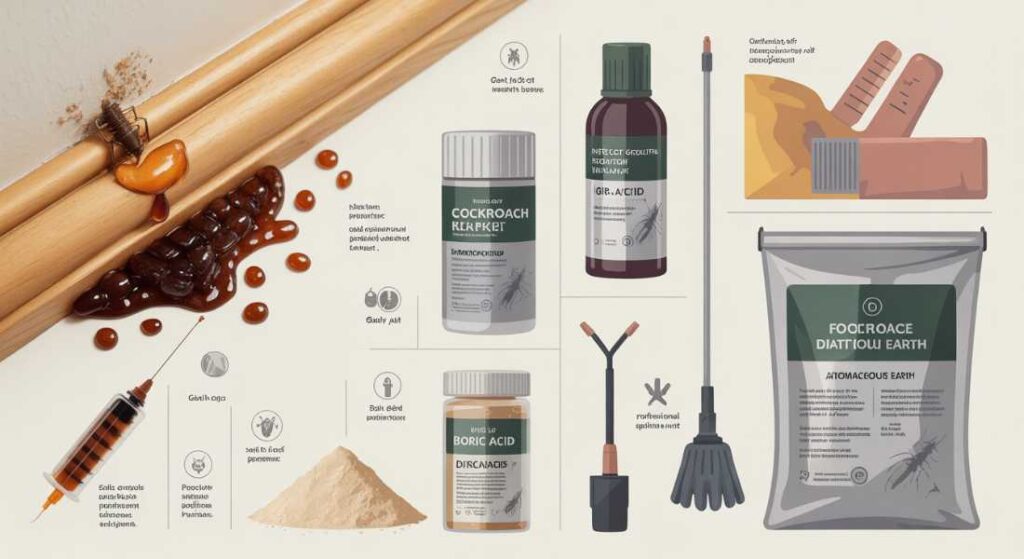
Gel baits work exceptionally well against cockroach nymphs because these products attract roaches with food-based attractants. Place small dots of gel bait in areas where you’ve seen activity, behind appliances, under sinks and in cabinets.
The nymphs consume the bait and carry it back to their hiding spots where it affects others through contact and feeding.
Insect growth regulators disrupt the molting process, preventing nymphs from developing into reproductive adults.
These products don’t kill immediately but effectively break the reproduction cycle. They work best when combined with other treatment methods for comprehensive control.
Diatomaceous earth provides a non-toxic option that works mechanically rather than chemically. This powder damages the roach’s exoskeleton, causing dehydration and death.
Apply food-grade diatomaceous earth in thin layers in cracks, crevices and behind appliances. The powder remains effective as long as it stays dry.
Professional Pest Control Considerations
Severe infestations or repeated DIY failures warrant professional intervention. Licensed exterminators have access to professional-grade products and application methods not available to homeowners.
They can identify the specific species involved and customize treatment plans accordingly.
Professional treatments typically involve multiple visits to ensure complete elimination. The initial treatment targets adult roaches and accessible nymphs.
Follow-up visits address newly hatched nymphs from eggs that survived the first treatment. This staged approach proves necessary because no treatment kills eggs inside their protective cases.
Integrated Pest Management combines chemical treatments with environmental modifications and ongoing monitoring.
This comprehensive strategy provides long-term control rather than temporary relief. Professional technicians can identify entry points, harborage areas and conducive conditions that homeowners might miss.
Preventing Future Cockroach Problems
Successfully eliminating current cockroach populations means nothing if new ones can easily establish themselves. Long-term prevention requires ongoing vigilance and maintenance to keep your home inhospitable to these persistent pests.
Seal all cracks and crevices where cockroaches might enter or hide. Use caulk around baseboards, pipes, electrical outlets and any gaps in walls or cabinets. Install door sweeps on exterior doors and repair damaged window screens.
Even tiny openings provide sufficient access for cockroaches to enter your home.
Building a Defensive Barrier
Create a protective zone around your home’s exterior by keeping vegetation trimmed back from the foundation. Remove leaf litter, mulch and debris from around the perimeter where cockroaches might harbor before entering.
Consider applying a barrier treatment of residual insecticide around the foundation and entry points.
Inspect items before bringing them inside your home. Cockroaches and their egg cases often hitchhike in grocery bags, cardboard boxes, used furniture and appliances.
Carefully examine these items outside or in a garage before bringing them into living areas. Discard cardboard quickly rather than storing it inside.
Ongoing Monitoring and Maintenance
Continue using monitoring traps even after you’ve eliminated visible cockroach activity.
These traps provide early warning if new roaches enter your home or if the population begins rebuilding. Check traps weekly and respond immediately if you catch any cockroaches.
Schedule regular deep cleaning sessions that target areas where cockroaches prefer to hide. Pull out appliances quarterly to clean behind and underneath them.
Empty and clean cabinets several times per year. This regular disruption prevents roaches from establishing secure harborage areas.
Stay alert for signs of renewed activity including droppings, egg cases, shed exoskeletons and actual roach sightings.
Early detection allows for quick intervention before small numbers grow into major infestations. Document any sightings with dates and locations to track patterns over time.
Frequently Asked Questions
Are cockroach nymphs baby cockroaches?
Yes, cockroach nymphs and baby cockroaches are exactly the same thing. Nymph is the scientific term used by entomologists to describe the immature stage of cockroach development, while baby cockroach is the common term most people use. These young roaches emerge from eggs and go through multiple molts before reaching adulthood.
What is the difference between cockroach nymph and cockroach?
The difference between a cockroach nymph and an adult cockroach involves size, appearance and reproductive capability. Nymphs are smaller, lack fully developed wings and cannot reproduce.
Adult cockroaches have complete wings, larger bodies and the ability to mate and produce eggs. Both stages have similar dietary needs and behaviors but nymphs must molt multiple times before maturing.
What does it mean if I see a cockroach nymph?
Seeing a cockroach nymph means eggs have hatched inside your home, indicating an active breeding population.
This sighting confirms that adult cockroaches have been present long enough to reproduce. The cockroach nymph vs baby cockroach question becomes less important than the immediate need to address the infestation before it grows larger.
Should I worry if I see one roach?
Yes, you should be concerned if you see even one roach, especially if it’s a nymph. That single visible cockroach typically indicates many more are hiding in walls, cabinets and other concealed areas.
Cockroaches are nocturnal and avoid light, so daytime sightings suggest population pressure forcing them into the open. Take immediate action by cleaning thoroughly, eliminating food and water sources and considering professional pest control.
How long does it take for baby roaches to become adults?
The development time from nymph to adult varies by species and environmental conditions. German cockroaches can mature in as little as 36 days under optimal conditions, while American cockroaches typically take several months.
Temperature, food availability and humidity levels all affect growth rates. Warmer conditions with abundant resources accelerate development.
Do baby cockroaches bite humans?
Baby cockroaches can technically bite humans but rarely do so. They lack the size and strength to cause painful bites like some other insects.
In extreme infestations where food becomes scarce, cockroaches of all ages might nibble on sleeping humans, particularly around the mouth, hands or feet where food residue may remain. These incidents are uncommon and usually painless.
Conclusion
Understanding that cockroach nymph vs baby cockroach describes the same pest helps you focus on what really matters: identifying these young roaches quickly and taking decisive action.
The presence of nymphs in your home signals active breeding that will only worsen without intervention.
Early detection and comprehensive treatment offer your best chance for successful elimination.
Combine thorough cleaning with targeted pest control products and ongoing prevention to create an environment where cockroaches cannot thrive. Don’t hesitate to call professional exterminators if DIY methods fail or if you’re dealing with widespread infestation.
Remember that seeing even one baby roach deserves your immediate attention. These resilient pests reproduce rapidly and adapt quickly to control measures.
By acting fast and maintaining vigilance, you can protect your home from the health risks and property damage that cockroach infestations cause.