

Introduction
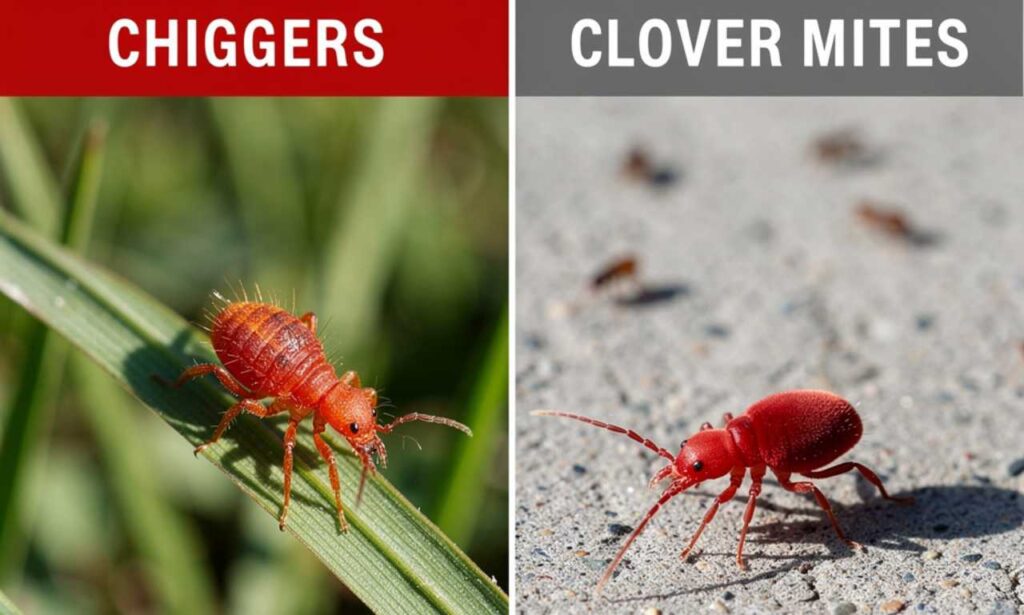
Chiggers vs clover mites are two of the most commonly confused tiny red bugs homeowners encounter. While both appear as small reddish creatures on concrete surfaces and around homes, they are completely different organisms with distinct behaviors and risks. Understanding the difference between these pests is crucial because one bites humans and causes intense itching, while the other is harmless but can become a nuisance when invading homes in large numbers.
This comprehensive guide will help you identify which red bug you’re dealing with and provide effective solutions for control and prevention.
What Are Chiggers?
Chiggers are the larval stage of mites belonging to the Trombiculidae family. These tiny red bugs are nearly invisible to the naked eye, measuring only about 1/150th of an inch. Despite their small chigger size, they can cause significant discomfort to humans and animals.
Unlike adult mites that feed on plant material, chigger larvae are parasitic and feed on skin cells. They don’t burrow into skin as commonly believed but instead attach themselves to hair follicles and inject digestive enzymes that break down skin tissue.
Chigger Appearance and Identification
What does a chigger look like? These skin chigger tiny red bugs appear as barely visible red or orange dots. Under magnification, they have six legs in their larval stage and eight legs as adults. Their bright red or orange coloring makes them somewhat easier to spot against light backgrounds, though their microscopic size makes identification challenging without close inspection.
How big are chiggers exactly? Adult chiggers measure roughly 1/20th of an inch, while the larvae that bite humans are much smaller at approximately 1/150th of an inch.
What Are Clover Mites?
Clover mites are tiny arachnids that feed exclusively on plants, particularly clover, grasses, and other vegetation. These red insects on concrete are often spotted in large numbers during spring and fall when they’re most active.
Measuring about 1/30th of an inch, clover mites are slightly larger than chiggers and visible to the naked eye as moving red specks. They have eight legs, with the front pair being noticeably longer than the others, which they often hold forward like antennae.
Clover Mite Behavior and Habitat
These tiny red bugs on concrete surfaces typically appear when they migrate from lawns and gardens seeking shelter or food. They’re particularly attracted to sunny exterior walls and often enter homes through tiny cracks and crevices.
Clover mites in house settings usually occur during temperature extremes when outdoor conditions become unfavorable. They don’t infest homes permanently but can appear in overwhelming numbers, leaving red stains when crushed.
Key Differences Between Chiggers and Clover Mites
Understanding the chigger vs clover mite distinction requires examining several critical characteristics that set these creatures apart.
Physical Appearance
The clover mite vs chigger comparison reveals distinct visual differences. Clover mites have a characteristic velvety appearance with their front legs extending prominently forward. Chiggers appear more rounded and lack this distinctive leg arrangement.
When examining red mites on concrete, clover mites typically gather in large visible groups, while chiggers are usually found in vegetation and rarely congregate on hard surfaces.
Biting Behavior
The most significant difference concerns biting. Can clover mites bite humans? No, they cannot. Clover mites lack the mouthparts necessary to bite people or animals. Reports of clover mite bites are mistaken identifications.
In contrast, chigger bites are very real and problematic. These little red bugs that bite attach to skin and cause intense itching that can last for days or even weeks.
Habitat Preferences
Chiggers prefer moist, vegetated areas with tall grass, weeds, and brush. They’re commonly found in overgrown yards, forests, and areas with dense ground cover.
Clover mites favor sunny locations with lush vegetation, particularly areas with well-fertilized lawns. When you spot small red bugs on concrete near garden beds or lawns, they’re more likely clover mites than chiggers.
Chigger Bites: Symptoms and Treatment
Chigger bite symptoms develop within hours after exposure and can cause significant discomfort.
Recognizing Chigger Bites
Images of chigger bites typically show small red welts concentrated around ankles, waistbands, and other areas where clothing fits tightly. Pictures of chiggers bites reveal clusters of intensely itchy bumps rather than single isolated bites.
Chigger bites pictures commonly display raised red bumps surrounded by inflamed skin. The chigger bite image often shows bites grouped together because multiple larvae attach during a single exposure.
Treatment for Chigger Bites
Treatment for chigger bites focuses on relieving itching and preventing infection. Wash the affected area thoroughly with soap and water immediately after exposure. Apply anti-itch creams containing hydrocortisone or calamine lotion to reduce inflammation.
Oral antihistamines can help manage severe itching. Avoid scratching as this increases infection risk and prolongs healing time. Chiggers bites typically resolve within one to two weeks with proper care.
Clover Mite Control and Prevention
Managing these tiny red mite populations requires different strategies than controlling biting pests.
How to Get Rid of Clover Mites Outside
Creating a barrier between your home and clover mite populations is essential. Remove vegetation within 18-24 inches of your foundation to create a dry, plant-free zone that deters these pests.
How to get rid of clover mites effectively involves reducing moisture and food sources. Trim grass regularly and avoid over-fertilizing lawns near your home. These concrete mites vs chiggers prefer different environments, so proper lawn maintenance helps control both.
Clover Mite Insecticide Options
When prevention isn’t enough, miticide for clover mites can provide effective control. Apply clover mite insecticide around foundations, window frames, and door thresholds following label instructions carefully.
How do you get rid of clover mites indoors? Vacuum them up rather than crushing them to avoid red stains. Seal entry points with caulk and repair damaged screens to prevent future invasions.
Identifying Red Bugs on Concrete
When you encounter little red bugs on concrete, proper identification determines the appropriate response.
Concrete Mites Identification
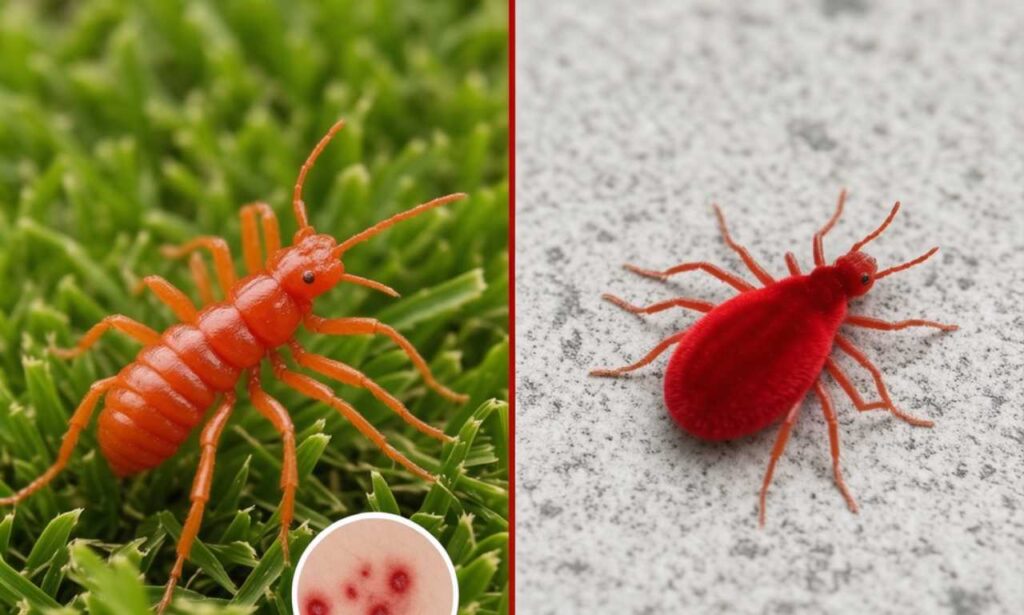
Red bugs on concrete moving in large groups are almost certainly clover mites. These concrete tiny red bugs create visible patches of red when gathered together and move relatively quickly across surfaces.
Red concrete mites typically appear during warm, sunny days and retreat to cracks and crevices during temperature extremes. Their behavior on hard surfaces differs markedly from chiggers, which avoid concrete and prefer vegetation.
Spider Mites vs Other Red Bugs
The clover mite vs spider mite comparison adds another layer of identification complexity. Spider mites are even smaller and typically found on plant leaves rather than concrete. Clover mites vs spider mites can be distinguished by their habitat preferences and the webbing spider mites produce on infested plants.
Prevention Strategies for Both Pests
Preventing infestations of both chiggers and clover mites requires understanding their different needs and behaviors.
Landscape Management
Maintain a well-groomed yard with regularly mowed grass to discourage chigger populations. Remove leaf litter, brush piles, and dense vegetation where chiggers thrive.
For clover mite control, create dry zones around foundations and minimize dense plantings near structures. Both pests benefit from similar landscape modifications, making integrated pest management efficient.
Personal Protection
When entering areas where chiggers may be present, wear long pants tucked into boots and apply insect repellent containing DEET to exposed skin and clothing. Shower immediately after outdoor activities in chigger-prone areas.
Since does clover mites bite is answered with a definite no, personal protection from clover mites focuses on preventing home invasion rather than protecting skin. Seal entry points and maintain barriers around your foundation.
Understanding Red Mites vs Chiggers
The broader category of chiggers vs mites includes numerous species with varying behaviors and risks.
Red Bugs vs Chiggers
When comparing chiggers vs red bugs, it’s important to note that “red bugs” is actually a colloquial term for chiggers in many regions. This naming confusion contributes to misidentification of clover mites or chiggers.
Understanding whether you’re dealing with clover mites or chiggers determines whether you need to worry about bites or simply home invasion.
Tiny Orange Spiders and Other Lookalikes
Sometimes what appear to be tiny orange spiders are actually clover mites or other harmless arachnids. True spiders have distinct body segments and web-building behavior that differentiate them from mites.
Seasonal Patterns and Activity
Both pests show distinct seasonal activity patterns that affect when you’re most likely to encounter them.
When Chiggers Are Most Active
Chiggers are most problematic during warm months from late spring through early fall. Peak activity occurs when temperatures range between 77-86°F and humidity is high.
Clover Mite Seasonal Trends
Clover mites surge during spring and fall when moderate temperatures and abundant vegetation provide ideal conditions. They may invade homes in massive numbers during these transitional seasons.
Health Concerns and Risks
Understanding the actual health implications of each pest helps maintain proper perspective and response.
Chigger Health Risks
Beyond the intense itching and discomfort, chigger bites images show that scratching can lead to secondary bacterial infections. In some regions, certain chigger species can transmit scrub typhus, though this is rare in North America.
Clover Mite Health Impact
Do clover mites bite? No, and they pose no direct health threats to humans or pets. Their main concern is the nuisance factor and potential staining of surfaces when crushed. They don’t spread diseases or cause structural damage.
Professional Pest Control Considerations
Sometimes professional intervention becomes necessary for severe infestations.
When to Call Professionals for Chiggers
If chigger populations in your yard make outdoor activities impossible or if landscape modifications don’t reduce numbers sufficiently, professional treatment may be warranted. Professionals can apply targeted treatments to vegetation and identify problem areas you might miss.
Professional Clover Mite Management
Persistent clover mite invasions despite prevention efforts may require professional assessment. Experts can identify entry points, apply appropriate miticide for clover mites, and implement long-term management strategies.
FAQs
What is the main difference between chiggers and clover mites?
The primary difference is that chiggers are parasitic larvae that bite humans and cause intense itching, while clover mites are plant-feeding arachnids that don’t bite people at all. Chiggers vs clover mites also differ in size, habitat preferences, and the risks they pose to homeowners.
Can clover mites bite humans?
No, clover mites cannot bite humans or animals. They lack the necessary mouthparts to pierce skin and feed exclusively on plant juices. Any perceived clover mite bite is likely a misidentification of another pest.
How can I tell if I have chiggers or clover mites?
Look at the location where you found them. Red bugs on concrete in large visible groups are clover mites, while chiggers prefer vegetation and are rarely seen on hard surfaces. Chiggers are also smaller and nearly invisible without magnification.
What do chigger bites look like?
Chigger bites appear as small red welts or bumps, often clustered in areas where clothing fits tightly. Pictures of chiggers bites show intensely itchy raised bumps that may develop a central blister or pustule.
How do I get rid of clover mites in my house?
Vacuum them immediately without crushing to avoid stains. Seal entry points around windows, doors, and foundations. Remove vegetation near your home’s exterior and apply appropriate clover mite insecticide around the perimeter if needed.
Are tiny red bugs on concrete dangerous?
If they’re clover mites, they’re harmless but annoying. These concrete mites don’t bite or spread disease. However, if you’re encountering biting issues in grassy areas, you likely have chiggers, which cause uncomfortable bites but rarely transmit diseases in North America.
What kills chiggers in the yard?
Maintain short grass, remove vegetation debris, and apply insecticides labeled for chigger control to problem areas. Focus treatments on shady, moist areas with dense vegetation where these tiny red bugs that bite thrive.
How long do chigger bites last?
Chigger bites typically cause itching for one to two weeks, though some people experience symptoms for longer periods. Proper treatment for chigger bites can reduce duration and intensity of symptoms.
Conclusion
Understanding the differences between chiggers vs clover mites empowers you to respond appropriately when you encounter these tiny red bugs. While chiggers pose a genuine nuisance through their itchy bites, clover mites are harmless plant feeders that simply need to be excluded from your home.
Whether you’re dealing with little red bugs on concrete or experiencing mysterious bites after outdoor activities, proper identification is the first step toward effective management. Implement the prevention strategies outlined here, and don’t hesitate to seek professional help if infestations persist.
Remember that both pests respond well to proper environmental management, making your home less attractive to these unwanted visitors while maintaining a healthy, enjoyable outdoor space.