

Introduction
Carpenter ant frass are the telltale wood shavings and debris that these destructive insects leave behind as they tunnel through wooden structures in your home. Unlike termites that consume wood, carpenter ants excavate it to create their nests, pushing out a mixture of sawdust-like material and body parts that accumulates near infested areas.
Finding this debris is often the first sign that carpenter ants have established a colony inside your walls, windowsills, or wooden beams. Understanding what this material looks like and where it appears can help you detect an infestation early and take action before extensive structural damage occurs. This guide will show you how to identify carpenter ant activity, distinguish it from termite damage, and respond effectively to protect your home.
What Is Carpenter Ant Frass
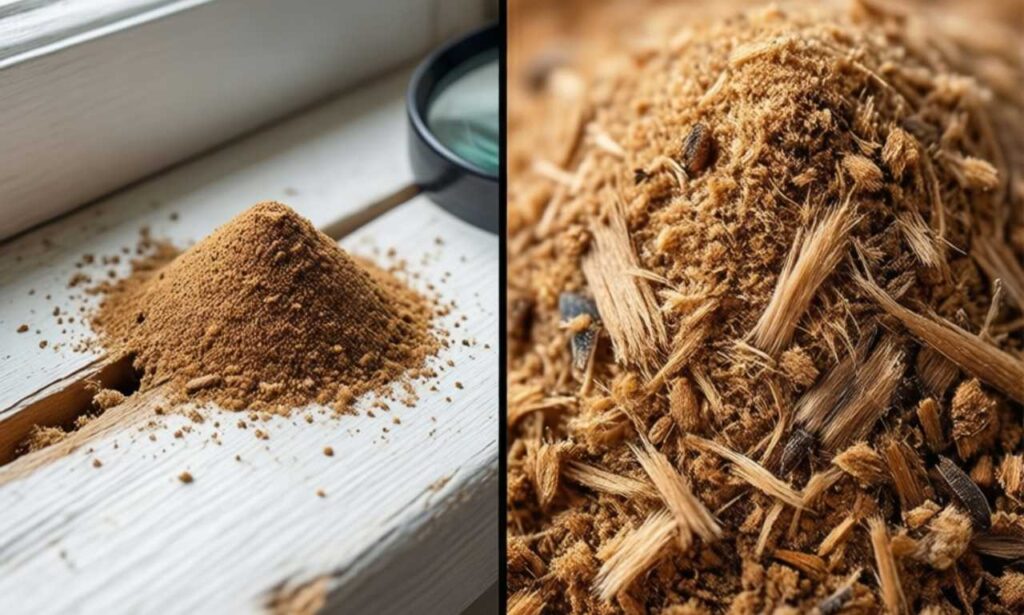
Carpenter ant frass is the waste material that these insects expel from their galleries as they carve out nesting spaces in wood. The material consists of fine wood particles that resemble sawdust, along with dead ant body parts, soil, and other debris from inside the nest.
When carpenter ants excavate wood, they don’t eat it. Instead, they remove it to create smooth tunnels and chambers where the colony lives. This excavated material gets pushed out through small openings, forming piles that homeowners often discover on windowsills, baseboards, or floors below infested wood.
The appearance and location of these piles provide crucial clues about the presence and extent of a carpenter ant problem in your home.
Physical Characteristics of the Debris
The material expelled by carpenter ants has distinct features that help with identification. Fresh deposits appear as fine sawdust with a texture similar to coarse sand or ground coffee. The color typically matches the wood being excavated, ranging from light tan to dark brown or reddish tones.
Upon closer inspection, you’ll notice the particles are uniform in size and shape, with some larger wood fragments mixed in. Unlike actual sawdust from construction, carpenter ant frass often contains insect body parts, including legs, antennae, and wing fragments. These biological components distinguish it from ordinary wood dust.
The piles also tend to form cone-shaped mounds directly below the exit holes in the wood. The material feels dry and fibrous when touched, without any moisture or stickiness that might indicate other pest activity.
Common Locations Where You’ll Find It
Understanding where carpenter ant frass typically appears helps you conduct thorough inspections of your property. These piles accumulate in specific areas that indicate active nest sites nearby.
Window Sills and Frames
Carpenter ants in windowsill areas are extremely common because these wooden structures often have moisture damage that makes excavation easier. You’ll find carpenter ant frass on window sill surfaces, especially in corners where the material accumulates undisturbed. The presence of carpenter ants on window sill areas indicates nearby galleries, often within the frame itself or the surrounding wall structure.
Basement and Attic Spaces
These less-frequented areas of your home provide ideal conditions for carpenter ant colonies. Look for piles near wooden beams, joists, and support structures. Basements with moisture problems and attics with roof leaks are particularly vulnerable to infestation.
Behind Walls and Under Floors
Active colonies inside wall voids push frass carpenter ants produce through tiny cracks in baseboards or along the junction between walls and floors. You might notice small piles appearing regularly in the same spots, indicating ongoing excavation activity behind these surfaces.
Carpenter Ant Frass vs Termite Frass
Distinguishing between these two wood-destroying pests requires understanding the key differences in their waste materials. While both indicate serious structural threats, the characteristics of carpenter ant vs termite droppings reveal which pest you’re dealing with.
Termite Frass Characteristics
What is frass from termites differs significantly from ant debris. Termite frass appears as tiny, hard pellets with six concave sides, resembling grains of sand or sawdust pellets. Drywood termite droppings are uniform in shape and pushed out in small quantities through kick-out holes. The color of termite poop ranges from cream to dark brown depending on the wood consumed.
When examining termite droppings vs carpenter ant material, note that termite frass vs ant frass shows termites produce compact pellets while ants create fibrous sawdust. What does termite droppings look like compared to ant debris is more pellet-like and uniform, whereas ant material appears coarser and less organized.
Key Differences in Appearance
Carpenter ant droppings mixed with wood shavings create a fluffier, less uniform pile. Ant frass vs termite frass comparison shows that carpenter ant vs termite droppings have distinctly different textures. The termite vs carpenter ant frass distinction becomes clear when you examine the particles closely.
Carpenter ant termite droppings also differ in moisture content. Termite dust and frass termite droppings remain dry and pellet-shaped, while carpenter ants frass may contain visible wood fibers and insect parts. Black ant frass from carpenter species often includes darker particles mixed with lighter sawdust.
Location Differences
Signs of carpenter ants vs termites extend beyond just the droppings. Termites droppings appear in small piles near exit holes in dry wood, while carpenter ant frass on window sill surfaces or floors typically accumulates in larger quantities near active galleries.
How to Identify Carpenter Ant Activity
Recognizing signs of carpenter ants in house environments requires looking beyond just the frass itself. Multiple indicators together confirm an active infestation requiring immediate attention.
Visual Inspection Techniques
Start by examining carpenter ant frass pictures and carpenter ant frass images online to familiarize yourself with what you’re looking for. Use a flashlight to inspect dark corners, behind appliances, and in crawl spaces. Look for ant frass images that match what you find in your home for proper ant frass identification.
Check what does carpenter ant frass look like in real situations by comparing your findings with reference photos. Fresh piles indicate current activity, while old, dusty accumulations might suggest past problems.
Signs of Active Infestation
Signs of carpenter ants include regular appearance of new frass piles in the same locations. You might hear faint rustling sounds inside walls during quiet evening hours as workers excavate wood. Seeing large black ants, especially winged reproductives during spring months, confirms a mature colony nearby.
Signs of carpenter ant damage extend to the wood itself. Tap wooden beams and listen for hollow sounds. Probe suspect wood with a screwdriver to check for hidden galleries. Smooth, clean tunnels without mud tubes distinguish carpenter ant damage from termite activity.
Monitoring and Documentation
Take photos of ant frass vs termite frass samples you find for comparison with professional assessments. Document locations and dates when you discover new piles. This information helps pest control professionals determine colony locations and treatment strategies.
Regular monitoring of known problem areas allows you to track whether infestations are growing or treatment efforts are succeeding.
Understanding the Threat
Carpenter ant presence represents more than just a cosmetic nuisance. These insects can cause significant structural damage over time if left untreated.

Unlike termites that digest cellulose, carpenter ants simply excavate wood to expand their living space. However, large colonies can remove substantial amounts of material from beams, joists, and other support structures. This weakening becomes particularly dangerous in critical load-bearing components of your home.
Moisture-damaged wood provides the easiest excavation material for carpenter ants. This means their presence often indicates underlying moisture problems that also need addressing. Water leaks, poor drainage, and high humidity create conditions that attract these pests and accelerate the damage they cause.
Early detection through frass droppings identification allows you to address problems before colonies grow large enough to cause serious structural concerns.
Prevention and Control Strategies
Protecting your home from carpenter ant infestations involves both eliminating existing colonies and preventing new ones from establishing.
Moisture Control
Since carpenter ants prefer damp, decaying wood, eliminating moisture sources removes their primary attraction. Fix leaking pipes, repair roof damage, and improve ventilation in crawl spaces and attics. Ensure proper drainage around your foundation to keep water away from wooden structures.
Replace any water-damaged wood in your home, as this material provides the easiest excavation sites for carpenter ants. Even small leaks under sinks or around bathtubs can create conditions that invite infestation.
Physical Barriers and Exclusion
Seal cracks and gaps in your home’s exterior to prevent ant entry. Pay special attention to areas where utilities enter the building, as these often provide access points. Trim tree branches and vegetation away from your house to eliminate bridges that ants use to reach your structure.
Store firewood at least 20 feet from your home and keep it elevated off the ground. Never stack wood against your house, as this creates a direct pathway for carpenter ants to enter.
Professional Treatment Options
When you discover active infestations, professional pest control services offer the most effective solutions. Exterminators can locate hidden colonies, apply targeted treatments, and monitor for ongoing activity. They use specialized equipment to inject insecticides directly into wall voids and other inaccessible areas where colonies nest.
Professional services also provide warranties and follow-up visits to ensure complete elimination of the problem.
When to Call a Professional
While small, isolated carpenter ant problems might respond to do-it-yourself treatments, several situations require professional intervention.
If you find large quantities of frass ants produce regularly, this indicates a substantial colony that likely extends through multiple areas of your home. When you see winged reproductive ants indoors, especially in large numbers, this signals a mature colony ready to create satellite nests throughout your property.
Structural concerns arise when you discover carpenter ant activity in load-bearing beams, floor joists, or roof supports. Professional assessment determines the extent of damage and appropriate repair needs alongside pest elimination.
Recurring infestations despite your treatment efforts suggest hidden colonies or entry points you haven’t addressed. Pest control professionals have tools and expertise to locate these problem areas and implement comprehensive solutions.
FAQs
What does carpenter ant frass look like compared to regular sawdust?
Carpenter ant frass appears as fine wood particles similar to sawdust but contains insect body parts, legs, and antennae fragments. The piles form in cone shapes below exit holes and have a coarser, more fibrous texture than clean sawdust from construction work. The material matches the color of the wood being excavated.
How can I tell the difference between termite frass and carpenter ant frass?
Termite frass consists of tiny, hard pellets with six concave sides that resemble grains of sand. Carpenter ant frass looks like fibrous sawdust mixed with debris. Termite pellets are uniform in shape and size, while carpenter ant material appears irregular with visible wood fibers and insect parts mixed throughout.
Where do carpenter ants typically leave frass in homes?
Common locations include windowsills, baseboards, attics, basements, and areas below wall voids. You’ll find carpenter ant frass on window sill surfaces frequently because window frames often have moisture damage. Piles accumulate directly beneath openings where ants expel material from their galleries.
Does finding frass mean I have a serious infestation?
Finding frass indicates active carpenter ant excavation nearby. The amount and frequency of new piles help determine severity. Small, occasional piles might indicate a beginning problem, while large or multiple locations suggest an established colony requiring immediate professional treatment.
Can I remove carpenter ants myself or do I need professional help?
Small infestations caught early might respond to store-bought treatments, but established colonies typically require professional intervention. If you find frass regularly, see winged ants indoors, or discover activity in structural wood, contact a pest control professional for thorough assessment and treatment.
What should I do immediately after finding carpenter ant frass?
Document the location with photos and note when you first discovered the material. Inspect surrounding areas for additional piles or live ants. Check for moisture problems near the frass location. Avoid disturbing the nest area excessively, as this can cause the colony to relocate deeper into your structure.
Conclusion
Recognizing carpenter ant frass gives you an early warning system for detecting these destructive pests before they cause extensive damage to your home. The distinctive sawdust-like piles with insect fragments appear in specific locations that point to nearby nest sites requiring attention.
Understanding the differences between carpenter ant and termite droppings ensures you identify the correct pest and choose appropriate treatment methods. Whether you find debris on windowsills, near baseboards, or in attic spaces, prompt action protects your property from ongoing structural damage.
Address moisture problems, seal entry points, and consult pest control professionals when you discover active infestations. Your vigilance in monitoring for these warning signs and responding quickly will preserve the integrity of your home’s wooden structures for years to come.