

Introduction
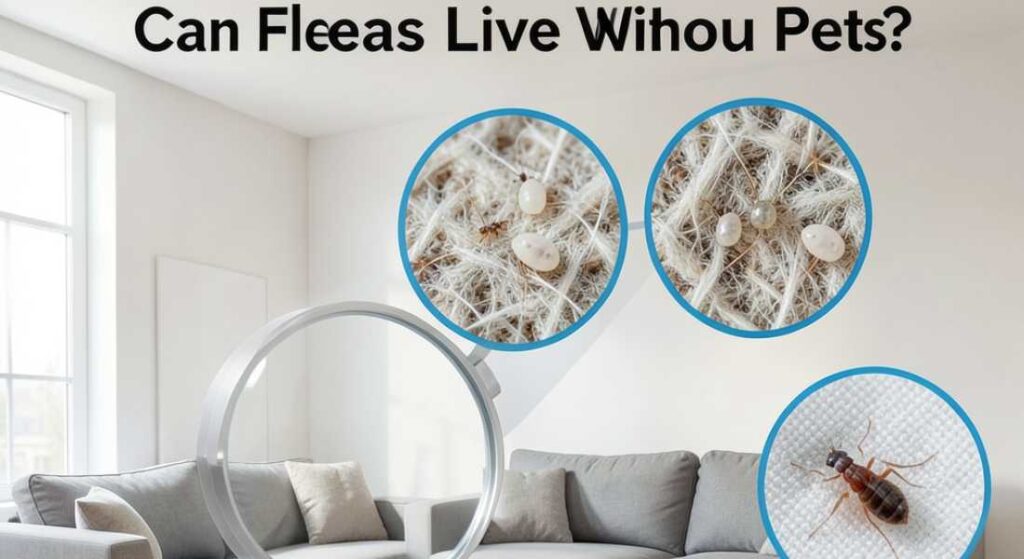
Can fleas live without pets? Yes, they can survive in your home even without any animals present. This surprising fact catches many homeowners off guard when they discover an infestation in a pet-free environment.
Understanding how these parasites operate without a host is essential for effective prevention and elimination.
This guide covers everything you need to know about flea survival, their lifecycle without animals, and practical solutions to protect your home from these persistent pests.
Understanding Flea Biology and Survival
Fleas are remarkable survivors with adaptive mechanisms that allow them to persist in various conditions. These tiny parasites have evolved over millions of years to wait patiently for their next meal.
Adult fleas prefer to live on warm-blooded hosts where they feed on blood and reproduce. However, their lifecycle includes several stages that don’t require immediate access to a host.
The Flea Lifecycle Explained
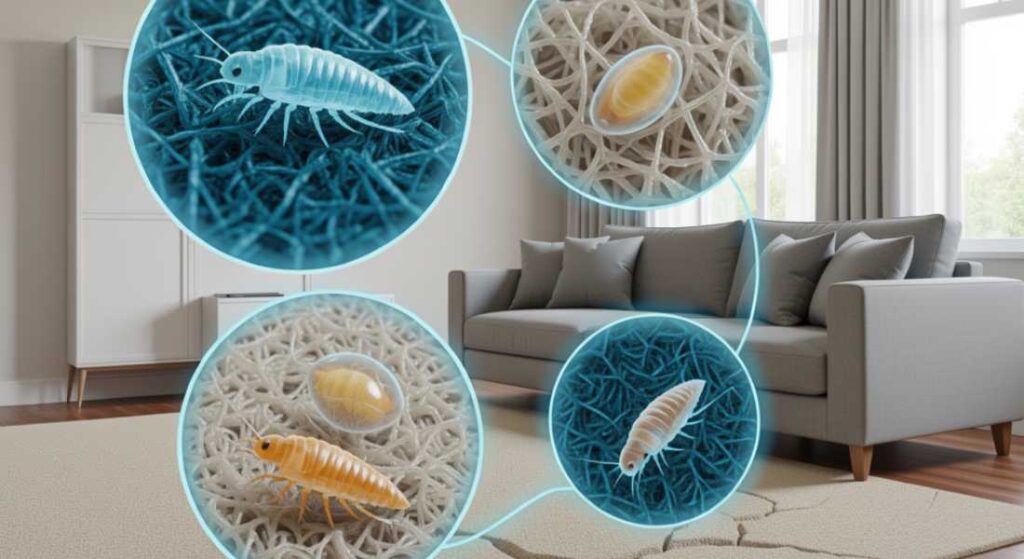
The complete flea lifecycle consists of four distinct stages: egg, larva, pupa, and adult. Each stage has different environmental needs and survival capabilities.
Eggs fall off the host animal and settle into carpets, furniture, and floor cracks. Larvae hatch within two to twelve days and feed on organic debris including adult flea feces.
The pupal stage is where fleas become nearly indestructible, protected inside a cocoon that shields them from pesticides and environmental threats.
How Fleas Detect Potential Hosts
Fleas use sophisticated sensory systems to locate animals or humans. They respond to vibrations, heat, carbon dioxide, and changes in air currents.
When a flea emerges from its cocoon, it can immediately jump toward these signals. This detection system remains active whether pets are present or not, which explains why fleas may attack humans in animal-free homes.
How Long Fleas Survive Without Hosts
The duration of flea survival without feeding depends on their life stage and environmental conditions. Adult fleas typically live only a few days to two weeks without blood meals under normal circumstances.
However, pupae can remain dormant inside their protective cocoons for several months. Some studies show that pupae can survive up to five months or longer while waiting for the right conditions to emerge.
Factors Affecting Flea Longevity
Temperature and humidity play crucial roles in determining survival rates. Fleas thrive in warm, humid environments between 65 and 80 degrees Fahrenheit with 70% humidity.
Cold temperatures slow their metabolism and extend their dormant period. Conversely, very dry conditions can dehydrate and kill adult fleas more quickly.
Adult Flea Survival Timeline
Adult fleas that have recently fed can survive approximately one to two weeks without access to another host. Newly emerged adults that haven’t fed yet may die within a few days.
The protective cocoon stage allows pre-emerged adults to survive much longer. This explains why homes can suddenly experience infestations weeks or months after pets have left.
Fleas in Homes Without Animals
A house without pets can still harbor active flea populations for extended periods. Previous infestations from former pets or wild animals are the most common sources.
Fleas don’t simply disappear when animals leave. The eggs, larvae, and pupae already present in the environment continue developing regardless of host availability.
Common Entry Points for Fleas
Wild animals like raccoons, squirrels, and rodents can introduce fleas to your property. These pests may nest in attics, crawl spaces, or underneath porches.
Used furniture and clothing from infested locations can also transport fleas into your home. Even visiting a flea-infested area can result in bringing these parasites back on your clothing or belongings.
Where Fleas Hide Without Pets
Carpeting provides ideal hiding spots for all flea life stages. The fibers offer protection and darkness that larvae prefer.
Upholstered furniture, bedding, and floor cracks also serve as perfect habitats. Fleas concentrate in areas where pets or humans frequently rest because these spots retain warmth and skin cells that larvae feed upon.
Can Humans Sustain Flea Populations
While fleas strongly prefer animals, they will feed on humans when no other options exist. Human blood can sustain adult fleas temporarily, but they don’t reproduce as successfully.
Fleas have difficulty maintaining long-term populations on humans because our skin is less accessible and we have fewer hair follicles for them to hide in. However, they can still cause significant discomfort through biting.
Flea Bites on Humans
Human flea bites typically appear as small red bumps with a central puncture point. They often occur in clusters or lines on ankles, legs, and feet.
The bites cause intense itching and can lead to allergic reactions in sensitive individuals. Scratching can result in secondary infections that require medical attention.
Behavioral Differences with Human Hosts
Fleas on humans behave differently than those on pets. They tend to jump on, feed quickly, and jump off rather than remaining on the body.
This hit-and-run feeding pattern makes detection and elimination more challenging. Fleas may hide in bedding, clothing, and carpets between feeding sessions.
Eliminating Fleas from Pet-Free Homes
Removing fleas from a residence without animals requires a comprehensive approach targeting all life stages. Single treatment methods rarely achieve complete elimination.
Thorough vacuuming removes eggs, larvae, and some adults from carpets and furniture. Dispose of vacuum bags immediately in outdoor trash containers to prevent re-infestation.
Deep Cleaning Strategies
Wash all bedding, curtains, and removable fabric items in hot water above 130 degrees Fahrenheit. High heat kills fleas at all life stages.
Steam cleaning carpets and upholstery penetrates deep into fibers where larvae hide. The combination of heat and moisture effectively eliminates developing fleas.
Chemical Treatment Options
Insect growth regulators prevent larvae from developing into adults and break the reproduction cycle. These products remain effective for several months with proper application.
Adult flea sprays containing pyrethrins or permethrins kill active fleas on contact. Apply these treatments to carpets, baseboards, and furniture according to product instructions.
Natural Remedies and Prevention
Diatomaceous earth is a non-toxic powder that damages flea exoskeletons and causes dehydration. Sprinkle food-grade diatomaceous earth on carpets and leave for several days before vacuuming.
Regular vacuuming and maintaining low indoor humidity below 50% creates unfavorable conditions for flea development. Sealing cracks and gaps prevents wild animals from introducing new fleas.
Professional Pest Control Solutions
Severe or persistent infestations may require professional intervention. Pest control experts have access to stronger treatments and specialized equipment.
Professional services typically include initial treatment, follow-up applications, and guarantees against re-infestation. The cost varies depending on home size and infestation severity.
When to Call an Exterminator
Contact professionals if home treatments fail after three to four weeks of consistent effort. Multiple generations of fleas require repeated treatments that homeowners may struggle to coordinate properly.
Properties with severe infestations affecting multiple rooms need professional-grade treatments. Exterminators can identify hidden infestation sources that homeowners might miss.
Preventing Future Infestations
Prevention is always easier than elimination once fleas establish themselves. Regular maintenance and vigilance keep homes flea-free long-term.
Inspect used furniture carefully before bringing items inside. Look for signs of flea dirt, which appears as tiny black specks that turn red when moistened.
Protecting Your Home Year-Round
Seal exterior gaps and cracks that allow wildlife access to your property. Install screens on vents and repair damaged areas around foundations.
Maintain your yard by keeping grass short and removing debris where wild animals might nest. Create barriers using gravel or stone between wooded areas and your home.
Monitoring for Early Signs
Watch for unexplained bites on your skin, particularly around ankles and lower legs. Early detection allows for faster and easier elimination.
Place white socks over your feet and walk slowly through suspected areas. Fleas will jump onto the white fabric where they become easily visible.
FAQs
How long can fleas live in a house without pets?
Adult fleas survive one to two weeks without feeding, but pupae can remain dormant in carpets and furniture for up to five months or longer waiting for a host to appear.
This extended dormancy period explains why homes can experience sudden infestations long after animals have departed.
Can fleas live in your house if you don’t have animals?
Yes, fleas can establish populations in homes without pets by feeding on human blood and continuing their lifecycle in carpets and furniture.
While they prefer animals, the existing eggs and larvae in your environment will continue developing into adults that seek out any available blood source including humans.
Can fleas ever go away on their own?
Fleas rarely disappear without intervention because they reproduce rapidly and their pupae can survive for months in dormant states.
Even if all adult fleas die, new generations will emerge from eggs and pupae already present in your home unless you actively eliminate them through cleaning and treatment.
Can someone bring fleas in your house?
Yes, people can transport fleas into your home on clothing, shoes, or belongings after visiting infested locations.
Fleas can jump onto fabric and hide in seams until they find a suitable environment to continue their lifecycle, making human transmission a common source of new infestations.
Will fleas bite humans repeatedly?
Fleas will bite humans multiple times if no animal hosts are available. They typically feed for several minutes during each session and may bite the same person numerous times throughout the day and night, causing persistent itching and discomfort.
What kills flea eggs in carpets?
Hot water extraction (steam cleaning), insect growth regulators, and thorough vacuuming effectively kill or remove flea eggs from carpet fibers. Combining these methods provides the most comprehensive elimination of eggs and prevents new generations from developing.
Conclusion
Fleas demonstrate remarkable survival abilities even in the absence of pets. Understanding their lifecycle, hiding spots, and feeding patterns empowers homeowners to eliminate these persistent pests effectively.
A comprehensive approach combining deep cleaning, appropriate treatments, and ongoing prevention ensures long-term success. Whether dealing with an active infestation or protecting against future invasions, consistent effort produces flea-free living spaces.
Remember that patience and thoroughness are essential because flea elimination requires addressing multiple life stages over several weeks. With proper knowledge and dedication, any home can become and remain free from these unwelcome parasites.