

Introduction
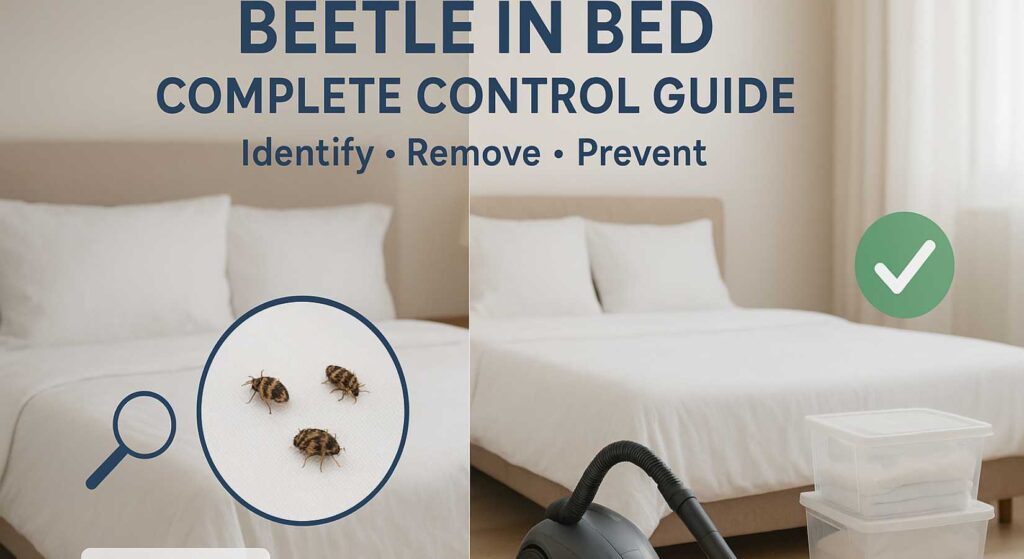
Beetle in bed situations can be alarming and frustrating for any homeowner. Finding these small creatures crawling across your sheets or hiding in your mattress is never pleasant. This comprehensive guide will help you identify which beetles are invading your bedroom, understand why they’re there, and learn effective methods to eliminate them completely.
Whether you’ve spotted a cigarette beetle in bedroom areas or noticed carpet beetle larvae on bed surfaces, understanding these pests is your first step toward reclaiming a peaceful sleep environment.
Understanding Common Beetles Found in Bedrooms
Beetles in sleeping areas are more common than most people realize. Several species might end up in your bed for different reasons. The most frequent invaders include carpet beetles, cigarette beetles, and drugstore beetles. Each has unique characteristics and requires specific approaches for removal.
Carpet beetles are particularly attracted to natural fibers in bedding, clothing, and carpets. These tiny pests feed on keratin found in wool, silk, and other materials. A tiny black beetle in bed is often a carpet beetle searching for food sources or a comfortable place to lay eggs.
Cigarette beetles and tobacco beetles prefer dried plant materials but can wander into bedrooms from nearby infestations. A cigarette beetle in house spaces typically originates from stored food products, dried flowers, or even old books.
Why Would There Be a Beetle in My Bed?
Beetles don’t intentionally seek out beds, but several factors can attract them to your sleeping area. Understanding these reasons helps prevent future infestations.
Food Sources in Your Bedroom
Natural fiber bedding acts as a feast for carpet beetles. Your wool blankets, silk pillowcases, or even cotton sheets with body oils and dead skin cells provide nutrition. Carpet beetle larvae bed infestations occur when adult beetles lay eggs near these food sources.
Hidden Entry Points
Beetles often enter through windows, door gaps, or ventilation systems. Once inside, they explore rooms searching for suitable habitats. A black beetle in bed might have simply wandered in through an open window attracted by indoor lighting.
Existing Infestations Nearby
If you notice cigarette beetles in house areas, they likely originated from your pantry or storage spaces. These beetles infest tobacco products, dried foods, spices, and pet food. They can migrate to bedrooms while searching for new food sources.
Identifying Different Beetle Types in Your Bed
Proper identification is crucial for effective treatment. Different beetles require different elimination strategies.
Carpet Beetles and Their Larvae
Adult carpet beetles are small, round, and measure about 2-4mm in length. They have varied patterns with black, white, and orange scales. However, carpet beetle larvae on mattress surfaces cause the real damage. These larvae are fuzzy, carrot-shaped creatures covered in brown bristles.
Varied carpet beetle in bed situations are particularly common because this species thrives in homes. Look for tiny shed skins and fecal pellets that resemble ground pepper as signs of infestation.
Cigarette and Tobacco Beetles
These beetles are reddish-brown, oval-shaped, and approximately 2-3mm long. A cigarette beetle in bedroom spaces usually indicates an infestation in stored products elsewhere. They have smooth wing covers and a humped appearance when viewed from the side.
Drugstore Beetles
Similar to cigarette beetles, drugstore beetle in bedroom areas suggests nearby food contamination. These beetles infest a wider range of products including bread, flour, spices, and even prescription medications.
Bed Bugs vs Carpet Beetles: Understanding the Difference

Many people confuse carpet beetles with bed bugs, leading to unnecessary panic. While both can appear in beds, they’re completely different pests requiring distinct treatments.
Bed bugs are parasitic insects that feed on human blood, leaving itchy bites. They’re flat, oval, and reddish-brown. The bed bug meme culture online often jokes about the paranoia these pests cause, with funny bed bug memes depicting sleepless nights and extreme reactions.
Carpet beetles don’t bite humans. They feed on natural fibers and organic materials. A beetle in bed meme might show someone overreacting to a harmless carpet beetle thinking it’s a bed bug. Understanding this difference saves time and reduces anxiety.
Black bed bugs don’t actually exist as a species. What people call black bed bugs are usually either engorged bed bugs that appear darker or completely different insects like carpet beetles.
How to Get Rid of Carpet Beetles in Bed
Eliminating carpet beetles requires thorough cleaning and strategic treatments. These methods work for carpet beetles in bedroom spaces and throughout your home.
Immediate Cleaning Actions
Strip all bedding and wash everything in hot water above 120°F. High heat kills carpet beetle larvae in bed and destroys eggs. Dry items on the highest heat setting your fabrics can tolerate.
Vacuum your mattress thoroughly, paying special attention to seams, tufts, and the underside. Use the crevice tool to reach tight spaces where carpet beetle larvae bed populations hide. Dispose of the vacuum bag immediately in an outdoor trash bin.
Deep Cleaning Your Bedroom
Steam clean your mattress if possible. The combination of heat and moisture effectively kills carpet beetles bed infestations at all life stages. Focus on areas where you noticed bugs in carpet and bed surfaces.
Clean under and around your bed frame. Carpet beetles often hide in dust accumulations and forgotten corners. Remove stored items from under the bed and inspect them carefully.
Professional Treatment Options
For severe infestations, carpet beetle treatment by professionals may be necessary. Pest control experts use targeted insecticides and have access to products not available to consumers. They can also identify the source of your infestation and recommend prevention strategies.
Carpet beetle killer products are available at home improvement stores. Look for products containing pyrethrins or permethrin. Apply according to label directions, focusing on carpet edges, closet floors, and other areas where you’ve seen activity.
How to Get Rid of Cigarette Beetles
Cigarette beetle infestations require a different approach focused on eliminating food sources and entry points.
Locating the Source
How to get rid of cigarette bugs starts with finding where they’re breeding. Inspect your pantry, spice cabinets, and any stored tobacco products. Check dried flowers, potpourri, and even old books that might harbor these pests.
Throw away all infested products in sealed plastic bags. Don’t just transfer items to new containers as eggs and larvae may already be present.
Cleaning and Prevention
Vacuum all storage areas thoroughly. Wipe down shelves with a mixture of vinegar and water. This removes pheromone trails that attract more beetles.
How to get rid of tobacco beetles permanently requires eliminating their food supply. Store all dried goods in airtight glass or thick plastic containers. Regularly inspect stored items for signs of infestation.
Treatment Methods
For active infestations, pheromone traps can capture adult beetles and help monitor population levels. These traps use synthetic attractants to lure beetles into sticky surfaces.
How to get rid of cigarette beetles in walls or hard-to-reach areas might require professional fumigation. This ensures complete elimination when infestations are widespread.
Preventing Beetles from Returning to Your Bed
Prevention is more effective than repeated treatments. These strategies keep beetles away permanently.
Regular Cleaning Routines
Vacuum your bedroom weekly, including under furniture and in closets. Regular cleaning removes potential food sources and eggs before infestations establish.
Wash bedding every one to two weeks in hot water. This prevents accumulation of skin cells and oils that attract carpet beetles.
Proper Storage Practices
Store woolens and natural fiber items in sealed plastic bins or garment bags. Add cedar blocks or lavender sachets as natural repellents. How to repel carpet beetles naturally involves using scents they dislike without harsh chemicals.
Keep your bedroom clutter-free. Piles of clothing or stored items create hiding spots and breeding grounds for beetles.
Sealing Entry Points
Install or repair window screens to prevent beetles from entering. Check for gaps around doors, pipes, and vents. Seal these openings with caulk or weatherstripping.
Consider installing door sweeps on exterior doors to eliminate gaps at floor level.
Natural Remedies for Beetle Control
Many homeowners prefer natural methods before resorting to chemical treatments. These approaches can be effective for small infestations or as preventive measures.
Essential Oils
Peppermint, eucalyptus, and cedar oils repel many beetle species. Mix 10-15 drops of essential oil with water in a spray bottle. Lightly mist around bed frames, closet areas, and window sills. Reapply weekly for continued protection.
Diatomaceous Earth
Food-grade diatomaceous earth kills beetles by damaging their exoskeletons. Sprinkle a thin layer around bed legs, along baseboards, and in closet corners. This powder remains effective as long as it stays dry.
Vacuum and reapply every few weeks. While safe for humans and pets, wear a dust mask during application to avoid inhaling the fine powder.
Temperature Control
Both extreme heat and cold kill beetles. Small items can be frozen for 72 hours or heated in a dryer on high for 30 minutes. This method works well for eliminating varied carpet beetle how to get rid of infestations in clothing and linens.
When to Call Professional Pest Control
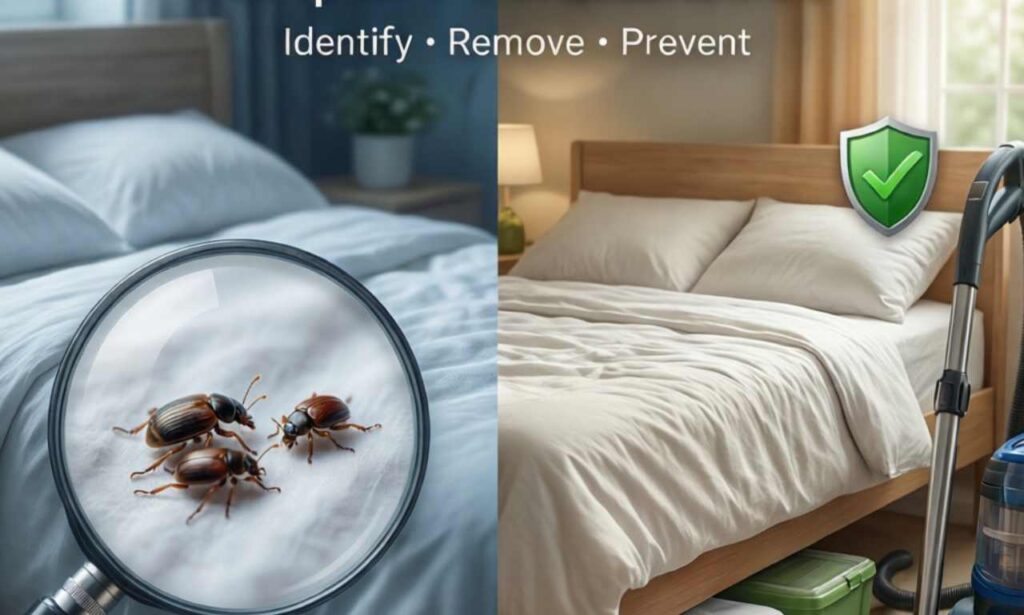
Some situations require expert intervention. Knowing when to seek help saves time and prevents infestations from worsening.
Signs You Need Professional Help
If you’ve tried multiple methods without success, professionals have stronger treatments and better equipment. Recurring infestations despite your efforts indicate a hidden source you haven’t located.
Widespread infestations affecting multiple rooms need comprehensive treatment plans. Professionals can treat your entire home systematically.
What Professionals Offer
Pest control experts can identify exactly which species you’re dealing with and where they’re breeding. They use professional-grade insecticides applied safely and effectively.
Many companies offer guarantees and follow-up treatments. This ensures complete elimination and provides peace of mind.
Is It Okay to Sleep in a Bed with Bedbugs or Beetles?
This common question deserves a clear answer. While the situation differs between bed bugs and beetles, neither is ideal for sharing your sleeping space.
Sleeping with Beetles
Beetles themselves don’t bite or pose direct health risks to humans. However, some people develop allergic reactions to carpet beetle larvae shed skins. These reactions can include skin irritation and respiratory symptoms.
Sleeping in a bed with beetles is generally safe short-term but should be addressed quickly. The presence of beetles indicates a problem that will worsen without intervention.
Sleeping with Bed Bugs
Bed bugs are parasites that feed on human blood while you sleep. They leave itchy, irritating bites that can become infected if scratched. While bed bugs don’t transmit diseases, the psychological stress and sleep disruption they cause are significant.
If you have bed bugs, professional treatment is necessary. Continue sleeping in your bed during treatment rather than moving to another room, which can spread the infestation.
Is It Normal to Find a Beetle in Your Room?
Finding an occasional beetle in your room is relatively normal and not always cause for alarm. Understanding what’s normal versus problematic helps you respond appropriately.
Occasional Visitors
A single small brown bug in bed once in a while might be an accidental visitor. Beetles can enter through open windows or doors, especially during warmer months when they’re more active.
One tiny bugs on bed doesn’t necessarily indicate an infestation. Monitor the situation for several days. If you don’t see additional beetles, the problem likely resolved itself.
Signs of Real Problems
Regular sightings of black bugs in bed or finding multiple carpet beetles in my bed indicates an actual infestation requiring action. Look for additional signs like shed skins, fecal pellets, or damage to fabrics.
Finding carpet beetle larvae on bed surfaces or in carpet confirms active breeding. This situation needs immediate attention.
Understanding Beetle Life Cycles
Knowing how beetles reproduce helps you break their cycle and prevent future problems.
Carpet Beetle Development
Adult carpet beetles lay 40-90 eggs near food sources. Eggs hatch in 10-20 days into larvae that cause the actual damage. Larvae feed for several months before pupating and emerging as adults.
Breaking this cycle requires eliminating both adults and larvae. This is why how do you get rid of carpet beetles requires persistence and multiple cleaning sessions.
Cigarette Beetle Reproduction
Female cigarette beetles lay 10-100 eggs in stored products. Larvae develop within food materials, making detection difficult until populations explode. Complete development from egg to adult takes 25-50 days depending on temperature.
This rapid reproduction explains why small infestations can quickly become serious problems.
Additional Beetle Species in Bedrooms
While carpet beetles and cigarette beetles are most common, other species occasionally appear in sleeping areas.
Varied Carpet Beetles
These are the most common carpet beetle species in homes. They have distinctive mottled patterns and feed on a wide range of natural materials.
Black Carpet Beetles
Entirely black or dark brown, these beetles prefer animal products but will infest synthetic materials contaminated with food or oils. A black bug on bed might be this species searching for suitable food sources.
Furniture Carpet Beetles
These spotted beetles often infest upholstered furniture before spreading to beds. They prefer materials in dark, undisturbed areas.
FAQs
Why would there be a beetle in my bed?
Beetles in bed typically appear because they’re attracted to natural fibers in bedding, dead skin cells, or they’ve wandered in from infestations elsewhere in your home. Carpet beetles specifically seek out wool, silk, and other keratin-containing materials. A beetle in bed might also be an accidental visitor that entered through windows or gaps in walls searching for food or shelter.
How to get rid of bed beetles?
To eliminate bed beetles, wash all bedding in hot water above 120°F and vacuum your mattress thoroughly. Remove items from under your bed and clean the entire area. Use steam cleaning on your mattress for best results. For persistent infestations, apply carpet beetle treatment products containing pyrethrins. Regular vacuuming and proper storage of natural fiber items prevent beetles from returning to your sleeping area.
Is it okay to sleep in a bed with bedbugs?
While technically you can sleep in a bed with bed bugs, it’s not recommended due to the itchy bites and psychological distress they cause. However, if you’re undergoing professional bed bug treatment, continue sleeping in your bed rather than moving to avoid spreading the infestation. For beetles rather than bed bugs, sleeping in the bed is generally safe but address the infestation promptly as populations can grow quickly.
Is it normal to find a beetle in your room?
Finding an occasional beetle in your room is relatively normal, especially during warmer months when insects are more active. A single beetle that wandered in through a window isn’t concerning. However, regular sightings of multiple beetles, especially carpet beetle larvae or tiny black bugs in bed areas, indicate an active infestation that needs attention. Monitor the situation for a few days to determine if it’s isolated or ongoing.
How do I get rid of carpet beetles permanently?
Permanent carpet beetle elimination requires consistent cleaning and prevention. Vacuum weekly, wash bedding regularly in hot water, and store woolens in sealed containers. Use diatomaceous earth around bed legs and baseboards. Seal entry points like window gaps and door cracks. For severe cases, professional treatment ensures complete elimination. How to get rid of carpenter beetles or other species requires identifying the specific type and targeting their food sources appropriately.
Conclusion
Discovering a beetle in bed can be unsettling, but understanding these pests empowers you to eliminate them effectively. Whether dealing with carpet beetles in bedroom spaces or cigarette beetle in house infestations, prompt action prevents small problems from becoming major headaches.
Remember that most beetles in sleeping areas are more nuisance than danger. They don’t bite or spread disease like bed bugs. With thorough cleaning, proper storage practices, and targeted treatments, you can reclaim your bedroom and sleep peacefully knowing your space is beetle-free.
Stay vigilant with regular cleaning routines and address any signs of infestation immediately. Your bedroom should be a sanctuary for rest, not a home for unwanted insects.