
Introduction
Bee nest vs wasp nest confusion causes homeowners to make dangerous mistakes when dealing with stinging insects around their property. Understanding the differences between these two types of nests can help you identify what you’re dealing with and choose the safest removal approach.
Many people discover unexpected nests in their gardens, under eaves, or inside walls and panic without knowing whether they’re facing bees or wasps. This guide will help you distinguish between these insects, recognize their nesting habits, and understand when to call professionals versus handling removal yourself.
Understanding the Basic Differences
The first step in dealing with any stinging insect problem is correctly identifying what you’re facing. Bees and wasps belong to different families and have distinct characteristics that affect how you should approach them.
Bees are generally rounder and hairier than wasps. They have thick, fuzzy bodies that help them collect pollen as they move from flower to flower. Their coloring tends to be golden brown or amber with less distinct stripes.
Wasps have slender, smooth bodies with a narrow waist connecting the thorax and abdomen. The wasp family includes many species, but most have bright yellow and black stripes that serve as warning colors. Unlike bees, wasps can sting multiple times because their stingers are smooth rather than barbed.
Physical Appearance and Behavior
Body Structure
When you’re trying to determine if you’re looking at bees or wasps, examine the body shape carefully from a safe distance. Bees have a robust, hairy appearance that makes them look almost fluffy. This hair serves an important purpose in their role as pollinators.
The wasp insect has a distinctly segmented body with a thin connection between sections. Their smooth, shiny exoskeleton lacks the dense hair coverage found on bees. This sleek design helps them hunt other insects efficiently.
Feeding Habits
Bees feed exclusively on nectar and pollen from flowers. They’re vegetarian insects that play a crucial role in pollinating crops and wild plants. You’ll typically see them hovering around flowering plants during daylight hours.
What is a wasp? It’s primarily a predator that hunts other insects to feed its young. Adult wasps also consume nectar and sweet substances, which explains why they’re attracted to sugary drinks and food at outdoor gatherings. This difference in diet affects their behavior around humans significantly.
Types of Bee Nests
Honey Bee Colonies
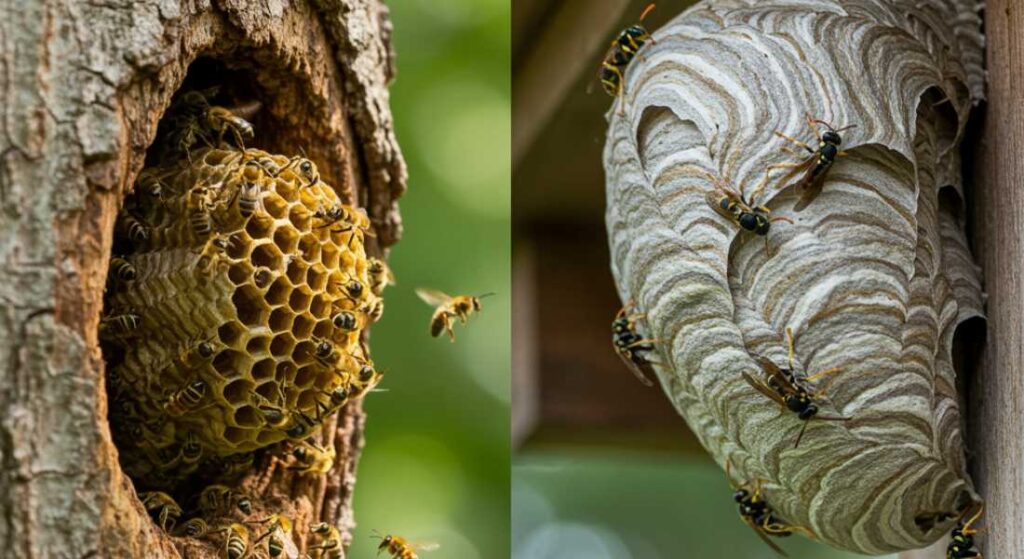
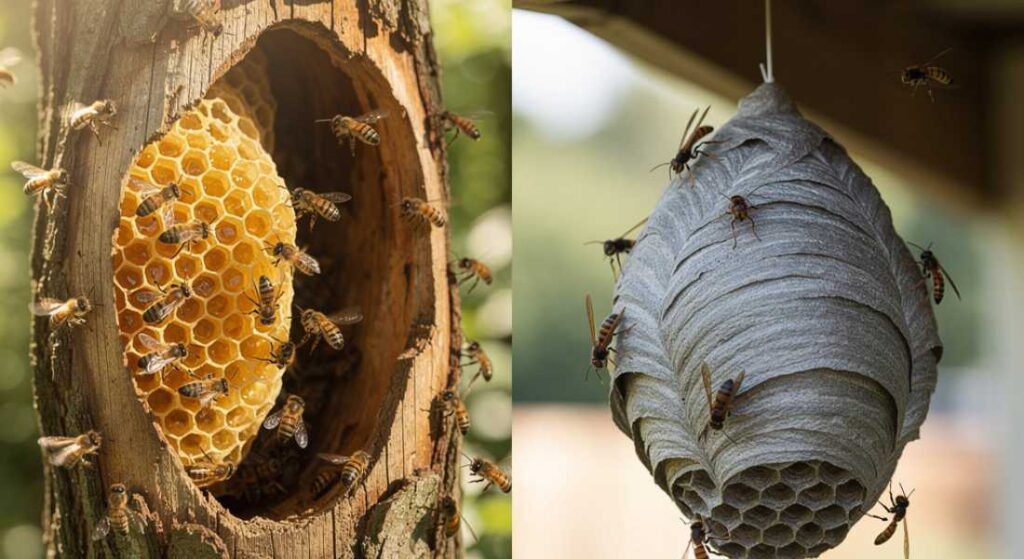
Honey bees create the most recognizable type of bee nests. These structures consist of hexagonal wax cells arranged in vertical combs. A mature honey bee colony can contain 20,000 to 80,000 individuals working together in a highly organized society.
Different types of bees nest in various locations depending on the species. Honey bees often establish colonies in hollow trees, wall cavities, or specially provided hives. The wax combs they build have a distinctive golden or light brown color.
Bumble Bee Nests
Bumble bees create much smaller colonies than honey bees, usually containing only 50 to 400 individuals. Types of bees nests from bumble bees are often found underground in abandoned rodent burrows or beneath piles of leaves and grass.
These nests have a messy appearance compared to the orderly honey bee structures. Bumble bees use wax to create small clumps that hold pollen and eggs rather than building elaborate combs.
Carpenter Bee Tunnels
Carpenter bees don’t technically build nests in the traditional sense. Instead, they bore tunnels into wood to create chambers for their eggs. These tunnels are perfectly round, about half an inch in diameter, and can extend several inches into the wood.
Pictures of bees nests from carpenter bees show clean, circular entrance holes in wooden structures like decks, fences, and eaves. While they don’t live in colonies, multiple carpenter bees may use the same area, creating numerous tunnels.
What Does a Wasp Nest Look Like
Paper Wasp Nests
Paper wasps construct open, umbrella-shaped nests that hang from a single stalk. These structures have visible hexagonal cells arranged in a single layer without an outer covering. The nest material looks like gray or brown paper because wasps create it by chewing wood fibers and mixing them with saliva.
A wasp nest from paper wasps typically hangs under eaves, branches, or other protected overhangs. You can easily see the individual cells and sometimes the wasps themselves moving across the surface.
Yellow Jacket Nests
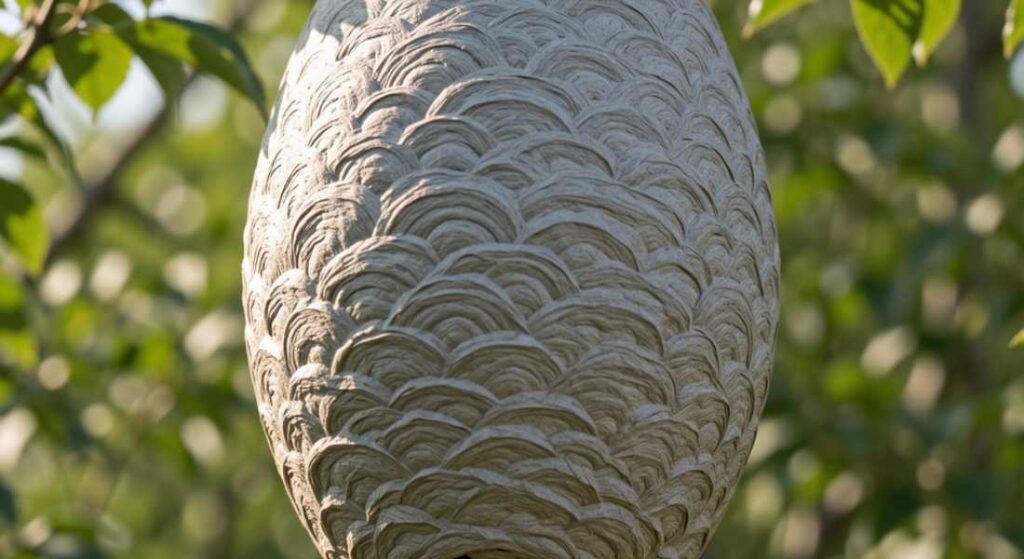
Yellow jackets build enclosed nests that can grow quite large. These wasps nest in cavities such as wall voids, attics, underground burrows, or dense vegetation. The exterior has a papery texture with swirled patterns from layers of material added as the colony expands.
The wasp beehive from yellow jackets can house thousands of workers by late summer. These are among the most aggressive wasp species when defending their nest.
Hornet Nests
Hornets create football-shaped nests that hang from trees, shrubs, or building overhangs. The hornet nest vs wasp nest from smaller species is notable because hornet nests can grow to the size of a basketball or larger. They have a smooth, grayish exterior with a single entrance hole near the bottom.
Understanding wasp vs hornet nest differences helps in identification because hornets are generally larger than other wasp species and their nests reflect this size difference.
Bee Nest Identification Tips
Learning proper bee nest identification starts with location. Check where you found the nest because different bee species have distinct preferences.
If you see a large structure with visible honeycomb hanging in an exposed location, you’re likely looking at a feral honey bee swarm that recently established itself. Bees nest or wasp nest confusion often happens with this scenario because both can appear suddenly.
For types of bee nests pictures comparison, honey bee structures appear waxy and golden, while bumble bee nests look like piles of fuzzy material. The entrance to a bumble bee nest is usually a small hole at ground level with bees flying low as they come and go.
Wasp Nest vs Bee Nest Key Differences
Construction Material
The beehive vs wasp nest difference is clear when examining materials. Bees produce wax from special glands in their bodies to build their nests. This wax has a distinctive appearance and slightly sweet smell.
Wasps create their nests by gathering wood fibers from dead trees, fences, and other sources. They chew these fibers and mix them with saliva to create a paper-like material. The wasp nest vs bee hive texture is therefore papery rather than waxy.
Location Preferences
Bees nest vs wasp nest locations vary significantly. Honey bees prefer enclosed spaces that protect their valuable honey stores and maintain stable temperatures. You’ll find them in tree hollows, wall cavities, or specially provided boxes.
The wasp nest vs bees nest placement shows that wasps are more flexible. Paper wasps prefer open air under protected overhangs. Yellow jackets nest in cavities or underground. Hornets build large, exposed nests high in trees.
Colony Size and Lifespan
Honey bee colonies persist for years with the same queen and can grow to enormous sizes. The wasp vs bee nest population difference is striking because most wasp colonies last only one season. In fall, all wasps except newly mated queens die, and the nest is abandoned.
Safety Considerations
Approaching any stinging insect nest requires caution. Bees generally sting only when they perceive a direct threat to their colony. They’re more docile when foraging away from the nest.
Wasps are more aggressive in defending their territory. Wasp species vary in defensiveness, but yellow jackets are particularly quick to attack if they feel threatened. A single disturbance can trigger dozens or hundreds of wasps to swarm from the nest.
Never attempt to remove a large or actively defended nest yourself. The risk of multiple stings can be life-threatening, especially for people with allergies.
Removing Bee Hives Safely
When to Call Professionals
Honey bee hive removal should almost always be handled by experienced beekeepers or pest control professionals. These colonies are valuable for agriculture and the environment, so many beekeepers will relocate them for free or a small fee.
The removing bee hives process requires specialized equipment and knowledge. Professionals can safely remove the bees, extract the honeycomb, and ensure the location is properly cleaned to prevent future colonies from establishing in the same spot.
DIY Considerations
Small bumble bee nests in the ground can sometimes be left alone since these bees are generally docile and the colony will die out naturally in fall. If removal is necessary, wait until evening when all bees have returned to the nest.
Bee nest removal for solitary species like carpenter bees focuses on filling their tunnels and treating the wood to prevent future boring. This is more of a prevention task than an active nest removal.
How to Get Rid of a Wasp Nest
Timing and Approach
The best time for wasp nest removal is early spring when colonies are just starting or late fall after the first hard freeze. Early morning or evening hours are safest because wasps are less active in cooler temperatures.
How to destroy a wasp nest depends on its size and location. Small paper wasp nests with only a few visible wasps can potentially be removed by homeowners using appropriate protective gear and wasp-specific insecticides.
Treatment Methods
For removing wasps nest structures, aerosol sprays designed for wasps can shoot streams 15 to 20 feet, allowing you to treat from a safe distance. Apply the product according to label directions, typically saturating the nest entrance and outer surface.
How to remove wasp nest completely requires waiting 24 hours after treatment to ensure all wasps are dead before physically removing the structure. Seal it in a plastic bag and dispose of it in an outdoor trash bin.
Professional Removal
Large wasp nests, especially those from yellow jackets or hornets, require professional wasp nest removal services. These experts have proper protective equipment and can access difficult locations safely.
Professionals also ensure complete elimination of the colony and can treat the area to prevent reinfestation. The cost of professional services is worthwhile considering the danger of disturbing a large, active nest.
Bee Removal Best Practices
When honey bee removal becomes necessary, prioritizing the survival of the colony benefits everyone. Contact local beekeeping associations to find someone who will relocate the bees rather than exterminating them.
Bee removal services that focus on live relocation will carefully extract the entire colony including the queen, workers, and honeycomb. They’ll transport them to a new location where they can continue their important pollination work.
For removing a bee nest from a structure, professionals may need to open walls or other enclosed spaces. They’ll repair these openings after removal and clean out all wax and honey to prevent attracting new colonies or other pests.
Prevention Strategies
Preventing nests is easier than removing them. Inspect your property in early spring when queens are searching for nest sites. Seal cracks and openings in walls, eaves, and foundations.
Remove potential nesting sites by clearing away piles of wood, leaves, and debris. Fill old rodent burrows that bumble bees or ground-nesting wasps might use.
For wasp hives prevention, remove food sources by keeping garbage cans tightly sealed and cleaning up fallen fruit from trees. Wasps are attracted to sweet smells and protein sources.
Legal and Environmental Concerns
Some bee species are protected by law due to their declining populations and ecological importance. Before removing bees, check local regulations to ensure you’re complying with wildlife protection laws.
Honey bees face numerous threats including habitat loss, pesticides, and diseases. Whenever possible, choose relocation over extermination. The value these pollinators provide to agriculture and wild ecosystems far exceeds the inconvenience of their presence.
Wasp species, while less popular than bees, also play important ecological roles. They control pest insect populations and serve as food for birds and other wildlife. Consider whether a nest truly poses a threat before deciding on removal.
FAQs
How do you tell if it’s a bee or wasp?
Look at the body shape and texture. Bees have fuzzy, robust bodies with dense hair, while wasps have smooth, shiny bodies with a narrow waist. Bees are typically rounder and less brightly colored than wasps. Observe their behavior too as bees are generally calmer and focus on flowers, whereas wasps are more aggressive and attracted to food.
What is the difference between a beehive and a bee nest?
A beehive is a man-made structure provided by beekeepers for honey bees to live in, while a bee nest is any natural structure that bees build themselves in the wild. Both serve the same function as a home for the colony, but the bee nest vs wasp nest terminology helps distinguish between structures created by these different insects in natural settings.
How do I know if I have a bees nest?
Watch for consistent bee traffic going to and from a specific location. Listen for buzzing sounds coming from walls, eaves, or other enclosed spaces. Look for bees nest types indicators like wax buildup, honey staining, or the distinctive hexagonal comb structure. Bees typically maintain a steady flight path to their nest entrance throughout the day.
Can I remove a small wasp nest myself?
Small paper wasp nests with fewer than a dozen visible wasps can potentially be removed by homeowners using proper protection and wasp-specific insecticides. However, the wasps nest vs bees nest danger level varies greatly by species. If you have any doubt about the nest size, species, or your ability to remove it safely, contact a professional.
What should I do if I find a nest on my property?
First, identify whether it’s a bee nest or wasp nest from a safe distance. Determine if the nest poses an immediate threat based on its location and the insects’ behavior. For bee nests, contact local beekeepers about relocation. For wasp nests, assess whether professional removal is necessary based on size and accessibility.
Are wasps beneficial or should I always remove them?
Wasps provide ecological benefits by controlling pest insect populations and pollinating some plants. If a wasp nest is in a location where people rarely go and doesn’t pose a safety risk, leaving it alone until winter is an option. However, nests near doorways, play areas, or high-traffic zones should be removed for safety.
Conclusion
Understanding the differences between bee nest vs wasp nest structures helps you make informed decisions about managing these insects around your property. Bees create waxy structures and are generally less aggressive, making them good candidates for professional relocation. Wasps build papery nests and can be more defensive, often requiring different removal approaches.
Always prioritize safety when dealing with any stinging insect nest. Professional removal services have the expertise and equipment to handle situations that would be dangerous for homeowners. When in doubt, observe from a distance and contact experts who can properly identify the species and recommend the best course of action for your specific situation.