
Introduction
Bee nests are natural structures created by various bee species to house their colonies and raise young. Understanding these fascinating structures helps homeowners identify potential risks and make informed decisions about coexistence or removal. Whether you discover a honey bee nest in your yard or encounter different varieties of bees building near your home, knowing the difference between beneficial pollinators and aggressive species protects your family while supporting environmental health.
This comprehensive guide explores everything from identification techniques to safe removal methods. You’ll learn to distinguish between bee hives and wasp nests, understand when professional help is necessary, and discover how different types of bees create their homes.
Understanding Bee Nests and Their Purpose
A bee nest serves as the central hub for colony life. These structures provide shelter, food storage, and nurseries for developing bees. Different kinds of bees construct homes using various materials and techniques based on their species and environmental conditions.
Social bee species like honeybees create elaborate combs with hexagonal cells. These cells store honey, pollen, and house developing larvae. The architectural precision demonstrates remarkable engineering that has evolved over millions of years.
What Is a Bee Nest Called?
The terminology surrounding bee housing can be confusing. A naturally occurring structure built by wild bees in trees, walls, or underground is properly called a bee nest. When beekeepers provide artificial housing for managed colonies, that structure is called a beehive or hive bee box.
The distinction matters primarily for communication purposes. Both natural nests and managed hives serve identical functions for the colony, providing protection and organization for the bees’ complex social structure.
Is It a Bee Nest or Hive?
This common question highlights an important difference. Wild colonies create bee nests in natural cavities or exposed locations. Managed colonies live in beehives, which are human-made structures designed for honey production and colony management.
A honey bee hive typically consists of removable frames that allow beekeepers to inspect the colony without destroying the comb. Natural nests lack this convenience, making them more challenging to relocate when they appear in inconvenient locations.
Identifying Different Types of Bee Homes
Recognition skills prevent unnecessary alarm and inappropriate responses. Many homeowners confuse beneficial pollinators with aggressive insects, leading to premature extermination of helpful species.
Honey Bee Nest Characteristics
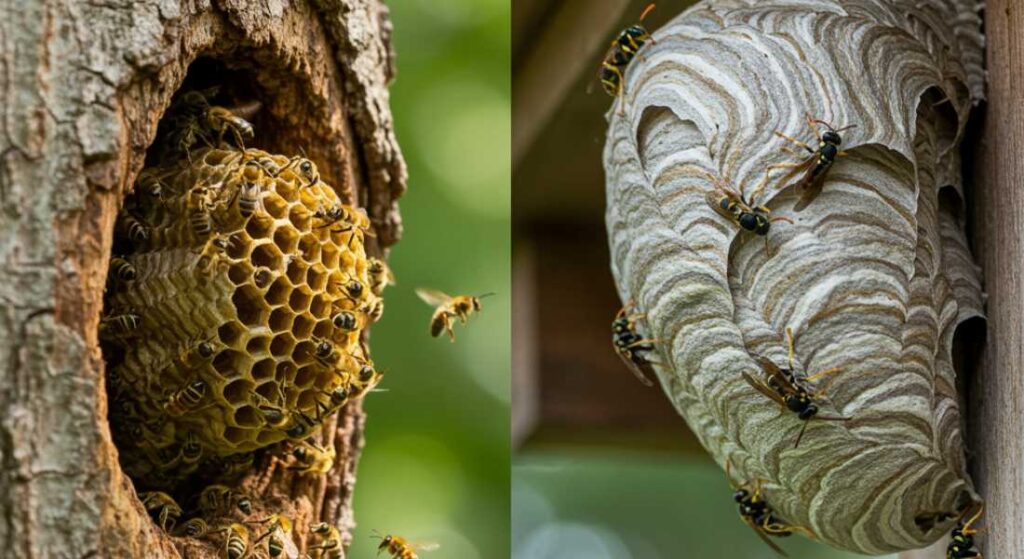
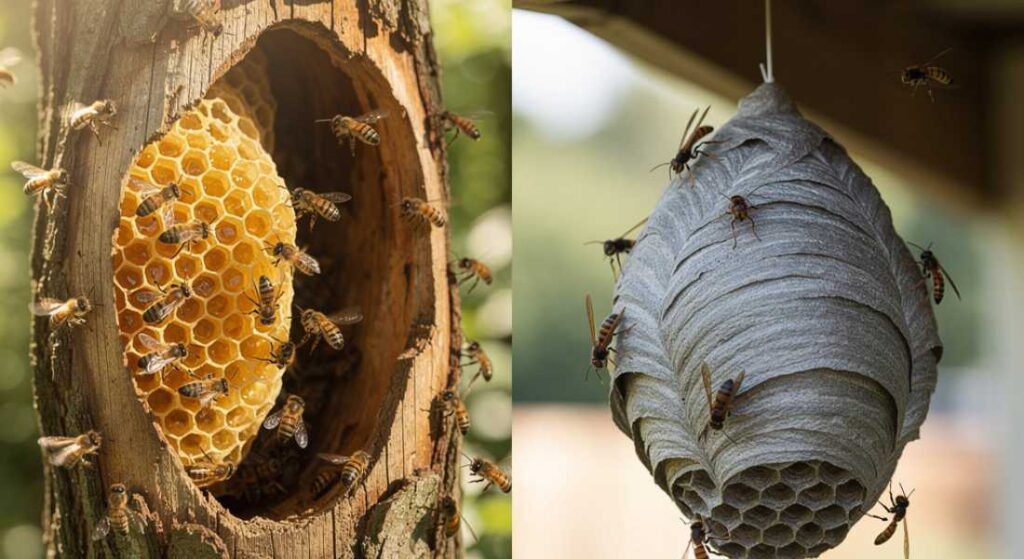
Honeybees prefer enclosed spaces offering protection from weather and predators. Common locations include hollow trees, wall voids, attics, and abandoned structures. Their nests feature distinctive parallel combs made from beeswax, appearing cream-colored to golden-brown depending on age.
A mature honey bee hive can house 20,000 to 80,000 individuals during peak season. The sheer number of bees entering and exiting creates noticeable traffic patterns near the entrance. Unlike paper wasps, honeybees produce and store significant quantities of honey within their comb structures.
Bee Nest vs Wasp Nest Differences
Understanding the bee nest vs wasp nest distinction prevents misidentification. Wasp nests typically feature paper-like construction made from chewed wood fibers mixed with saliva. These structures appear gray or tan with visible layered texture.
A wasp nest often hangs from eaves, branches, or protected overhangs. The beehive vs wasp nest comparison reveals that bee structures use wax rather than paper, and bees generally display less aggressive territorial behavior unless directly threatened.
Physical differences extend to the insects themselves. Bees appear fuzzy with wider bodies, while wasps have smooth, narrow bodies with defined waist segments. This bees nest vs wasp nest knowledge helps determine appropriate response strategies.
What Does a Wasp Nest Look Like?
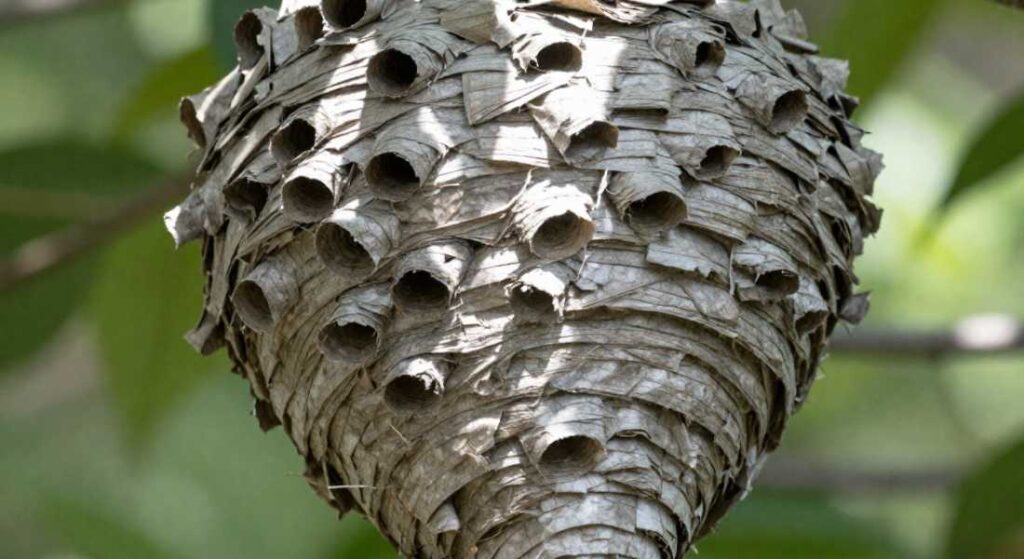
Wasp species create distinctive homes depending on their type. Paper wasps build open-comb structures resembling upside-down umbrellas. Yellow jackets construct enclosed paper nests underground or in wall voids. Hornets create large, football-shaped nests in trees or on buildings.
All wasp hives share the paper-like appearance created from processed wood fibers. Unlike bee combs with their consistent hexagonal cells, wasp nests show more irregular construction patterns with visible entry holes.
What to Do If You Find a Bee Nest
Discovery of bees nesting near your home requires careful assessment before action. Hasty decisions often lead to regret, especially when beneficial pollinators are destroyed unnecessarily.
Initial Assessment Steps
First, observe from a safe distance to identify the insects accurately. Note their physical appearance, behavior patterns, and nest location. Document with photos if possible without approaching too closely.
Determine whether the location poses genuine risk. A nest in a rarely used shed corner presents different concerns than one beside your front door. Consider timing as well; bee colonies are seasonal, with some naturally declining in fall.
When to Coexist Peacefully
Many bee species are non-aggressive and pose minimal threat. Native bees including mason bees, carpenter bees, and leafcutter bees rarely sting and provide valuable pollination services. If the nest location allows safe distance, consider leaving it undisturbed.
Honeybees are protected in many regions due to their agricultural importance. Before removing bee hives, contact local beekeeping associations. Many beekeepers provide free bee removal services, relocating colonies to managed apiaries rather than destroying them.
When Removal Becomes Necessary
Immediate action is warranted when nests threaten high-traffic areas, when occupants have bee allergies, or when aggressive species like Africanized honeybees are involved. Wasp nests near entryways also typically require removal due to their defensive nature.
Safe Removal Methods and Techniques
Removing bees safely protects both humans and insects when relocation proves impossible. The approach varies dramatically based on species and situation.
Professional Bee Hive Removal
For established honey bee hive removal, professional services offer the safest option. Specialists possess proper equipment, protective gear, and techniques for live removal. They can extract combs, relocate the queen, and transfer the entire colony to a new location.
Professional bee hive boxes are specially designed for transport and temporary housing during relocation. This method preserves valuable pollinators while addressing homeowner concerns about safety and property damage.
How to Get Rid of a Wasp Nest
Wasp control requires different strategies than bee management. For small wasp hives accessible from ground level, commercial wasp sprays provide effective solutions when used according to label directions. Treatment should occur at dusk or dawn when wasps are least active.
How to destroy a wasp nest safely involves maintaining distance and having an escape route. Spray directly into the entrance hole, then quickly retreat. Multiple treatments may be necessary for complete elimination.
How to Remove Wasp Nest from Difficult Locations
Large nests, high locations, or underground colonies often require professional pest control services. Attempting removal of established wasp nests without proper equipment creates dangerous situations.
For those wondering how to get rid of wasp nest problems in walls or attics, professional services use specialized equipment to access hidden colonies. They also seal entry points to prevent future infestations.
Bee Boxes and Managed Beekeeping
Understanding managed beekeeping helps differentiate between wild nests and intentional bee husbandry. A bee hive box represents humanity’s long partnership with honeybees for honey production and crop pollination.
Types of Beehives
Modern beekeepers use several beehive designs. Langstroth hives feature stackable boxes with removable frames, allowing easy inspection and honey harvest. Top-bar hives offer simpler, more natural comb building with easier maintenance for hobbyists.
When searching for a bee hive for sale, consider your goals and commitment level. Complete starter kits include all necessary components for beginning beekeepers.
Creating Bee Habitat in Games
For Minecraft enthusiasts wondering how to make a beehive in minecraft, the game mirrors real-world beekeeping basics. Players can craft beehives minecraft structures using wood planks and honeycomb. Understanding how to make bee hive minecraft items enhances gameplay while teaching basic bee biology concepts.
The process of how to make beehive minecraft structures or learning how to make beehives minecraft designs introduces players to resource management and animal husbandry concepts in an accessible format.
Alternative Names and Terminology
Language surrounding bee housing varies by region and context. Knowing alternative terms helps when researching or communicating with professionals.
What Is Another Name for a Bee House?
Common alternatives include apiary (for multiple hive locations), bee box, hive stand, or simply beehive. Historical terms like skep refer to traditional dome-shaped straw hives, though these are rarely used in modern beekeeping.
Commercial operations might reference their facilities as honey houses or extraction facilities, though these terms describe processing buildings rather than the hives themselves.
Related Pests and Confusion
Spider Nest Identification
Homeowners sometimes confuse spider nests with small bee or wasp structures. A spider nest typically appears as dense silk webbing in protected corners, creating egg sacs or shelter for nesting spider populations. Unlike bee structures, spider nests lack organized cells or comb patterns.
Multiple spiders nest in areas with abundant prey and shelter. Identifying nest of spiders correctly prevents inappropriate treatment methods designed for flying insects.
Visual Representations and Education
Bee Hive Cartoon and Educational Materials
A bee hive cartoon or beehive cartoon provides accessible education for children and adults. These simplified beehive drawing easy examples help people recognize basic hive shapes and understand colony structure without requiring artistic skills.
Educational materials featuring beehive drawing illustrations teach bee biology, pollination importance, and environmental conservation. Cartoon beehive images make complex ecological concepts approachable for all ages.
Understanding Wasp Species and Behavior
What Is a Wasp?
For those asking what is wasp or what a wasp actually is, these insects belong to the order Hymenoptera, sharing ancestry with bees and ants. Wasps display more carnivorous tendencies than bees, hunting other insects to feed their larvae.
Different wasp species exhibit varying levels of aggression. Paper wasps are generally docile unless their nest is disturbed, while yellow jackets show much more aggressive territorial behavior.
Common Wasp Species
Numerous wasp species inhabit different regions. Paper wasps build open-comb nests and hunt caterpillars. Yellow jackets nest underground and scavenge human food. Mud daubers create individual mud tubes for their offspring.
Understanding these distinctions helps identify whether the insects near your home pose significant threat or provide beneficial pest control services.
Varieties of Bees and Their Nesting Habits
Type of Bees in North America
The varieties of bees across North America number in the thousands. Honeybees (introduced from Europe) represent just one species among countless native bees. Carpenter bees drill holes in wood for nests. Mason bees use hollow plant stems or artificial tubes. Ground-nesting bees create underground tunnels.
Each type of bees demonstrates unique nesting behaviors adapted to their ecological niche. Understanding these differences promotes appropriate conservation efforts.
Bees Names and Classification
Scientific bees names help distinguish between species, though common names dominate casual conversation. The family Apidae includes honeybees, bumblebees, and carpenter bees. The family Megachilidae encompasses mason and leafcutter bees. Each group displays distinctive physical and behavioral characteristics.
FAQs
What Is a Bee Nest Called in Scientific Terms?
Scientists refer to natural bee colonies as nests regardless of species. The structure itself might be called a comb in honeybees or a cell in solitary species. Managed colonies live in apiaries, which is the term for bee yards containing multiple hives.
How Long Do Bee Nests Last?
Honeybee colonies can persist for years if conditions remain favorable. The nest structure grows annually as the colony expands. Solitary bee species create annual nests that last only one season. Bumblebee colonies are annual, dying off in fall except for new queens.
Can I Remove a Small Bee Nest Myself?
Small nests of non-aggressive species like mason bees can be relocated carefully. However, established honey bee nest structures require professional removal to handle thousands of bees safely. Never attempt removing bees without proper identification and safety equipment.
Are All Bee Nests Dangerous?
Most bee species are docile and only sting when directly threatened. The danger level depends on species, location, and proximity to human activity. Solitary bees rarely sting. Social species defend their colonies but generally ignore humans maintaining respectful distance.
What Attracts Bees to Nest in Certain Locations?
Bees seek protected cavities offering shelter from weather and predators. Ideal locations provide proper size, single entrance points, and nearby flowering plants for foraging. Old trees, wall voids, and abandoned structures commonly attract nest-building bees.
How Do I Prevent Future Bee Nests?
Seal potential entry points in buildings including gaps around vents, pipes, and foundation cracks. Remove attractants like standing water sources. Regular property inspection helps identify scout bees before colonies establish. However, remember that bee populations provide essential ecological services worth preserving when possible.
Conclusion
Understanding bee nests transforms fear into informed decision-making. These remarkable structures represent millions of years of evolutionary refinement, housing colonies that pollinate crops and wild plants essential for ecosystem health.
When you encounter a bee nest, accurate identification determines the appropriate response. Many situations allow peaceful coexistence with beneficial pollinators. When removal becomes necessary, professional services protect both human safety and valuable bee populations.
Respecting these incredible insects while maintaining safe living spaces creates balance between human needs and environmental stewardship. Whether you’re dealing with a wild nest or considering beekeeping yourself, knowledge empowers better choices for everyone involved.