

Introduction
Ant vs termite wings are often the first clue homeowners notice when dealing with a sudden insect invasion. Understanding the differences between these winged pests is crucial because while flying ants are mostly harmless, termites can cause thousands of dollars in structural damage to your property. This comprehensive guide will help you quickly identify which insect has invaded your space and what steps you should take next.
Understanding Winged Insects in Your Home
When winged insects suddenly appear indoors, most people panic without knowing what they’re dealing with. Both ants and termites produce winged reproductives during specific times of the year as part of their natural mating cycle. These swarmers leave their colonies to establish new nests, which explains why you might see large numbers appearing at once.
The key to proper pest management starts with correct identification. Misidentifying these insects can lead to unnecessary expenses or, worse, ignoring a serious termite problem that silently destroys your home’s foundation.
Key Differences Between Ant and Termite Wings
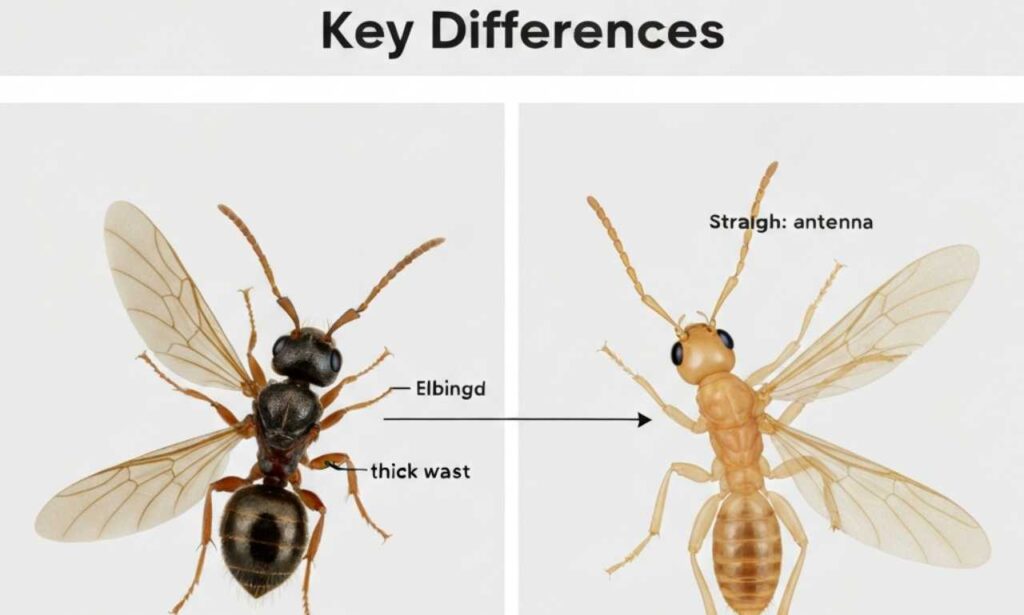
The most reliable way to distinguish these pests is by examining their wings closely. While both insects have four wings, the structure and appearance differ significantly.
Wing Size and Shape
Termites with wings display four wings of equal length that extend well beyond their body. These wings appear almost translucent and have a uniform, paddle-like shape. When termites shed their wings after swarming, you’ll often find neat piles of identical-sized wings near windowsills or door frames.
Flying ants have two sets of wings with distinctly different sizes. The front pair is noticeably larger than the back pair. This unequal wing length is one of the fastest ways to identify a flying ant versus a termite.
Wing Texture and Venation
Termite wings appear delicate with minimal veining patterns. They have a slightly milky or whitish appearance and are relatively fragile. After swarming, termites quickly shed these wings, leaving them scattered in small piles.
Winged ants possess wings with more prominent veining patterns. Their wings appear more structured and slightly darker compared to termite wings. The wings also remain attached longer after the swarm has ended.
Body Structure Differences
Beyond examining ant vs termite wings, looking at the overall body structure provides additional identification clues.
Waist and Body Shape
Flying ants have a distinctly pinched waist that creates three separate body segments. This narrow waist gives them that characteristic ant appearance even when they have wings.
Termites flying around your home will have a thick, straight waist with no obvious segmentation. Their body appears more uniform from head to tail, almost cigar-shaped in profile.
Antennae Characteristics
Another reliable identifier involves the antennae. Flying ants have bent or elbowed antennae that look like they have a small joint in the middle. Termites possess straight, beaded antennae that resemble tiny strings of pearls.
Why Flying Ants Suddenly Appear
Many homeowners wonder what causes flying ants to show up without warning. Understanding their behavior helps you respond appropriately.
Mating Season and Swarms
Swarms of flying ants typically emerge during warm, humid weather, usually in late spring or summer. This synchronized emergence is triggered by environmental conditions like temperature and humidity levels. A single colony can release hundreds or even thousands of winged reproductives at once.
These mating flights usually last only a few hours. After mating, male flying ants die while fertilized females search for suitable nesting sites to establish new colonies.
Environmental Triggers
What do flying ants do when they invade your home? Usually, they’re not intentionally targeting your house. Instead, they’re attracted to light sources during their mating flight. Open windows, bright indoor lighting, and gaps in doors can draw them inside.
Flying ants in house situations often indicate that an established ant colony exists somewhere nearby, either in your yard, walls, or foundation. While the swarmers themselves don’t cause structural damage, their presence suggests you should inspect for nesting sites.
When Do Flying Ants Swarm
Timing plays an important role in identification and management. Swarming flying ants follow predictable seasonal patterns.
Most species swarm on warm days following rain. In many regions, you’ll notice the highest activity between May and August. Some species prefer specific times of day, with many swarming in late afternoon or early evening when temperatures are moderate.
Why do flying ants suddenly appear in my house during these times? The combination of warmth, moisture, and air pressure changes triggers their synchronized emergence. If you notice tiny flying ants in house spaces during these months, you’re witnessing a natural reproductive event.
Identifying Flying Termites
Flying termites in house situations demand immediate attention because they signal an active termite colony nearby or within your structure.
Termite Swarm Characteristics
Winged termites emerge during their own seasonal patterns, typically in spring. Unlike flying ants that swarm briefly, termite swarmers may continue emerging over several days or weeks from the same location.
When you discover termite with wings in house areas, especially near wooden structures, moisture-damaged areas, or basements, this strongly indicates an established colony. Termites rarely travel far from their nest during swarming, meaning the parent colony is likely within or very close to your home.
Color and Size Variations
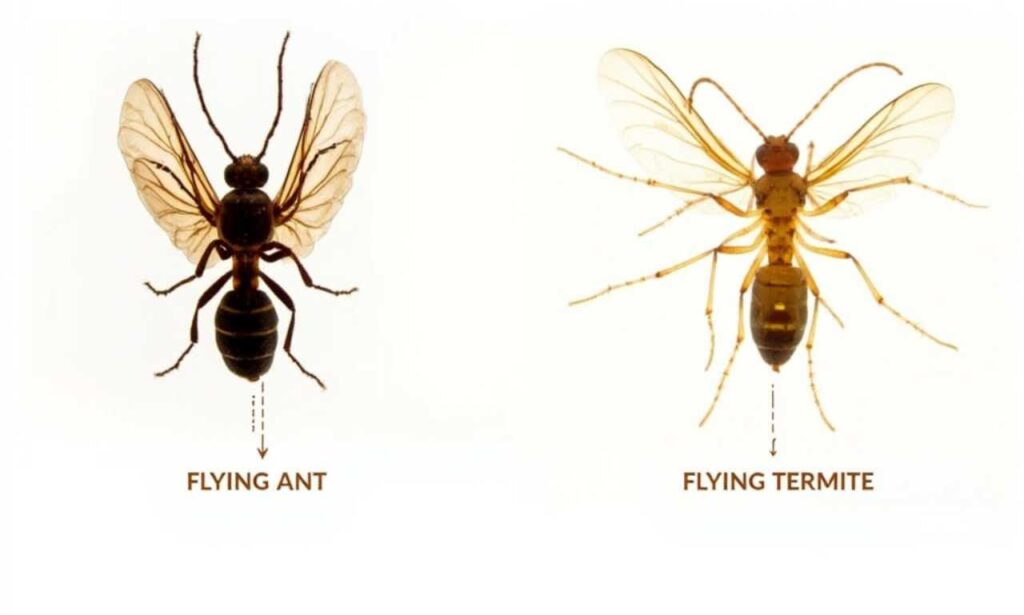
Small black ants with wings are common, but termites usually appear lighter in color. Most termite swarmers range from creamy white to dark brown or black, depending on the species. Their bodies appear softer and less segmented compared to the more defined appearance of small ants with wings.
Visual Comparison Tips
Learning to spot differences quickly becomes easier with practice and attention to specific details.
Using Photos for Identification
Flying ant vs termite pics available online show clear side-by-side comparisons. When examining images of flying ants vs termites, focus on the wing length ratio, waist definition, and overall body proportions. Photos of termites and flying ants taken at close range reveal the subtle differences in wing venation and texture.
Taking your own termite vs flying ant images with your smartphone can help when consulting with pest control professionals. Clear winged ants photos showing the insect from above and from the side provide the best diagnostic value.
What to Look for During Active Swarms
During winged ant swarm events, observe where the insects are emerging from. Flying ants often come from outdoor nests in soil, under pavement, or in rotted wood. They move quickly and appear more agile in flight.
Winged termites in house emergencies show different behavior. They fly poorly, often appearing clumsy or dropping to the ground quickly. They’re attracted to light and tend to gather near windows and light fixtures.
Health and Safety Concerns
Understanding whether these insects pose direct threats helps you respond appropriately without unnecessary alarm.
Do Flying Ants Bite
Will flying ants bite humans? Most species of winged ants can bite if handled or threatened, but they rarely do so during swarming. Their focus remains on reproduction rather than defense. Some species of flying ants that bite may cause minor discomfort, but serious reactions are uncommon.
The flying ant bite from most common household species feels similar to a pinch and may cause slight redness. However, certain species like carpenter ants can deliver more painful bites.
Stinging Species
Flying ant that stings is less common than biting species. Some ant species possess stingers used primarily for defense. The flying ant sting can cause more intense pain and localized swelling compared to simple bites. Fire ants, which occasionally produce winged reproductives, are the most notorious stinging species in affected regions.
Does flying ants bite or sting enough to require medical attention? For most people, no. However, individuals with allergies to insect venom should exercise caution and seek medical care if they experience severe reactions.
Pest Control and Prevention
Taking appropriate action depends entirely on correct identification and understanding the severity of the infestation.
Flying Ants Pest Control Options
For flying ants pest control, remember that the swarmers themselves are not the primary problem. These winged reproductives don’t establish colonies immediately, and most will die within hours or days. Your focus should be on locating and treating the parent colony producing these swarmers.
Professional flying ant extermination services can identify nesting sites and apply targeted treatments. For minor issues, sealing entry points and eliminating outdoor nesting sites near your foundation often resolves the problem.
How to Get Rid of Flying Ants
How to get rid of flying ants starts with reducing attractants. Turn off unnecessary lights during known swarming periods, seal cracks and gaps around windows and doors, and address moisture issues that attract ants to your property.
For tiny ants with wings appearing indoors, vacuuming them up provides immediate relief. Then focus on prevention by removing food sources, fixing water leaks, and trimming vegetation away from your home’s exterior.
Termite Treatment Approaches
How to get rid of flying termites requires professional intervention in most cases. Unlike ants, termites cause significant structural damage, and DIY treatments rarely eliminate entire colonies.
How to get rid of flying ants or termites when you’re uncertain which pest you’re facing? Contact a licensed pest control professional for proper identification. Many companies offer free inspections and can distinguish between these insects quickly using their expertise and equipment.
Professional termite treatment may include liquid termiticides, bait systems, or fumigation depending on the species and extent of infestation. Early detection through proper identification of ant vs termite wings can save thousands in repair costs.
Prevention Strategies
Preventing future invasions requires understanding what attracts these insects to your property.
Home Maintenance Tips
Regular inspection of your home’s exterior helps identify potential entry points. Seal cracks in foundations, repair damaged screens, and ensure weather stripping around doors remains intact. Both flying ants in my house and termite problems often begin with structural vulnerabilities.
Address moisture problems promptly. Fix leaky pipes, improve drainage around your foundation, and ensure proper ventilation in crawl spaces and attics. Excess moisture attracts both ants and termites.
Landscape Management
Keep mulch, firewood, and debris away from your home’s foundation. These materials provide nesting sites for ants and food sources for termites. Trim tree branches and shrubs that touch your house, as these create highways for ants to access your structure.
Remove rotting stumps and dead wood from your property. These natural materials attract termites and certain ant species, increasing the likelihood of why do flying ants suddenly appear near your home during swarming season.
FAQs
What is the main difference between ant vs termite wings?
The primary difference in ant vs termite wings is the size ratio. Termites have four wings of equal length, while flying ants have two distinctly larger front wings and two smaller back wings. This unequal wing pattern makes identification quick and reliable even without close examination.
Why do flying ants suddenly appear in large numbers?
Flying ants suddenly appear because environmental conditions trigger synchronized mating flights. Warm temperatures combined with humidity and recent rainfall signal mature colonies to release their winged reproductives all at once. This natural phenomenon ensures the highest chance of successful mating and new colony establishment.
Are winged termites more dangerous than flying ants?
Yes, winged termites in house situations indicate a much more serious problem than flying ants. While ants may be nuisance pests, termites cause billions in property damage annually by consuming wood structures. The appearance of termite swarmers often means an established colony is already feeding on your home.
How can I tell flying ant vs termite from pictures alone?
Flying ant vs termite photos should show clear differences in body shape and wing structure. Look for the pinched waist in ants versus the straight body of termites. Check whether wings appear equal in length or if front wings are noticeably larger. These visual markers in images of flying ants vs termites provide reliable identification.
When should I call pest control for flying insects?
Call pest control immediately if you suspect termites based on wing structure and body shape. For flying ants, contact professionals if swarms repeatedly emerge from indoor locations, suggesting a colony within your walls. Single occurrences of outdoor swarmers entering through open doors typically don’t require professional intervention.
Can flying ants damage my home like termites do?
Most flying ants do not cause structural damage comparable to termites. However, carpenter ants can excavate wood to create nesting galleries, potentially weakening structures over time. The damage carpenter ants cause develops much more slowly than termite damage and typically occurs in already moisture-damaged or rotting wood.
Conclusion
Correctly identifying ant vs termite wings protects your home and saves money on unnecessary treatments. Remember that termite wings appear equal in length while ant wings show clear size differences between front and back pairs. The distinct waist of ants versus the straight body of termites provides another reliable identification method.
When you notice winged insects in your home, take time to observe their physical characteristics before taking action. Flying ants, while startling when they appear in large numbers, rarely require aggressive pest control measures. Termites demand immediate professional attention to prevent costly structural damage.
Stay vigilant during warmer months when swarming activity peaks, and maintain your property to reduce conditions that attract these insects. With the knowledge you’ve gained from this guide, you can confidently identify these common household pests and respond appropriately to protect your investment.