

Introduction
Cockroach droppings vs mice droppings are often confused because both pests leave behind similar-looking waste in your home. However, identifying which pest has invaded your space is critical for effective treatment and prevention. This guide will help you understand the distinct characteristics of each type of droppings, the health risks they pose, and how to take immediate action to protect your family and property.
Knowing the difference between these two common household pests can save you time, money, and potential health complications. Let’s explore the key differences and what each type of droppings tells you about your infestation problem.
Understanding What Cockroach Droppings Look Like
Cockroach droppings have distinct characteristics that set them apart from other pest waste. These droppings are one of the most reliable signs of a cockroach infestation in your home.
Physical Appearance of Roach Droppings
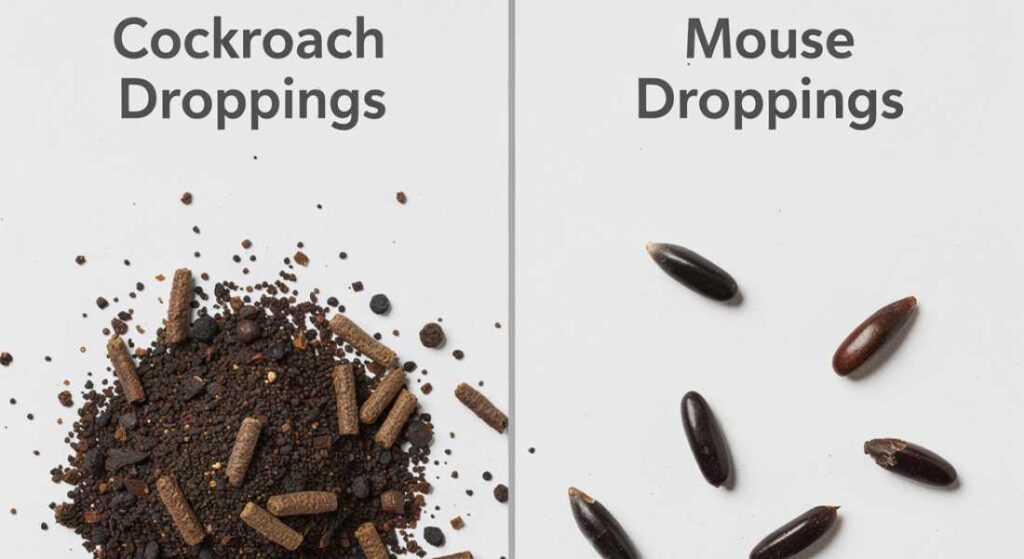
What do roach droppings look like depends largely on the species and size of the cockroach. Generally, roach poop appears as small, dark brown to black particles that resemble ground coffee or black pepper. The texture can range from grainy to smooth depending on moisture levels in the environment.
For smaller species like German cockroaches, the droppings are typically less than 1mm in diameter and appear as tiny specks. Larger species such as American cockroaches produce droppings that are cylindrical and ridged, measuring about 2mm to 5mm in length.
Different Types of Cockroach Feces
German roach poop is particularly small and appears as fine dark specks that accumulate in areas where these pests frequently travel. These droppings often look like scattered pepper flakes and are commonly found in kitchen cabinets, behind appliances, and along baseboards.
American roach poop is noticeably larger and has a cylindrical shape with distinct ridges along the sides. Large cockroach droppings from these species are often mistaken for mouse droppings due to their size, which is why proper identification is essential.
Common Locations Where You’ll Find Cockroach Poop
Cockroach feces typically accumulates in areas where these pests hide and travel most frequently. You’ll commonly find droppings in kitchen areas, particularly under sinks, behind refrigerators, and inside cabinets where food is stored.
Bathrooms are another hotspot because cockroaches are attracted to moisture. Check behind toilets, under sinks, and along bathroom baseboards. You might also discover droppings in dark corners, along wall edges, and in basement areas where humidity levels are high.
Understanding What Mouse Droppings Look Like
Mouse droppings have their own unique characteristics that help distinguish them from cockroach waste. Recognizing these features is crucial for accurate pest identification.
Physical Characteristics of Mouse Poop
Mouse droppings are significantly larger than most cockroach droppings, measuring approximately 3mm to 8mm in length. They have a distinctive rod-like shape with pointed ends, similar to a grain of rice but darker in color.
Fresh mouse poop appears dark brown or black and has a moist, soft texture. As the droppings age, they become lighter in color, turning gray and developing a harder, crumbly consistency. This aging process can help you determine how active your mouse infestation is.
Typical Patterns of Mouse Droppings
Mice tend to leave droppings in scattered patterns along their travel routes. Unlike cockroaches that may leave concentrated areas of waste, mice distribute their droppings more randomly as they move throughout your home searching for food.
You’ll typically find 50 to 80 droppings per day from a single mouse, making identification easier when dealing with an active infestation. These droppings often appear in clusters near food sources, along walls, and inside cabinets.
Where Mice Leave Their Droppings
Mice prefer to travel along walls and baseboards where they feel protected. You’ll find their droppings concentrated in pantries, kitchen drawers, and areas where dry goods are stored.
Attics, garages, and basements are common locations for mouse droppings because these areas provide shelter and nesting opportunities. Check inside boxes, behind stored items, and in corners where mice feel safe to nest and feed.
Key Differences Between Cockroach and Mouse Droppings
Understanding the specific differences between roach droppings vs mouse droppings helps you quickly identify which pest problem you’re facing.
Size Comparison
The size difference is one of the most obvious distinguishing factors. Cockroach poop vs mouse poop shows a clear variance, with mouse droppings being substantially larger in most cases.
Small cockroach species produce droppings under 1mm, while larger roaches create waste up to 5mm. In contrast, mouse droppings consistently measure between 3mm and 8mm, making them generally larger and more noticeable.
Shape and Texture Differences
Mouse poop vs roach poop also differs significantly in shape. Mouse droppings have a distinct rod shape with pointed ends, while cockroach droppings can be either cylindrical with ridges or appear as small specks depending on the species.
The texture provides another clue. Cockroach droppings often have a grainy appearance and may smear when wet, while mouse droppings maintain their shape better and become hard and crumbly as they dry.
Color Variations
Both types of droppings are typically dark brown to black when fresh. However, cockroach droppings may appear slightly lighter and more varied in color depending on their diet.
Mouse droppings change color more noticeably over time, shifting from dark black when fresh to gray as they age. This color change is less pronounced in cockroach droppings, which tend to remain consistently dark.
Distribution Patterns
Mice droppings vs roach droppings show different distribution patterns. Cockroaches tend to leave concentrated areas of droppings in hiding spots and along frequent travel routes, often appearing in corners and crevices.
Mice scatter their droppings more randomly along their pathways, though you’ll still find clusters near nesting areas and food sources. This scattered pattern versus concentrated deposits can help you determine which pest you’re dealing with.
Cockroach Eggs vs Poop: Avoiding Confusion
Many homeowners confuse roach eggs vs poop because both can appear as small dark objects in infested areas.
How to Identify Cockroach Eggs
Cockroach eggs come in protective casings called oothecae, which are elongated, brown capsules that measure about 8mm to 10mm in length. These egg cases have a distinctive pill-shaped appearance and are much larger than individual droppings.
Roach eggs vs poop can be distinguished by their shape and texture. Egg cases are smooth, leathery, and maintain a consistent capsule shape, while droppings appear as smaller, irregular particles or ridged cylinders.
Visual Differences Between Eggs and Droppings
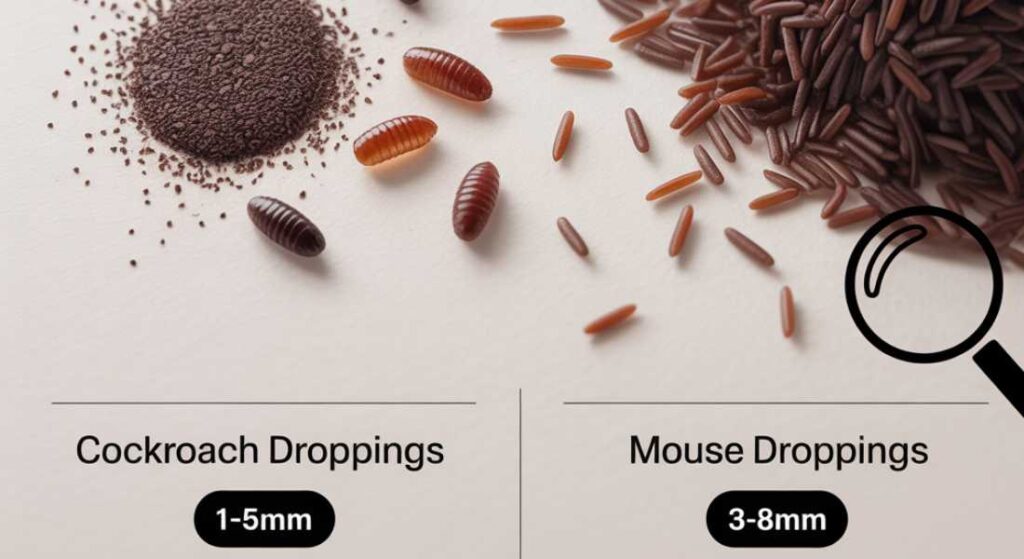
Cockroach poop vs eggs shows clear visual differences. Droppings are typically scattered in various sizes and shapes, while egg cases are uniform in appearance and found in protected locations where female roaches deposit them.
Egg cases also have a slightly reddish-brown color and a glossy appearance when fresh, whereas droppings are matte and darker. Understanding these differences helps you assess the severity of your infestation.
Health Risks: Are Cockroach Droppings Dangerous?
The question of whether are cockroach droppings dangerous has a clear answer: yes, they pose significant health risks to humans.
Allergens and Respiratory Issues
Is cockroach poop toxic in terms of immediate poisoning? Not directly, but cockroach poop dangerous effects come from the proteins and allergens contained in the feces. These allergens can trigger severe asthma attacks, especially in children and individuals with respiratory conditions.
Prolonged exposure to cockroach droppings can cause chronic respiratory problems, including persistent coughing, wheezing, and difficulty breathing. The dried particles become airborne and are easily inhaled, making indoor air quality a serious concern.
Disease Transmission
Is roach poop toxic from a disease transmission standpoint? Absolutely. Cockroaches carry numerous pathogens on their bodies and in their digestive systems, which are transferred to their droppings.
These droppings can contain bacteria like Salmonella, E. coli, and other harmful microorganisms that cause food poisoning and gastrointestinal diseases. When droppings contaminate food preparation surfaces or stored food, the risk of illness increases significantly.
Long-term Exposure Concerns
Is roach poop dangerous over extended periods? Continuous exposure to cockroach droppings creates cumulative health effects that worsen over time. Children living in homes with cockroach infestations show higher rates of asthma development and allergic reactions.
The psychological stress of living with pest infestations also affects mental health and overall quality of life, making prompt identification and treatment essential.
Health Risks Associated with Mouse Droppings
Mouse droppings carry their own set of serious health concerns that require immediate attention and proper handling.
Hantavirus and Other Diseases
Mouse droppings can transmit Hantavirus, a potentially fatal respiratory disease. This virus becomes airborne when dried droppings are disturbed during cleaning, making improper cleanup extremely dangerous.
Other diseases transmitted through mouse droppings include Leptospirosis, Salmonellosis, and Lymphocytic choriomeningitis. These illnesses can cause symptoms ranging from mild flu-like conditions to severe organ damage.
Contamination Risks
Mouse urine and droppings contaminate food, cooking surfaces, and stored goods. The parasites and bacteria present in mouse waste can survive for extended periods, creating ongoing contamination risks even after the mice are removed.
Children and pets are particularly vulnerable because they may come into direct contact with contaminated surfaces or accidentally ingest contaminated materials.
How to Safely Clean and Remove Droppings
Proper cleanup procedures are essential for protecting your health while eliminating pest waste from your home.
Safety Precautions Before Cleaning
Never sweep or vacuum droppings directly, as this releases harmful particles into the air. Always wear disposable gloves, a mask rated N95 or higher, and protective eyewear before beginning cleanup.
Ventilate the area by opening windows and doors, but avoid creating strong air currents that might spread contaminated dust. Keep children and pets away from the cleaning area until the process is complete.
Proper Cleaning Methods for Cockroach Droppings
Spray the affected area with a disinfectant solution or a mixture of bleach and water (one part bleach to ten parts water). Let the solution soak for at least five minutes to kill pathogens and prevent particles from becoming airborne.
Use paper towels to wipe up the droppings and dispose of them immediately in a sealed plastic bag. Clean the area again with disinfectant and allow it to air dry completely.
Proper Cleaning Methods for Mouse Droppings
The same precautions apply when cleaning mouse droppings, but extra care is needed due to Hantavirus risks. Saturate the droppings thoroughly with disinfectant before attempting to remove them.
After removing visible droppings, mop the entire area with disinfectant solution. Dispose of all cleaning materials in sealed bags and wash your hands thoroughly with soap and hot water.
When to Call Professional Help
If you find extensive droppings covering large areas, or if the infestation appears to be severe, professional pest control services are strongly recommended. Professionals have the proper equipment and expertise to safely remove contaminated materials and eliminate the pest population.
Individuals with respiratory conditions, compromised immune systems, or pregnant women should never attempt to clean pest droppings themselves and should always seek professional assistance.
Prevention Strategies to Keep Pests Away
Preventing pest infestations is far easier and less expensive than dealing with established populations.
Sealing Entry Points
Inspect your home’s exterior for cracks, gaps, and openings that pests use to enter. Seal holes around pipes, utility lines, and foundation cracks with steel wool and caulk.
Install door sweeps on exterior doors and repair damaged window screens. Even small gaps under doors or around windows provide easy access for both cockroaches and mice.
Eliminating Food and Water Sources
Store all food in airtight containers, including pet food and dry goods. Clean up spills immediately and avoid leaving dirty dishes in the sink overnight.
Fix leaky pipes, faucets, and eliminate standing water sources. Both cockroaches and mice require water to survive, so removing moisture sources makes your home less attractive.
Regular Inspection and Maintenance
Conduct monthly inspections of common pest hiding areas, including basements, attics, kitchens, and bathrooms. Early detection of droppings allows you to address small problems before they become major infestations.
Keep your home clean and clutter-free. Remove cardboard boxes, stacks of paper, and unnecessary storage items that provide hiding places for pests.
FAQs
What is the main difference between cockroach droppings vs mice droppings?
The main difference lies in size and shape. Mouse droppings are larger (3mm to 8mm) with a rod-like shape and pointed ends, while cockroach droppings are smaller, appearing as tiny specks or small ridged cylinders depending on the species.
Can you tell how serious an infestation is by looking at droppings?
Yes, the quantity and freshness of droppings indicate infestation severity. Large amounts of fresh, dark droppings suggest an active and potentially serious infestation requiring immediate professional intervention.
What does roach poop look like compared to mouse poop?
Roach poop looks like small dark specks or ridged cylinders (1mm to 5mm), while mouse poop appears as larger rod-shaped pellets with pointed ends (3mm to 8mm). Mouse droppings also change color from black to gray as they age.
Are there pictures available to help identify pest droppings?
While this article describes the appearance in detail, searching for cockroach droppings images, cockroach poop pics, or roach poop pictures online can provide visual references. Compare roach poop vs mouse poop pictures to see the size and shape differences clearly.
How quickly should I act after finding pest droppings?
Act immediately upon discovering droppings. The presence of poop signs of cockroaches or mouse droppings indicates an active infestation that will worsen without intervention. Begin by identifying the pest correctly, then implement cleaning and control measures right away.
Can pest droppings cause serious health problems?
Yes, both types of droppings pose significant health risks. Cockroach droppings contain allergens that trigger asthma and respiratory issues, while mouse droppings can transmit serious diseases like Hantavirus. Proper cleanup and pest elimination are essential for protecting your family’s health.
Conclusion
Identifying whether you have cockroach droppings vs mice droppings in your home is the crucial first step in addressing a pest problem effectively. While both types of droppings pose health risks and indicate unwelcome visitors, their distinct differences in size, shape, and distribution patterns make accurate identification possible.
Remember that mouse droppings are typically larger with pointed ends, while cockroach droppings appear as smaller specks or ridged cylinders. Both require immediate attention, proper cleanup procedures, and comprehensive pest control measures.
Don’t wait for the problem to worsen. Take action today to protect your home and family from the health risks and property damage these pests can cause. Whether you choose DIY methods or professional services, addressing the infestation promptly will save you time, money, and stress in the long run.

Mateen Cee is a dedicated pest control writer who specializes in cockroach identification, prevention, and removal techniques. He creates clear, practical content to help homeowners manage infestations effectively and maintain a clean, pest-free environment with simple, reliable solutions.