

Introduction
Termite swarmers are winged reproductive termites that emerge from established colonies to start new infestations. These flying insects often cause panic when they suddenly appear inside homes during spring and summer months. Understanding what swarmer termites look like and why they appear helps homeowners take quick action before serious structural damage occurs.
This guide explains everything about termite swarmers including how to identify them, what their presence means for your property, and the most effective ways to eliminate them before they establish new colonies in your home.
What Are Termite Swarmers
Termite swarmers represent the reproductive caste in the termite life cycle. These winged adults leave their parent colony during specific times of the year to mate and establish new colonies. Unlike worker termites that remain hidden inside wood, swarmers emerge into open air making them the most visible sign of termite activity.
The appearance of swarmer termites signals that a mature colony exists nearby. Subterranean termite colonies must be at least three to four years old before producing swarmers. This means that finding these winged insects indicates an established infestation rather than a new problem.
Physical Characteristics of Swarmer Termites
Swarmer termites have distinct physical features that help with identification. Their bodies measure about 3/8 inch long including wings. The termite size remains consistent across most common species found in homes.
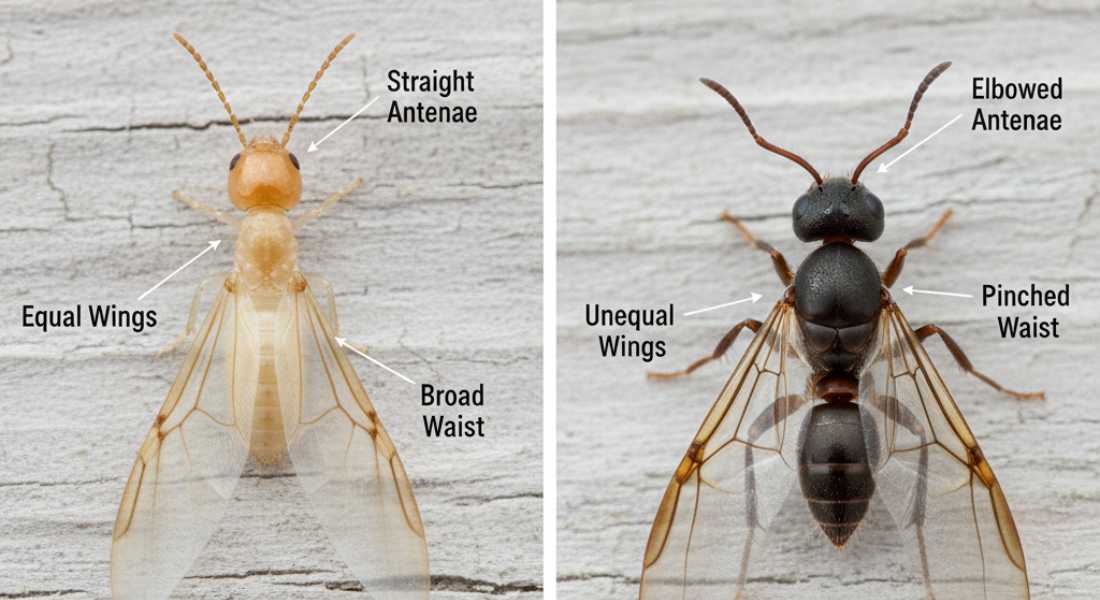
These reproductive termites have straight antennae, thick waists without segmentation, and four wings of equal length. The wings appear translucent or milky white and extend well beyond the body. After mating, termite wings shed quickly and swarmers become the king and queen of new colonies.
Black termites are actually a misnomer since true termites range from creamy white to dark brown. The color varies by species and caste within the colony.
Termite Swarmers vs Flying Ants: Key Differences
Many homeowners confuse termite swarmers vs ant swarmers because both insects look similar during flight. However, several clear differences help distinguish between these pests.
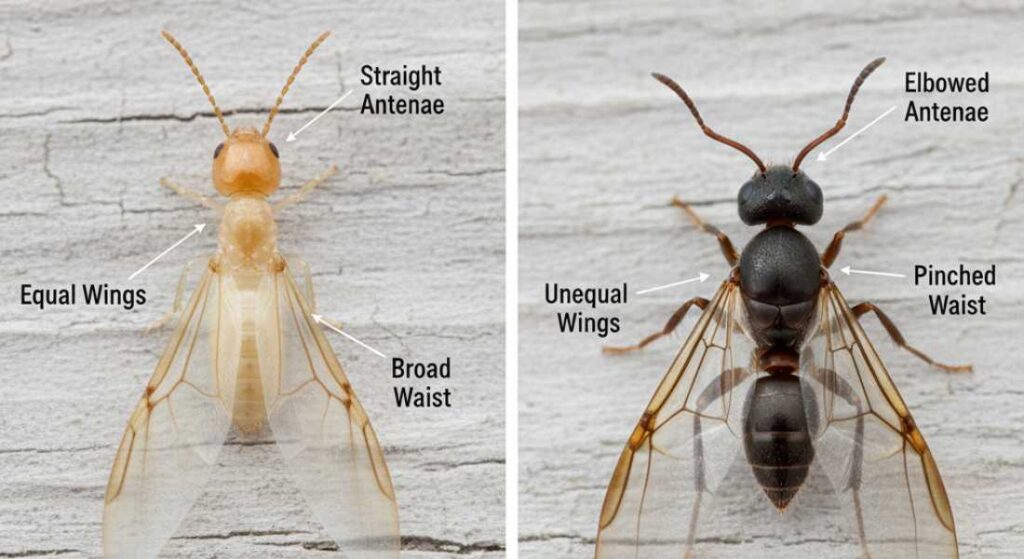
The most reliable way to tell flying ant vs termite swarmer apart involves examining their body structure and wings. Termites have straight, bead-like antennae while ants have elbowed antennae. The waist provides another crucial clue since termites have thick, straight waists and ants have pinched, narrow waists.
Wing Comparison: Termite vs Ant Wings
Wing structure offers the easiest identification method when comparing ant swarmer vs termite swarmer. Termite wings vs ant wings show distinct patterns that are visible even to untrained eyes.
Does termites have wings? Yes, but only the reproductive caste. These wings are equal in length with the front and back pairs being nearly identical. The wings appear uniform and extend beyond the abdomen.
Ant wings show clear size differences. The front wings are noticeably larger than the back wings. This unequal wing pattern never appears in termites. Both winged ants vs termites shed their wings after mating, but termite wings shed in pairs and fall off more uniformly.
Behavioral Differences Between Swarmers
Understanding why do ants swarm versus termite swarming behavior helps with proper identification. Ant swarmers typically appear during warmer afternoon hours and are attracted to light sources. They fly with more control and purpose.
Swarming termites are weak fliers that flutter rather than fly directly. They emerge during specific times based on species, often after rain when humidity is high. Do ants swarm in the same coordinated manner? Yes, but ant swarming usually involves larger numbers appearing from outdoor nests.
Life Cycle of Termites
The termite life cycle involves several distinct stages that determine colony growth and survival. Understanding this cycle explains why finding swarmers indicates a serious problem.
The life cycle of subterranean termites begins when a king and queen establish a new colony after swarming. The queen lays eggs that hatch into larvae. These larvae develop into different castes including workers, soldiers, and eventually reproductive swarmers.
A termite nymph represents the immature stage before a termite fully develops into its adult caste. The nymph stage is crucial because this is when the colony determines what role each termite will play. Environmental factors and colony needs influence whether nymphs become workers, soldiers, or future swarmers.
White Ants Life Cycle Myth
Many people refer to termites as white ants, but this term is misleading since termites are not ants at all. The white ants life cycle terminology comes from the pale color of worker termites. However, the life cycle termite follows differs significantly from true ants.
Termites undergo incomplete metamorphosis with gradual changes through molting. Ants undergo complete metamorphosis with distinct larval and pupal stages. This fundamental difference affects how each insect develops and functions within their respective colonies.
Finding Termite Swarmers in House: What It Means
Discovering termite swarmers in house situations requires immediate attention. The presence of these winged insects inside your home indicates one of two scenarios, both requiring professional inspection.
First, an active colony exists within your home’s structure. Swarmers emerging from baseboards, walls, or other interior locations mean termites are eating the wooden framework. Second, swarmers from an outdoor colony entered through cracks or open windows. While less concerning, this still indicates nearby termite activity.
Are Termite Swarmers Dangerous
Are termite swarmers dangerous to humans? No, these insects do not bite, sting, or carry diseases. However, their presence signals structural danger to your property. A termite swarm in house dangerous situations comes from what the swarmers represent rather than the insects themselves.
Swarmer termites in house locations indicate active colonies consuming wood continuously. The damage occurs silently over months and years. By the time swarmers appear, significant hidden damage may already exist in floor joists, wall studs, or support beams.
Common Indoor Swarming Locations
Termites swarming in house areas typically emerge from locations near moisture and wood contact. Basements, crawl spaces, and bathrooms are common swarming sites. The insects are attracted to light, so they often gather near windows after emergence.
A termite swarm in house during evening hours may result in hundreds of winged insects flying toward lamps and light fixtures. Finding discarded wings near windowsills or light sources the next morning confirms termite swarmer activity even if you missed the actual swarm.
Identifying Termite Swarmer Size and Appearance
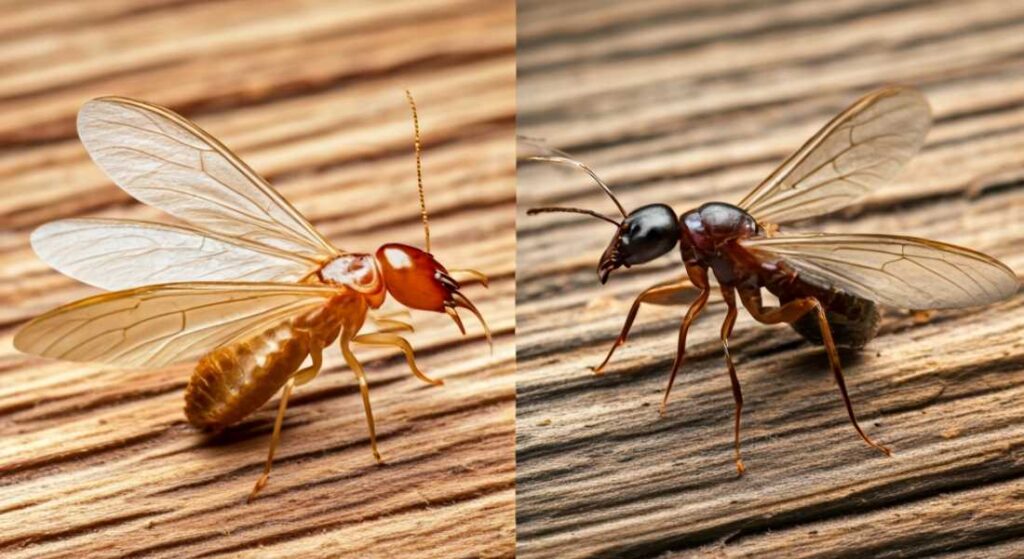
Termite swarmer size varies slightly by species but generally remains consistent. Most swarmers measure between 1/4 to 3/8 inch in body length. When including wings, the total length can reach 1/2 inch. This termite swarmers size makes them easily visible during emergence.
Comparing how big are termites helps distinguish workers from swarmers. Worker termites are typically smaller at 1/8 to 1/4 inch and lack wings entirely. The termites size increases for soldiers who have larger heads with powerful mandibles for colony defense.
Why Termite Swarms Occur
Termite swarm events are part of natural colony reproduction. Mature colonies produce swarmers as a survival strategy to spread and create new colonies. Environmental triggers including temperature, humidity, and seasonal changes prompt synchronized emergence.
Swarming termites from multiple nearby colonies often emerge simultaneously. This increases mating success and colony establishment rates. The coordinated timing occurs because all termite colonies of the same species respond to identical environmental cues.
Seasonal Patterns of Swarming
Different termite species swarm during specific seasons. Subterranean termites typically swarm in spring, particularly after rain when soil moisture is high. Drywood termites may swarm in late summer or fall depending on location.
A swarm of ants follows similar seasonal patterns but timing differs by species. Understanding these patterns helps distinguish between ant vs termite swarmer activity based on when emergence occurs.
Preventing and Controlling Termite Swarmers
Finding swarmers termites means taking immediate action to prevent colony establishment. While the swarmers themselves are temporary, they indicate ongoing problems requiring professional treatment.
The most effective approach combines immediate steps with long-term prevention strategies. Remove moisture sources, eliminate wood-to-soil contact, and seal entry points around your home’s foundation. These actions make your property less attractive to termites with wings in house seeking new nesting sites.
Immediate Steps After Finding Swarmers
When you discover termites swarmers, vacuum up the visible insects immediately. Save some specimens in a sealed container for professional identification. Contact a licensed pest control company for a thorough termite inspection within 24 to 48 hours.
Do not attempt DIY treatment for active termite infestations. Professional treatments including liquid termiticides, bait systems, or fumigation are necessary to eliminate established colonies producing swarmers.
FAQs
What is the difference between termite swarmers vs ant swarmers?
Termite swarmers have straight antennae, thick waists, and equal-length wings. Ant swarmers have elbowed antennae, pinched waists, and unequal wing sizes. These physical differences provide reliable identification even without magnification.
Are termite swarmers a sign of infestation?
Yes, finding swarmer termites always indicates an active colony nearby. The colony may be in your home’s structure or in soil within 300 feet of your property. Professional inspection determines the exact location and extent of infestation.
How long do termite swarms last?
A termite swarm typically lasts 30 to 40 minutes. The winged reproductives emerge quickly, mate, shed their wings, and search for nesting sites. The brief swarming period is why many homeowners only find discarded termite wings rather than seeing the actual swarm.
Can flying ants or termites cause structural damage?
Flying termites indicate colonies causing structural damage through continuous wood consumption. Flying ants generally do not damage structures except for carpenter ants which excavate wood for nesting. Proper identification is essential for appropriate treatment.
What should I do if I find termite swarmers in my house?
Contact a professional pest control company immediately for inspection. Save several swarmers or their shed wings for identification. Avoid disturbing areas where swarmers emerged as this helps professionals locate the colony source.
Do all termites have wings at some point?
No, only reproductive termites develop wings. Worker and soldier castes remain wingless throughout their lives. The presence of ants with wings vs termites helps identify which pest you have since both insects produce winged reproductives.
Conclusion
Termite swarmers serve as crucial warning signs of active colonies threatening your home’s structural integrity. Learning to identify these winged reproductives and distinguish them from flying ants helps you respond quickly to potential infestations.
The appearance of swarmers means an established colony exists nearby, likely causing hidden damage for years. Professional inspection and treatment provide the only reliable solution for eliminating termite threats. Taking immediate action when you spot swarmers protects your home from costly repairs and maintains your property’s value and safety.

Mateen Cee is a dedicated pest control writer who specializes in cockroach identification, prevention, and removal techniques. He creates clear, practical content to help homeowners manage infestations effectively and maintain a clean, pest-free environment with simple, reliable solutions.