

Introduction
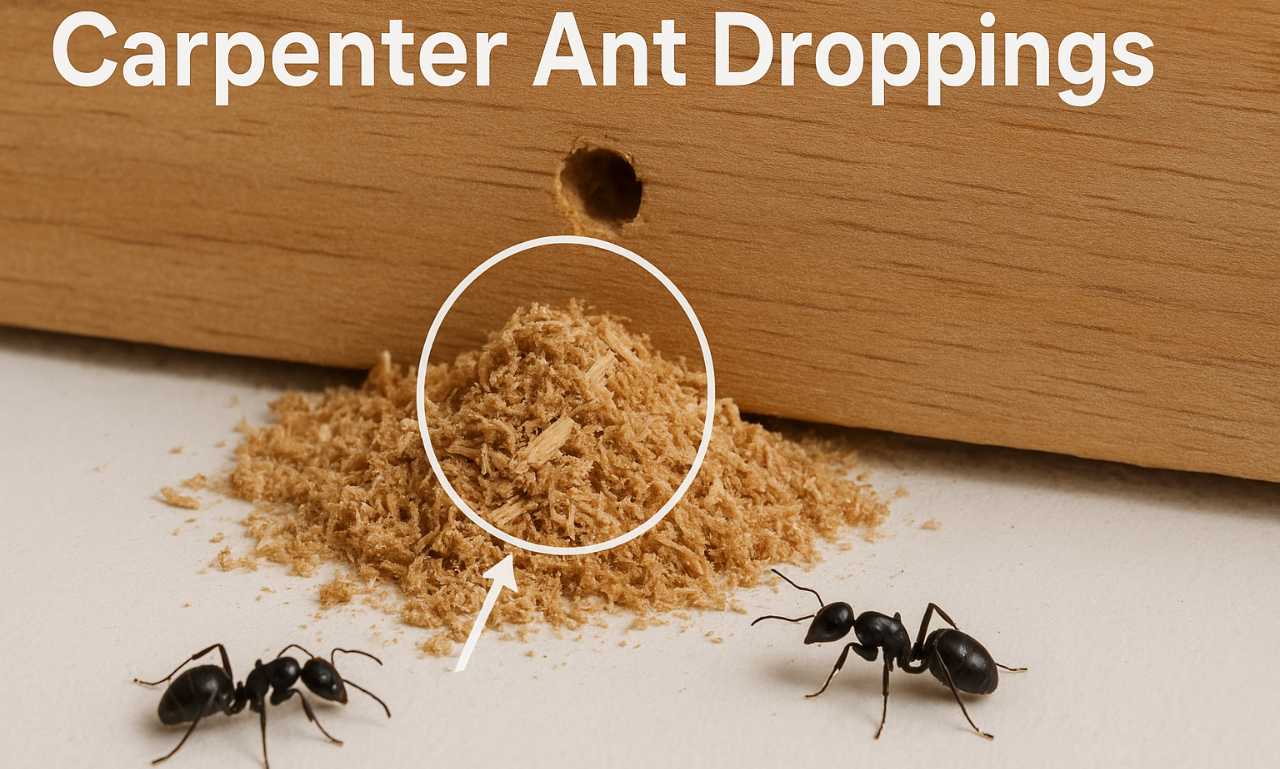
Carpenter ant droppings are small piles of sawdust-like debris that these wood-destroying insects leave behind as they tunnel through wooden structures in your home. Unlike termites that consume wood, carpenter ants excavate it to create their nests, pushing out fine particles mixed with insect body parts and fecal matter. This material, known as frass, serves as one of the earliest warning signs of an active infestation that could compromise your property’s structural integrity.
Understanding what these droppings look like and where to find them can help you catch an infestation early. This comprehensive guide will walk you through everything you need to know about identifying carpenter ant frass, distinguishing it from termite droppings, and taking effective action to protect your home from further damage.
What Are Carpenter Ant Droppings?
Carpenter ant droppings, commonly called frass, consist of tiny wood shavings and waste materials that carpenter ants expel from their galleries. When these ants burrow into wood to create nesting spaces, they don’t eat the material like termites do. Instead, they push it out through small openings, creating telltale piles beneath the affected areas.
The frass typically appears as a fine, sawdust-like substance that accumulates on floors, windowsills, or other surfaces below infested wood. The color can vary from light tan to dark brown or black, depending on the type of wood being excavated. You might also notice small insect body parts mixed into the debris, which helps distinguish carpenter ant activity from simple wood dust.
Finding these droppings usually means carpenter ants have established a mature colony inside your structure. The presence of frass indicates active tunneling and suggests the infestation has been ongoing for some time, making prompt identification and treatment essential.
How to Identify Carpenter Ant Frass
Visual Characteristics
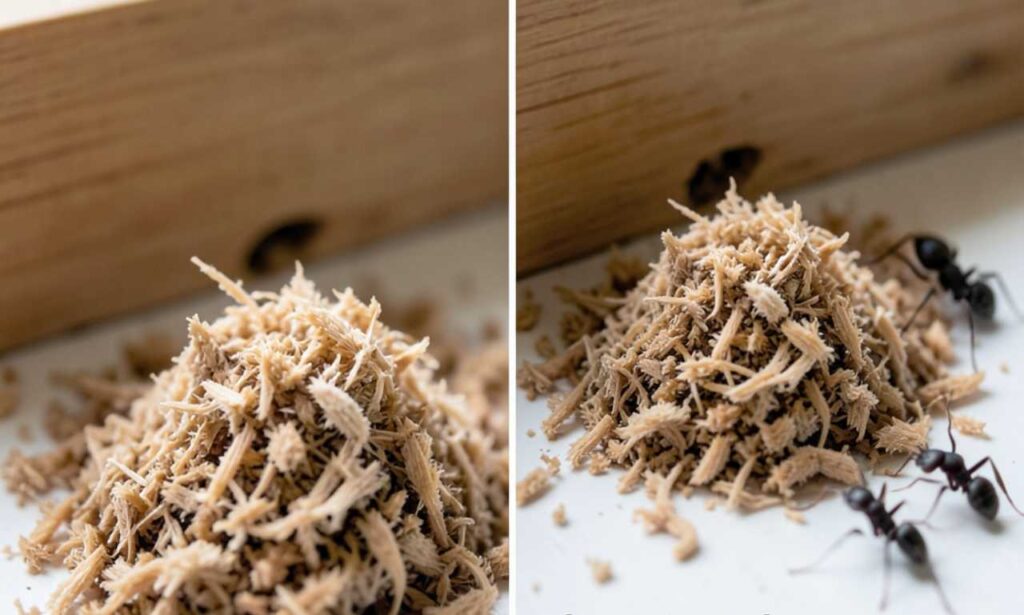
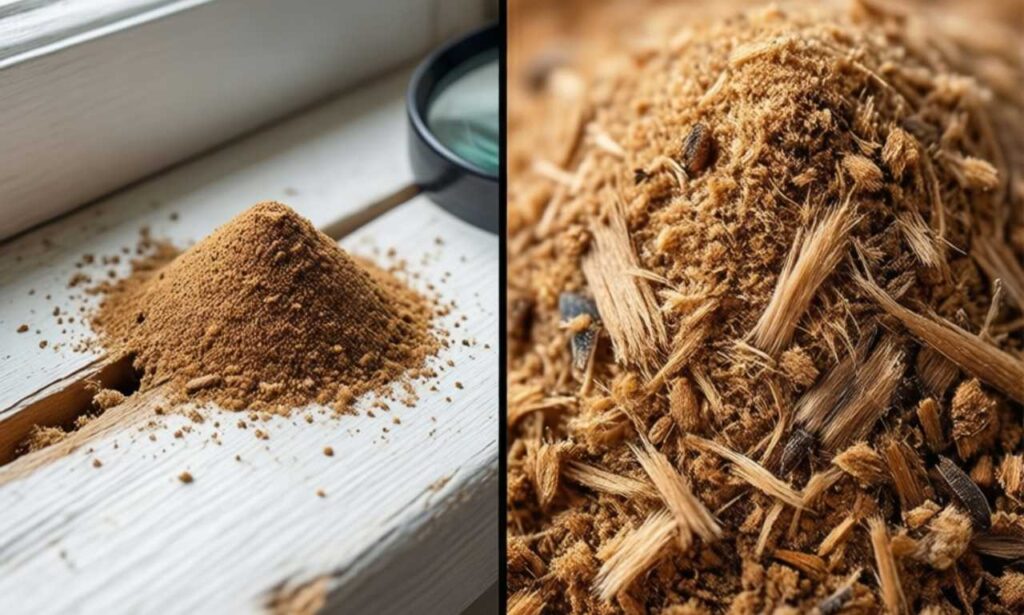
Ant frass identification begins with understanding what you’re looking for. Carpenter ant frass appears as fine, fibrous wood particles that look similar to sawdust. The texture is relatively coarse compared to termite droppings, and when examined closely, you can often see individual wood fibers rather than uniform pellets.
The color of the frass depends entirely on the wood type being excavated. Light-colored woods produce tan or beige droppings, while darker woods result in brown or black ant droppings. This variation helps you identify the source of the infestation within your home.
Texture and Composition
Unlike smooth sawdust from woodworking, carpenter ant frass has a slightly irregular texture. When you examine pictures of ant poop or ant droppings images online, you’ll notice the material contains not just wood particles but also dead ant parts, soil particles, and occasionally food debris. This mixture creates a distinctive appearance that sets it apart from simple wood shavings.
The frass may also have a slightly moist or clumped appearance if the infestation is in a damp area. Carpenter ants prefer moisture-damaged wood, so finding wet or compressed frass can indicate both ant activity and a moisture problem that needs addressing.
Common Locations
You’ll typically find carpenter ant droppings beneath exit holes in wooden beams, door frames, window sills, and baseboards. Look for small piles accumulating on floors directly below these openings. Carpenter ants often create kick-out holes to expel debris, leaving visible openings in the wood surface with frass piles beneath them.
Attics, basements, crawl spaces, and areas with water damage are prime locations for carpenter ant colonies. Check behind appliances, under sinks, and around bathroom fixtures where moisture levels tend to be higher. These areas provide the ideal conditions carpenter ants seek when establishing their nests.
Carpenter Ant Droppings vs Termite Droppings
Key Differences
Understanding ant droppings vs termite droppings is crucial for proper pest identification and treatment. Carpenter ant frass consists of fibrous wood particles mixed with insect debris, creating an irregular, sawdust-like appearance. In contrast, termite froppings appear as uniform, hard pellets that resemble tiny grains of sand or salt.
Termite frass, specifically from drywood termites, forms distinct six-sided pellets with rounded ends. These pellets are extremely uniform in size and shape, looking almost manufactured. When you compare carpenter ant droppings pictures with ant droppings vs termite droppings pictures, the pellet structure of termite waste becomes immediately apparent.
The color also differs between the two. While carpenter ant frass matches the wood being excavated, termite droppings often appear in shades of brown, black, or tan regardless of the wood color. Drywood termite droppings maintain their pellet shape even when disturbed, whereas carpenter ant frass crumbles easily when touched.
Why Identification Matters
Correctly distinguishing between carpenter ant vs termite droppings determines your entire treatment approach. Are termites or carpenter ants worse? Both cause significant structural damage, but they require completely different elimination methods. Using the wrong treatment wastes time and money while allowing the real problem to worsen.
Termites consume wood for nutrition and can cause more rapid structural damage since they eat continuously. Carpenter ants excavate wood for shelter only, but their colonies can grow quite large and still compromise structural integrity over time. Both pests warrant immediate professional attention once identified.
Looking at carpenter ant poop pictures vs termite comparisons helps train your eye to spot the differences. The fibrous texture of ant frass versus the pellet shape of termite frass provides the most reliable visual distinction between these two wood-destroying pests.
What Does Carpenter Ant Frass Look Like?
When people search for what does carpenter ant droppings look like, they’re usually trying to confirm an infestation. The frass resembles very fine sawdust with visible wood grain patterns when examined closely. Unlike clean sawdust from power tools, carpenter ant frass contains dark specks of insect body parts and waste.
Fresh carpenter ant frass pictures show light, fluffy piles that haven’t been compressed or disturbed. The material accumulates steadily beneath active galleries, forming cone-shaped piles directly below exit holes. Over time, these piles can grow quite large if left undisturbed, indicating an established colony.
The consistency of frass carpenter ants produce varies with wood moisture content. In damp areas, the frass may appear darker and more compressed. In dry environments, it remains light and powdery. This variation helps pest control professionals determine where moisture issues may be contributing to the infestation.
Carpenter ant frass images often show the material mixed with other debris like insulation particles or drywall dust. In wall voids, the frass may be hidden until renovation work exposes it. Finding old, settled frass alongside fresh deposits suggests a long-term infestation that may have spread to multiple areas.
Signs of Carpenter Ants in Your Home
Primary Indicators
Beyond droppings, several signs point to carpenter ant activity. Rustling sounds inside walls, especially at night when these ants are most active, indicate a colony is nearby. You might hear faint scratching or crackling noises as hundreds of ants move through their galleries.
Seeing large black ants wandering indoors, particularly near moisture sources or wooden structures, suggests a colony has established itself nearby. Carpenter ants are among the largest ant species in North America, measuring up to half an inch long. Their size makes them easier to spot than smaller household ants.
Winged ants emerging from walls, ceilings, or floors indicate a mature colony producing reproductive members. These swarmers appear in spring and early summer, seeking to establish new colonies. Finding shed wings near windows or light fixtures confirms that swarming has occurred inside your home.
Secondary Evidence
Wood damage with smooth, clean galleries indicates carpenter ant excavation. Unlike termite damage, which appears rough and mud-packed, carpenter ant tunnels look sanded and polished. The galleries follow the wood grain and contain no soil or mud tubes.
Moisture stains or soft, damaged wood around windows, doors, and rooflines attract carpenter ants. These areas provide easy excavation and suitable nesting conditions. Inspecting these vulnerable spots regularly helps catch infestations before they spread.
Finding dead ants near baseboards or on windowsills may indicate nearby nesting activity. Carpenter ants remove dead colony members from their nests, depositing them outside the galleries. Repeated discoveries of dead ants in the same location warrant further investigation.
Carpenter Ant Frass vs Termite Frass
The comparison between termite frass vs carpenter ant frass reveals fundamental differences in pest behavior and biology. Termites digest wood completely and excrete uniform pellets that they push out of their tunnels. These pellets pile up beneath infested wood, often forming small mounds that look like coffee grounds or sand.
Carpenter ants create frass by mechanically excavating wood without consuming it. Their waste products mix with wood particles, creating the fibrous, irregular material characteristic of ant activity. This distinction helps professionals determine which pest is present without even seeing live insects.
When examining termite vs carpenter ant frass in person, texture provides the clearest distinction. Roll the material between your fingers – termite pellets maintain their shape and hardness, while carpenter ant frass crumbles into powder. This simple test works even for homeowners without pest control experience.
Carpenter ant vs termite frass also differs in moisture response. Termite pellets remain dry and separate even in humid conditions, while carpenter ant frass may clump or cake when exposed to moisture. This characteristic helps identify the pest type even in challenging inspection conditions.
Is Frass Harmful to Humans?
Many homeowners wonder is frass harmful to humans when they discover it in their homes. The material itself poses minimal direct health risks. Carpenter ant frass consists primarily of wood particles and doesn’t contain toxic substances or pathogens that affect human health.
However, the presence of frass indicates an active infestation that can cause property damage and potentially trigger allergies. Some individuals may experience respiratory irritation from airborne wood particles, especially if they have existing sensitivities or asthma. Cleaning up frass carefully and addressing the underlying infestation prevents these minor health concerns.
The bigger concern isn’t the frass itself but what it represents. Large accumulations indicate extensive tunneling that may compromise structural wood members. Addressing carpenter ant infestations promptly protects your property investment and prevents more serious damage that could affect home safety.
Wearing a dust mask when cleaning up frass piles protects against inhaling wood particles. Vacuum the material carefully rather than sweeping it, which creates airborne dust. Dispose of the vacuum contents in sealed bags to prevent spreading any live ants that might be mixed with the debris.
How to Get Rid of Carpenter Ants
Inspection and Location
Successful carpenter ants removal begins with finding the colony. Follow ant trails back to their entry points, which often lead to the main nest. Look for frass piles, damaged wood, and areas where ants enter and exit the structure.
Inspect both inside and outside your home. Parent colonies often exist in outdoor trees, stumps, or woodpiles, with satellite colonies inside the structure. Eliminating only the indoor colony may not solve the problem if ants continue entering from an outdoor source.
Use a flashlight to examine attics, basements, and crawl spaces thoroughly. Tap on suspected wood with a screwdriver handle – hollow sounds indicate excavated galleries. Probe suspicious areas gently with a screwdriver to confirm soft or damaged wood.
Treatment Methods
Professional carpenter ant extermination provides the most reliable results. Pest control experts use specialized products and application methods that target colonies effectively. They can inject treatment directly into wall voids and other inaccessible areas where carpenter ants nest.
For DIY carpenter ants treatment, bait stations work well for smaller infestations. Place baits near ant trails and suspected nesting areas. Worker ants carry the bait back to the colony, eventually eliminating the queen and other members. Patience is essential since baits take several weeks to fully work.
Liquid insecticide treatments applied to exterior foundations and entry points prevent new ants from entering. Focus on areas where utility lines enter the home, foundation cracks, and gaps around windows and doors. Creating a barrier treatment reduces the likelihood of future infestations.
What kills carpenter ants most effectively combines multiple approaches. Use baits to eliminate existing colonies, barrier treatments to prevent new entries, and habitat modification to make your property less attractive to these pests.
Prevention Strategies
How to deal with carpenter ants long-term requires addressing conducive conditions. Fix moisture problems immediately since carpenter ants prefer damp wood. Repair leaking pipes, improve ventilation in crawl spaces, and ensure proper drainage around your foundation.
Remove dead trees, stumps, and old firewood from your property. These materials attract carpenter ants and provide nesting sites for parent colonies. Store firewood at least 20 feet from your home and keep it elevated off the ground.
Trim tree branches and vegetation away from your home’s exterior. Branches touching the roof or siding create highways for ants to access your structure. Maintain at least a one-foot gap between vegetation and your home.
Seal cracks and gaps in your foundation, siding, and around utility penetrations. Caulk openings around pipes, wires, and vents where ants might enter. Replace damaged window screens and door sweeps to eliminate entry points.
Can You Permanently Get Rid of Carpenter Ants?
The question can you permanently get rid of carpenter ants depends on thoroughness and prevention. Complete elimination requires destroying all colony members including queens and addressing conditions that attracted them initially. Professional treatment combined with habitat modification offers the best chance of permanent resolution.
Single colonies can be eliminated successfully with proper treatment. However, new ants may establish colonies if favorable conditions persist. Ongoing prevention through moisture control, structural maintenance, and landscape management keeps carpenter ants from returning after treatment.
Professional pest control services often provide warranties or guaranteed treatments that include follow-up visits. These programs ensure complete elimination and address any surviving ants or new colonies that appear after initial treatment. Regular monitoring helps catch new activity before it becomes established.
Maintaining your property properly makes permanent elimination more achievable. By fixing moisture issues, removing conducive conditions, and sealing entry points, you create an environment where carpenter ants struggle to survive. This proactive approach prevents future infestations more effectively than reactive treatments alone.
Professional vs DIY Treatment
When to Call Professionals
Extensive infestations affecting multiple areas of your home require professional carpenter ant treatment. Pest control experts have access to professional-grade products and application equipment that aren’t available to homeowners. They can treat wall voids, attics, and other difficult areas effectively.
If you’re unable to locate the colony despite finding frass and seeing ants, professionals can perform thorough inspections using specialized tools. They’re trained to identify nesting sites and can often find hidden colonies that homeowners miss. Their experience speeds up the treatment process significantly.
Structural damage accompanying carpenter ant activity warrants professional assessment. Pest control companies can evaluate the extent of damage and recommend appropriate repairs. Some companies work with contractors to provide comprehensive solutions for both pest elimination and structural restoration.
DIY Approaches
Minor infestations caught early may respond to DIY carpenter ant extermination efforts. If you’ve located the colony and it’s easily accessible, treating it yourself can save money. Hardware stores carry effective ant baits and sprays suitable for small-scale problems.
Before attempting DIY treatment, research proper product selection and application methods. Using the wrong products or applying them incorrectly wastes effort and allows infestations to worsen. Follow label directions precisely for safety and effectiveness.
Monitor treatment results closely when handling carpenter ants yourself. If ant activity continues four to six weeks after treatment, professional help becomes necessary. Persistent problems indicate either incomplete treatment or multiple colonies requiring more aggressive intervention.
FAQs
Can you permanently get rid of carpenter ants?
Yes, permanent elimination is possible through comprehensive treatment that destroys all colonies and addresses moisture issues attracting carpenter ants. Professional pest control combined with structural repairs and preventive maintenance provides the best long-term results. Regular monitoring helps ensure carpenter ant droppings don’t reappear and indicates successful control.
Are termites or carpenter ants worse?
Both pests cause serious structural damage but through different mechanisms. Termites consume wood continuously for nutrition and may cause faster damage. Carpenter ants excavate wood for shelter only but can still significantly weaken structures over time. Both warrant immediate professional treatment regardless of which is technically worse.
Is frass harmful to humans?
Carpenter ant frass itself poses minimal health risks to humans. The wood particles may cause minor respiratory irritation in sensitive individuals but contain no toxic substances. The greater concern involves the structural damage indicated by frass presence rather than direct health effects from the material itself.
What are ant droppings in my house?
Ant droppings in your house typically indicate carpenter ants have established a colony and are actively excavating wood for nesting. The sawdust-like piles you find contain wood particles mixed with insect waste and body parts. Finding these carpenter ant droppings requires immediate inspection to determine infestation extent and appropriate treatment.
How do carpenter ant droppings differ from regular sawdust?
Carpenter ant frass contains insect body parts, waste material, and irregular wood fibers, while clean sawdust from woodworking appears uniform. The frass may have a slightly moist texture and contains dark specks not present in mechanical sawdust. Additionally, frass appears in specific locations beneath exit holes rather than spread randomly.
Where do carpenter ants leave their droppings?
Carpenter ants deposit frass through small kick-out holes, creating piles on surfaces below infested wood. Common locations include beneath window sills, along baseboards, under door frames, and on floors below ceiling beams. The piles accumulate directly under exit points, making them relatively easy to spot during careful inspection.
How quickly should I act after finding carpenter ant frass?
Act immediately upon discovering carpenter ant droppings since their presence indicates an active, established colony. The longer you wait, the more extensive the damage becomes as ants continue excavating galleries. Early intervention prevents minor infestations from becoming major structural problems requiring costly repairs.
Conclusion
Identifying carpenter ant droppings early provides your best defense against serious structural damage. The distinctive sawdust-like frass these insects produce serves as a clear warning sign that warrants immediate attention. By understanding the difference between carpenter ant and termite waste, you can take appropriate action quickly.
Whether you choose professional treatment or DIY methods, addressing the infestation promptly prevents the problem from escalating. Combine active treatment with moisture control and preventive maintenance to keep your home protected long-term. Remember that finding frass means carpenter ants have already established themselves, making swift action essential for protecting your property investment.
Stay vigilant by inspecting vulnerable areas regularly and addressing conducive conditions before they attract wood-destroying pests. With proper knowledge and proactive care, you can keep your home free from carpenter ant damage.

Mateen Cee is a dedicated pest control writer who specializes in cockroach identification, prevention, and removal techniques. He creates clear, practical content to help homeowners manage infestations effectively and maintain a clean, pest-free environment with simple, reliable solutions.