



Introduction
Why am I finding spiders in my house is a question many homeowners ask when they notice these eight-legged creatures appearing more frequently indoors. Spiders often enter homes searching for food, shelter, or warmth, particularly during seasonal changes.
Understanding why spiders choose your home and what attracts them can help you take effective steps to reduce their presence and create a more comfortable living environment.
This comprehensive guide explains the common reasons behind spider invasions, identifies conditions that make your home attractive to them, and provides practical solutions to prevent future encounters.
What Attracts Spiders to Your Home
Spiders enter homes for specific reasons related to survival and reproduction. Unlike many pests, they don’t come inside seeking human food or water sources. Instead, they follow their prey and look for suitable habitats.
Your home may inadvertently provide ideal conditions that encourage spider activity. Recognizing these attractants is the first step toward addressing the problem effectively.
Food Sources and Prey Availability
Spiders are predators that feed primarily on insects. If you keep finding spiders in your house, it often indicates an existing insect problem. Common prey includes flies, mosquitoes, moths, ants, and other small bugs that may already be living in your home.
When insects are abundant inside, spiders naturally follow them indoors. They build webs or hunt actively in areas where their food source is most concentrated. Kitchens, bathrooms, and storage areas often harbor insects, making them prime locations for spider activity.
Shelter and Hiding Places
Dark, undisturbed spaces provide perfect hiding spots for spiders. Cluttered areas, storage boxes, closets, basements, and attics offer protection from predators and human activity. These quiet zones allow spiders to build webs and lay eggs without interference.
Gaps around windows, doors, and foundation cracks serve as entry points. Once inside, spiders seek out corners, behind furniture, and other secluded areas where they can remain hidden during daylight hours.
Seasonal Changes and Weather Conditions
Many people wonder why do spiders keep coming in my house during specific times of the year. Autumn brings a noticeable increase in spider sightings as males search for mates and temperatures drop outdoors.
Cold weather drives spiders to seek warmer environments. Similarly, heavy rains or extreme heat can push outdoor spiders to migrate indoors where conditions are more stable and comfortable.
Common Types of House Spiders
Understanding which spiders commonly inhabit homes can help you assess whether their presence poses any risk. Most house spiders are harmless and actually beneficial by controlling insect populations.
Harmless House Spiders
Cellar spiders, also known as daddy longlegs, frequently inhabit basements and corners. These spiders have long, delicate legs and build irregular webs in undisturbed areas. They pose no threat to humans and help reduce other insect populations.
Common house spiders are brown or gray with distinctive markings. They create funnel-shaped webs in corners and along baseboards. These spiders rarely bite and prefer to flee when disturbed.
Jumping spiders are small, fuzzy hunters that don’t build webs. They have excellent vision and actively stalk their prey. Despite their quick movements, they are harmless to people and actually quite beneficial.
When to Be Cautious
While most spiders are harmless, certain species require awareness. Black widows have shiny black bodies with red hourglass markings and prefer dark, undisturbed locations like garages and basements.
Brown recluse spiders are tan to brown with a violin-shaped marking on their back. They hide in storage areas and rarely bite unless threatened. If you suspect venomous spiders in your home, contact a pest control professional for safe identification and removal.
Why You Keep Seeing Spiders in Specific Rooms
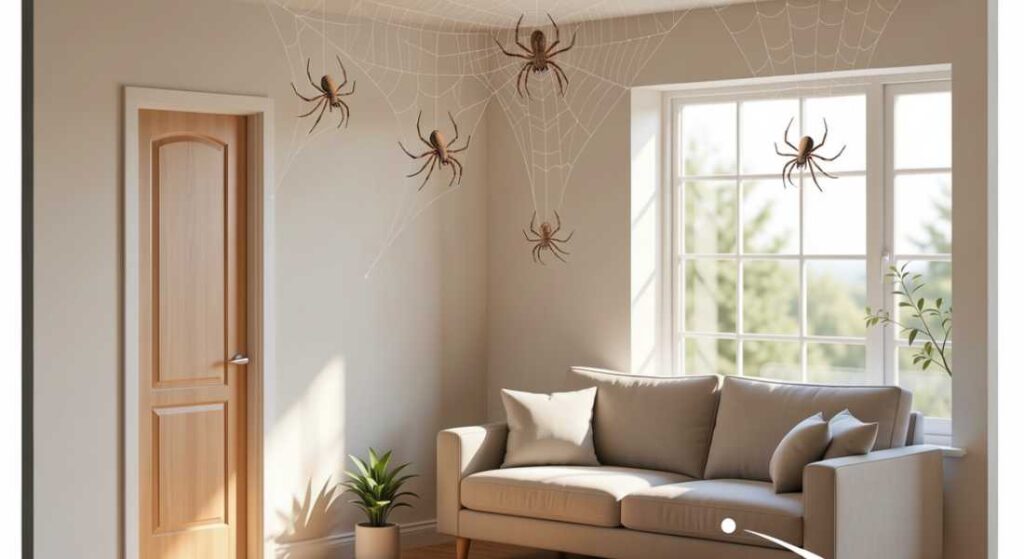
Different rooms attract spiders for different reasons. Identifying patterns in where you encounter them can reveal underlying issues that need attention.
Bathrooms and Moisture
Bathrooms provide humidity that attracts certain spider species and their insect prey. Drain flies, silverfish, and other moisture-loving insects create a food source that draws spiders to these areas.
Poor ventilation and water leaks increase moisture levels, making bathrooms even more attractive. Spiders often hide behind toilets, under sinks, and in shower corners where they can access both water and prey.
Basements and Crawl Spaces
Why is there spiders in my room often relates to proximity to basements or crawl spaces. These lower levels typically have higher humidity, less light, and more undisturbed areas perfect for spider habitation.
Foundation cracks and gaps around utility lines provide easy access from outdoors. Stored items in basements create numerous hiding places where spiders can establish themselves without detection.
Bedrooms and Living Areas
Spiders in bedrooms usually arrive by accident while hunting for insects. They may enter through windows left open or follow air currents through ventilation systems. Clutter under beds and in closets provides hiding spots.
Living areas attract spiders when insects like flies or moths are present. Plants brought indoors may harbor spiders or their egg sacs. Regular cleaning and decluttering significantly reduce spider activity in these spaces.
How Spiders Enter Your Home
Understanding entry points helps you prevent future invasions. Spiders can squeeze through surprisingly small openings due to their flexible bodies.
Cracks and Gaps
Foundation cracks, gaps around windows and doors, and spaces where utilities enter your home serve as primary entry routes. Even tiny openings allow spiders to slip inside while pursuing prey or seeking shelter.
Weatherstripping that has deteriorated or shifted creates gaps that spiders exploit. Door sweeps that don’t reach the threshold leave space for entry. Inspecting your home’s exterior regularly helps identify these vulnerable points.
Accidental Transport
Sometimes spiders arrive as hitchhikers on items brought inside. Firewood stacked against the house or stored indoors often harbors spiders and their egg sacs. When you bring logs inside, spiders come along for the ride.
Boxes stored in garages or sheds may contain spiders that later emerge when items are moved indoors. Plants from outdoor areas or garden centers sometimes carry spiders or eggs that hatch after being brought inside.
Open Windows and Doors
Windows without screens or damaged screens allow easy spider access. Leaving doors open, even briefly, provides opportunity for spiders to enter while following flying insects attracted to indoor lights.
Garage doors that don’t seal properly create an open invitation. Spiders often establish themselves in garages first, then gradually move into living spaces through interior access points.
Effective Ways to Reduce Spider Presence
Addressing why do i have spiders in my house requires a multi-faceted approach combining prevention, exclusion, and habitat modification. These strategies work together to make your home less appealing to spiders.
Sealing Entry Points
Inspect your home’s exterior and seal all cracks and gaps with appropriate materials. Use caulk for small cracks around windows and doors. Apply expanding foam to larger gaps around pipes and cables.
Install or repair weatherstripping around doors and windows. Add door sweeps to exterior doors, ensuring they make full contact with the threshold. Replace damaged window screens and ensure they fit tightly in their frames.
Reducing Food Sources
Control the insect population that attracts spiders by addressing the root causes of bug problems. Fix leaky pipes and improve ventilation to reduce moisture that attracts many insects.
Store food in sealed containers and clean up crumbs and spills promptly. Take out garbage regularly and keep trash bins sealed. Address fruit fly problems quickly and eliminate standing water where mosquitoes might breed.
Decluttering and Cleaning
Regular cleaning removes webs, egg sacs, and the spiders themselves. Vacuum corners, baseboards, and under furniture weekly. Pay special attention to areas behind and under stored items.
Reduce clutter in storage areas like basements, attics, and closets. Keep items in sealed plastic containers rather than cardboard boxes. Organize storage areas to minimize dark, undisturbed spaces where spiders thrive.
Outdoor Maintenance
Keep vegetation trimmed back from your home’s exterior. Spiders use plants as bridges to reach buildings. Maintain at least a one-foot clearance between shrubs and your foundation.
Remove debris, woodpiles, and leaf litter from around your home’s perimeter. These outdoor habitats support large spider populations that eventually migrate indoors. Store firewood away from the house and bring in only what you’ll use immediately.
Natural Deterrents
Certain scents repel spiders naturally. Peppermint oil diluted in water and sprayed around entry points can discourage spider activity. Other essential oils like eucalyptus, tea tree, and citrus also show repellent properties.
Keep outdoor lights off when possible, as they attract flying insects that in turn attract spiders. Use yellow bulbs or sodium vapor lights that are less attractive to insects when outdoor lighting is necessary.
When to Call Professional Help
Most spider situations can be managed with consistent prevention and exclusion methods. However, certain circumstances warrant professional pest control services.
Signs You Need Expert Assistance
If you encounter venomous spiders like black widows or brown recluse spiders regularly, professional identification and treatment ensure safety. Experts have the training and equipment to handle these situations properly.
Severe infestations where why am i finding so many spiders in my house becomes a persistent problem despite your efforts may indicate underlying issues requiring professional assessment.
Pest control specialists can identify hidden entry points and treat areas you cannot easily access.
When spider problems coincide with significant insect infestations, professionals can address both issues simultaneously. They use integrated pest management approaches that provide long-term solutions rather than temporary fixes.
What Professionals Offer
Licensed pest control technicians conduct thorough inspections to identify spider species, locate entry points, and assess contributing factors. They develop customized treatment plans addressing your specific situation.
Professional treatments may include residual insecticides applied to exterior perimeters, crack and crevice treatments, and web removal. They also provide recommendations for structural repairs and habitat modifications that support long-term prevention.
FAQs
Why do I keep finding spiders in my house even after cleaning?
Cleaning removes visible spiders and webs but doesn’t address entry points or food sources. Spiders continue entering through gaps and cracks while following insects that serve as prey.
Combine regular cleaning with sealing entry points and controlling insect populations for lasting results. Also check outdoor areas adjacent to your home as spiders may be continuously migrating from nearby habitats.
Are spiders in my house a sign of a dirty home?
No, finding spiders in your house doesn’t necessarily indicate poor cleanliness. Spiders enter homes primarily seeking food and shelter regardless of how clean spaces are. Even immaculate homes can have spider visitors if entry points exist and insects are present.
However, regular cleaning does help by removing webs, egg sacs, and reducing hiding places that make your home attractive to spiders.
What time of year do spiders come inside most?
Autumn brings the highest number of spider sightings indoors as males actively search for mates and cooler temperatures drive them to seek warmth. Late summer through early fall sees peak spider activity.
Spring can also bring increased activity as spiders emerge from winter dormancy. Weather events like heavy rains or extreme heat at any time of year can push outdoor spiders to migrate inside.
Do spiders actually help control other pests?
Yes, spiders are beneficial predators that consume many common household insects including flies, mosquitoes, moths, and other pests. A single spider can eat hundreds of insects throughout its lifetime.
While you may not want spiders indoors, their presence often indicates they’re actively feeding on other bugs you also want to eliminate. Addressing the underlying insect problem naturally reduces spider populations.
How can I prevent spiders without using chemicals?
Prevent spiders naturally by sealing entry points with caulk and weatherstripping. Remove clutter and vacuum regularly to eliminate webs and egg sacs. Control moisture and fix leaks to reduce insect prey.
Keep outdoor vegetation trimmed away from your home. Use natural repellents like peppermint oil around windows and doors. Maintain clean, organized spaces and reduce outdoor lighting that attracts insects spiders feed on.
Should I be worried if I see spiders frequently?
Most house spiders are completely harmless and pose no health risk. Frequent sightings usually indicate an abundant food source rather than danger.
However, if you identify venomous species or have severe infestations that don’t respond to prevention methods, consult a pest control professional.
Otherwise, focus on understanding why spiders are attracted to your home and addressing those underlying conditions systematically.
Conclusion
Understanding why am i finding spiders in my house empowers you to take effective action rather than simply reacting to each encounter. Spiders enter homes following prey, seeking shelter, or escaping outdoor conditions.
By sealing entry points, controlling insect populations, reducing clutter, and maintaining both indoor and outdoor spaces, you can significantly reduce spider activity in your home.
Remember that most spiders are harmless and actually beneficial. A few preventive measures implemented consistently provide better long-term results than sporadic reactions.
With patience and persistence, you can create an environment that naturally discourages spider presence while maintaining a safe, comfortable home for you and your family.

Mateen Cee is a dedicated pest control writer who specializes in cockroach identification, prevention, and removal techniques. He creates clear, practical content to help homeowners manage infestations effectively and maintain a clean, pest-free environment with simple, reliable solutions.