

Introduction
Fruit fly vs house fly identification confuses many homeowners when dealing with indoor pest problems. These two common insects may seem similar at first glance but differ significantly in appearance, behavior, breeding habits, and control methods.
Understanding these differences helps you choose the right elimination strategy and prevent future infestations. While both pests can be annoying, knowing which one has invaded your space makes treatment faster and more effective.
This guide covers everything you need to identify each species and remove them from your home permanently.
Understanding the Basic Differences
The confusion between these two flying insects is understandable since both appear in kitchens and living spaces. However, their physical characteristics and habits are quite distinct once you know what to look for.
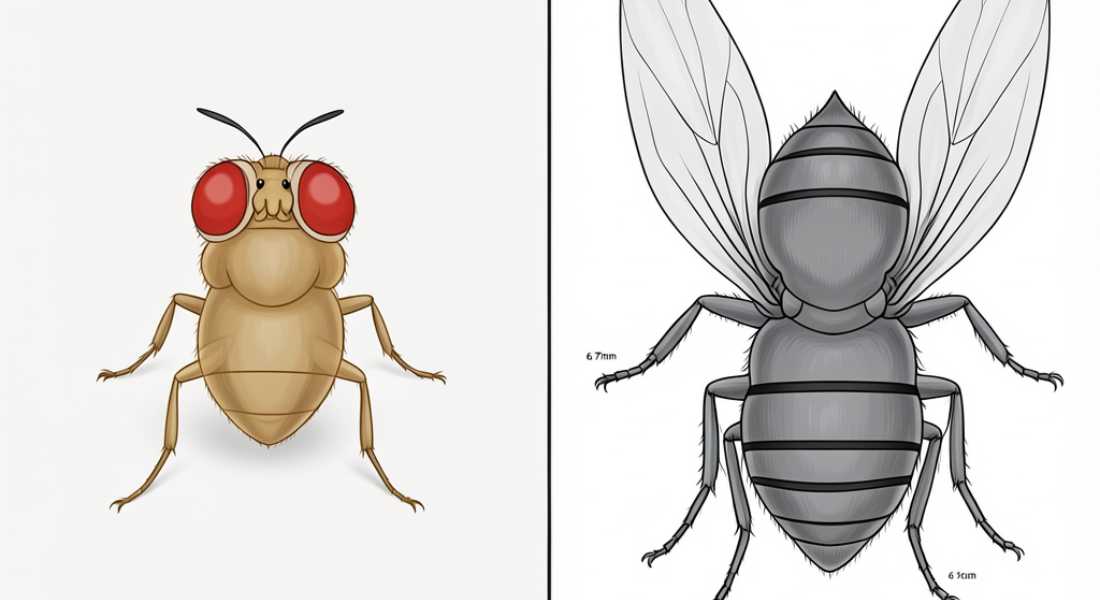
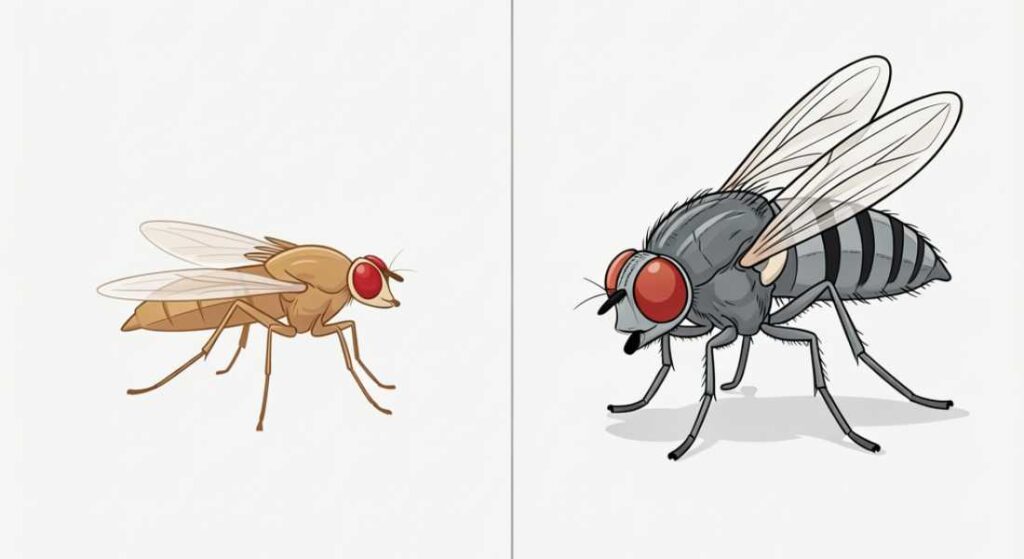
House flies are larger, measuring about 6 to 7 millimeters in length with a grayish body and four dark stripes on their thorax. They have compound red eyes and clear wings. Fruit flies are much smaller at only 3 to 4 millimeters with tan or light brown bodies and distinctive red eyes. Their bodies often appear slightly translucent.
The size difference alone can help you quickly determine which pest you’re dealing with. If the flies in your home are tiny and seem attracted to ripe produce or fermented items, you’re likely dealing with fruit flies.
Larger flies that buzz loudly and land on various surfaces throughout your home are probably house flies.
Physical Characteristics and Identification
Body Structure and Coloring
House flies have robust, sturdy bodies covered in tiny hairs. Their gray coloring with darker thoracic stripes makes them easily recognizable. The wings are completely clear and longer than their body when at rest.
Fruit flies display a more delicate appearance with yellowish-brown or tan bodies. Some species show darker bands across their abdomen. Their most notable feature is bright red eyes that stand out against their lighter bodies.
Size Comparison
When comparing fruit fly vs house fly size, the difference is immediately apparent. House flies reach about twice the length of fruit flies and have significantly more mass. This size difference affects their flight patterns too.
House flies fly faster and cover greater distances while making audible buzzing sounds. Fruit flies have slower, more erratic flight patterns and hover around food sources silently.
Habitat and Breeding Preferences
Where House Flies Thrive
House flies prefer areas with decaying organic matter, garbage, and animal waste. They breed in trash bins, compost piles, pet waste, and any rotting material. Female house flies lay hundreds of eggs in these breeding sites.
The complete lifecycle from egg to adult takes about 7 to 10 days under optimal conditions. These pests enter homes through open doors, windows, and any small gaps in building structures.
Fruit Fly Breeding Grounds
Fruit flies are drawn to fermenting or ripening produce, drains, garbage disposals, and recycling bins containing beverage containers. They breed in the thin film of fermented material found on produce, in drains, or inside empty bottles.
A single female can lay up to 500 eggs near food sources. The lifespan of a fruit fly from egg to adult is remarkably short at just 8 to 10 days. Adult fruit flies in house environments can live for several weeks if food sources remain available.
Lifespan and Reproduction Rates
How Long Does a Fly Live
The life expectancy of these pests varies between species. How long do house flies live depends on environmental conditions, but adults typically survive 15 to 30 days. In ideal conditions with abundant food, they might live slightly longer.
How long do fruit flies live is a common question among homeowners dealing with persistent infestations. Adult fruit flies typically live 40 to 50 days, which is surprisingly longer than house flies despite their smaller size.
Reproduction Speed
Both species reproduce rapidly, which explains why small infestations can become serious problems within days. The life span of a fly from egg to reproductive adult is incredibly short for both types.
House flies can produce up to six generations during warm months. The life span of fruit fly populations follows a similar pattern with multiple overlapping generations creating persistent problems.
Understanding what is the lifespan of a fruit fly helps explain why elimination requires consistent effort over several weeks.
Health Risks and Contamination Concerns
Are House Flies Harmful to Humans
House flies pose significant health risks because they frequently contact disease-causing materials. They land on feces, garbage, and carrion before visiting your food preparation areas. Their feeding and defecation habits spread bacteria, viruses, and parasites.
These pests can transmit diseases including food poisoning, dysentery, cholera, and typhoid fever. They regurgitate digestive fluids onto food to liquefy it before consumption, spreading pathogens in the process.
Are Fruit Flies Harmful
Fruit flies present lower health risks compared to house flies. They don’t typically contact the same contaminated materials. However, they still carry bacteria on their bodies and can contaminate food.
The primary concern with fruit flies involves food spoilage and general unsanitary conditions. Large infestations indicate poor food storage or unnoticed rotting produce, which can attract other pests.
Behavioral Differences
House flies are active during daylight hours and rest at night. They’re attracted to light and frequently try to exit through windows. Their behavior includes constant movement between food sources, breeding sites, and resting spots.
Fruit flies remain active throughout the day and night when food sources are available. They hover around fermenting materials and show less interest in escaping through windows. Their attraction to fermentation means they often gather near wine glasses, beer bottles, and overripe produce.
Prevention Strategies for Both Species
Sanitation and Cleanliness
The foundation of fly prevention involves maintaining clean living spaces. Remove garbage regularly and keep bins sealed. Clean up food spills immediately and store produce properly.
Wipe down counters daily and avoid leaving dirty dishes overnight. These simple habits eliminate the conditions both pest types need for breeding.
Proper Food Storage
Keep ripe fruit in the refrigerator rather than on counters. Store vegetables in sealed containers when possible. Empty and clean recycling bins weekly to prevent residue buildup.
Check stored produce regularly for signs of overripeness or decay. Removing problem items quickly prevents them from becoming breeding sites.
Home Maintenance
Install or repair window screens to prevent entry. Seal cracks around doors, windows, and foundation. Keep doors closed when not in use.
Ensure garbage disposals and drains remain clean since these areas attract fruit flies. Pour boiling water down drains weekly to eliminate organic buildup.
How to Get Rid of House Flies
Natural Methods
Create homemade fly traps using simple materials. Mix apple cider vinegar with dish soap in a jar. The scent attracts flies while the soap breaks surface tension causing them to drown.
Hang strips of flypaper near windows and doors. Plant herbs like basil, lavender, and mint near entrances as natural deterrents.
Cleaning Approaches
Identify and eliminate breeding sources first. Remove all garbage and clean bins thoroughly. Address any pet waste immediately.
Use vinegar and water solutions to clean surfaces flies frequent. Steam clean areas where organic matter may have accumulated.
How to Get Rid of Fruit Flies
Immediate Action Steps
What instantly kills fruit flies includes several effective approaches. Commercial sprays work but may contain harsh chemicals. Natural alternatives often prove equally effective.
How to get rid of fruit flies fast requires attacking their breeding sites. Pour boiling water mixed with bleach down drains. Cover or refrigerate all produce.
Homemade Fly Trap Solutions
Learning how to make a fly trap saves money and uses household items. Fill a small bowl with apple cider vinegar and add a few drops of dish soap. Cover with plastic wrap and poke small holes.
Another effective diy fly trap indoor method uses red wine or beer in a jar with a paper funnel. Flies enter but cannot escape.
Getting Rid of Fruit Flies in Specific Areas
How to get rid of fruit flies in kitchen spaces requires thorough cleaning. Check under appliances, inside pantries, and behind sinks for forgotten produce or spills.
How to get rid of fruit flies in house environments means inspecting every room. They often breed in unexpected places like potted plant soil or recyclables.
Comparing Common Look-Alikes
Drain Fly vs Fruit Fly
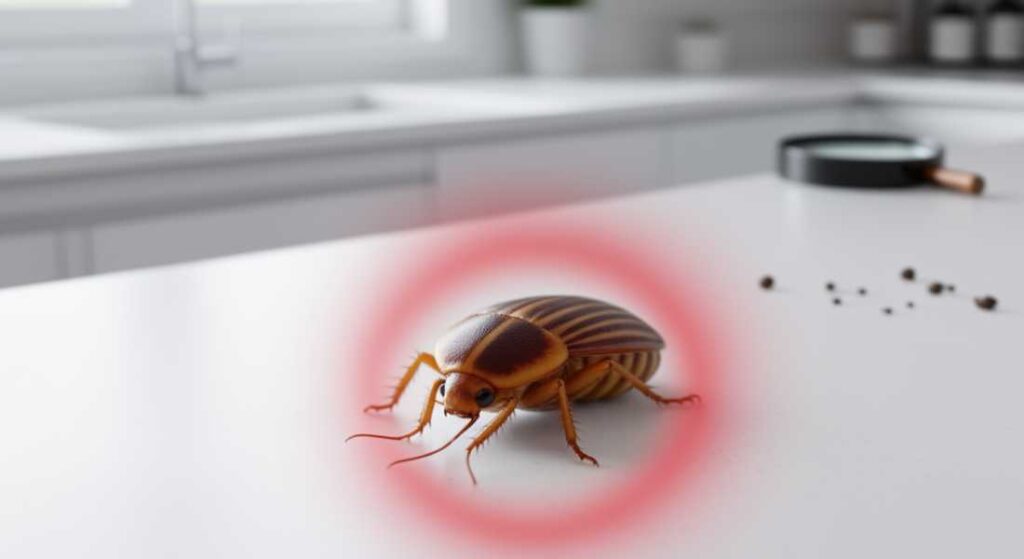
Many people confuse these species. Drain fly vs fruit fly identification matters because treatment differs. Drain flies are fuzzy, moth-like insects that breed exclusively in drain pipes and sewage areas.
What’s the difference between fruit flies and drain flies becomes clear when observing behavior. Drain flies rarely venture far from their breeding sites while fruit flies roam freely toward food sources.
Sewer Flies vs Fruit Flies
Sewer flies vs fruit flies represents another naming confusion since drain flies are sometimes called sewer flies. These fuzzy insects with pointed wings look nothing like fruit flies upon close inspection.
Understanding the difference between drain flies and fruit flies helps target elimination efforts correctly. If flies emerge from drains, you’re dealing with drain flies requiring pipe treatment.
Gnats and Small Flies
What is a gnat is a question many people ask when seeing tiny flying insects. Gnat is a general term for various small flying insects including fungus gnats, biting midges, and sometimes fruit flies.
The term gnat fly doesn’t refer to a specific species. What gnat really means depends on regional usage and context. Some areas call fruit flies gnats while others reserve the term for different insects.
Types of Flies in House Environments
Understanding types of flies helps identify exactly which pest you’re managing. Common types of flies in house settings include house flies, fruit flies, blow flies, drain flies, and cluster flies.
Each types of gnats and similar small flying insects has unique characteristics and requires specific control methods. Proper identification ensures you use appropriate elimination techniques.
Natural and Home Remedies
Kill Flies Home Remedy Options
Effective home remedies for flies include essential oil sprays. Mix water with eucalyptus, peppermint, or lemongrass oil in a spray bottle. Apply to areas where flies gather.
Create sachets with cloves and hang them near problem areas. The scent repels many flying insects naturally.
Natural Fly Traps
Natural fly traps work well for both species. At home fly trap designs using fruit, vinegar, or wine attract and capture pests without chemicals.
Best way to get rid of flies often combines multiple natural methods. Use traps alongside improved sanitation and preventive measures.
Long-Term Control and Management
Maintaining a fly-free home requires ongoing attention. Even after successful elimination, new pests can arrive if conditions remain favorable.
Continue proper food storage and regular cleaning even when no flies are visible. Monitor potential breeding sites weekly. Address any sanitation issues immediately.
Understanding the life of a fly helps time control efforts. Since both species reproduce quickly, consistent prevention stops new generations before they emerge.
FAQs
Are house flies the same as fruit flies?
No, house flies vs fruit flies are completely different species. House flies are larger, gray insects that breed in garbage and waste. Fruit flies are tiny, tan insects with red eyes that breed near fermenting produce. They require different control methods.
Are fruit flies harmful?
Fruit flies pose minimal direct health risks compared to house flies. They can carry bacteria on their bodies and contaminate food, but they don’t typically contact disease-causing materials. Their presence indicates unsanitary conditions that might attract more serious pests.
Are house flies harmful to humans?
Yes, house flies are harmful because they spread diseases. They land on contaminated materials like feces and garbage before touching your food and surfaces. They can transmit bacteria causing food poisoning, dysentery, and other illnesses through their feeding habits.
What instantly kills fruit flies?
Commercial insect sprays provide immediate results but contain chemicals. For safer options, a mixture of dish soap and water sprayed directly on flies kills them instantly.
Boiling water poured down drains eliminates larvae immediately. Removing all food sources causes adult flies to die within days.
How do I tell if I have fruit flies or drain flies?
Fruit flies have red eyes, tan bodies, and hover around produce or garbage. Drain flies look fuzzy and moth-like with pointed wings, and they rest on walls near drains. Check where flies congregate to identify them correctly.
What kills flies most effectively?
For house flies, eliminating breeding sites in garbage and waste areas works best. For fruit flies, removing fermenting food sources and cleaning drains stops infestations. Traps, proper sanitation, and prevention provide more lasting results than sprays alone.
How long does it take to get rid of fruit flies completely?
Complete elimination typically takes two to three weeks. This timeframe accounts for destroying existing breeding sites and waiting for remaining adults to die naturally. Consistent effort with traps and sanitation speeds up the process.
Conclusion
Distinguishing between fruit fly vs house fly problems ensures you apply the right control methods. House flies present greater health risks and require focus on garbage and waste management. Fruit flies indicate issues with food storage and drain cleanliness.
Both pests respond well to improved sanitation and consistent prevention efforts. Understanding their lifecycles, breeding habits, and behavioral differences helps you eliminate current infestations and prevent future problems.
Taking action immediately when you notice these pests prevents small problems from becoming major infestations.
Remember that patience and consistency matter more than harsh chemicals when creating a long-term solution. With proper identification and targeted control methods, you can maintain a clean, pest-free home year-round.

Mateen Cee is a dedicated pest control writer who specializes in cockroach identification, prevention, and removal techniques. He creates clear, practical content to help homeowners manage infestations effectively and maintain a clean, pest-free environment with simple, reliable solutions.