

Introduction
Baby cockroach vs ant larvae are two completely different types of immature insects that homeowners often confuse when they spot tiny bugs in their homes. Understanding the differences between these two common household pests is essential for proper identification and effective pest control.
While baby cockroaches (nymphs) are young versions of adult roaches that can move independently, ant larvae are helpless, worm-like creatures that depend entirely on worker ants for survival.
This comprehensive guide will help you distinguish between these two pests by examining their physical characteristics, behavior patterns and habitats.
You’ll learn exactly what to look for when identifying these insects and understand why correct identification matters for keeping your home pest-free.
Understanding Baby Cockroaches
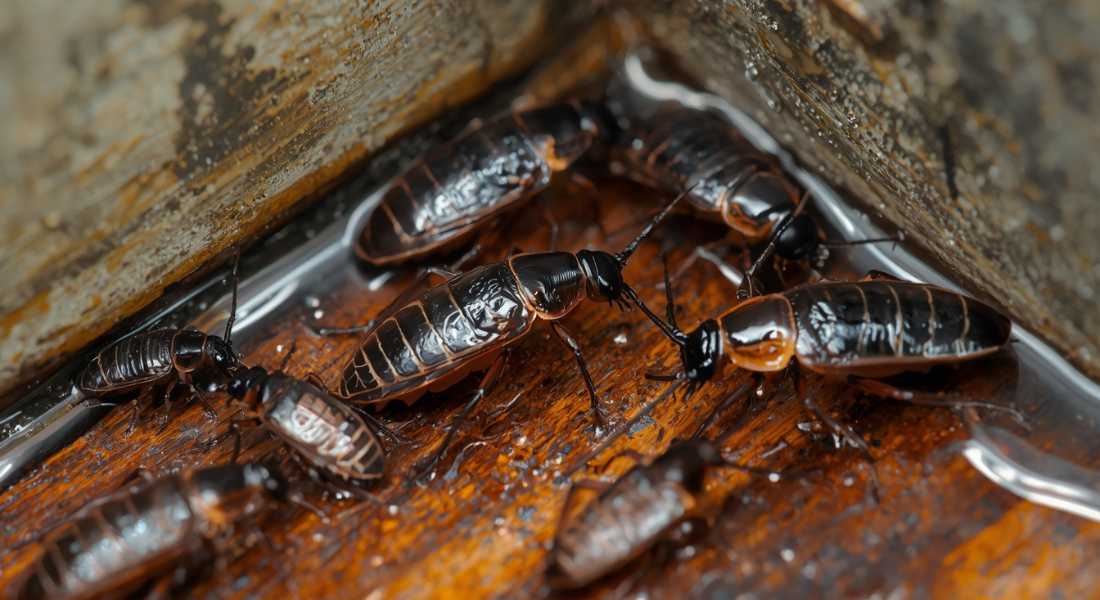
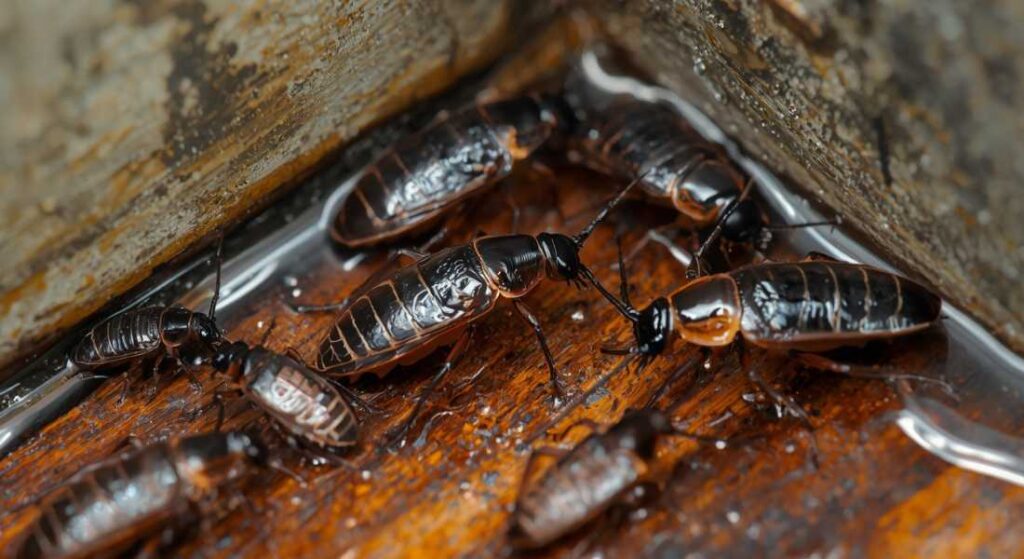
Baby cockroaches, scientifically called nymphs, are the juvenile stage of cockroaches that emerge from eggs. Unlike ant larvae, these nymphs look like miniature versions of adult roaches and can move around on their own from the moment they hatch.
They go through multiple molting stages before reaching adulthood, gradually developing wings and reproductive capabilities.
These young roaches are typically brown, tan or dark gray in color depending on the species. Their bodies have a flat, oval shape with long antennae extending from their heads. Even at the smallest stage, baby roaches display the characteristic fast, scurrying movement that adult cockroaches are known for.
Physical Appearance of Baby Roaches
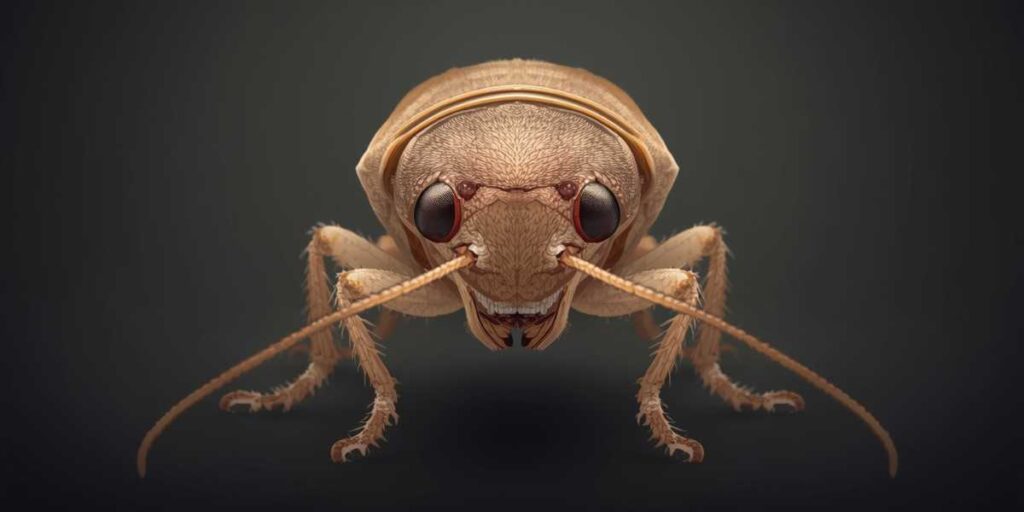
Newborn cockroach nymphs are extremely small, measuring only about 3 to 4 millimeters in length when they first emerge.
Their bodies appear segmented with a distinct head, thorax and abdomen. The coloration can range from light tan to dark brown, and some species have white or cream-colored markings on their backs.
As nymphs grow through successive molts, they develop more pronounced features. Their exoskeleton hardens and darkens with each stage.
Six legs extend from the thorax, allowing them to run quickly across surfaces. The antennae are always present and quite long, often half the length of their entire body.
Behavior and Movement Patterns
Baby roaches are highly active insects that avoid light and prefer dark, hidden spaces. They move with surprising speed for their size, darting quickly when disturbed.
Unlike ant larvae which cannot move on their own, baby cockroaches actively search for food and water sources throughout your home.
These nymphs tend to stay close to their hatching location initially but gradually explore wider areas as they grow.
They’re most active during nighttime hours when they venture out to feed. If you see them during the day, it often indicates a heavy infestation since overcrowding forces them into the open.
Understanding Ant Larvae
Ant larvae represent a completely different life stage compared to baby cockroaches. These are the immature, legless offspring that develop inside ant colonies after hatching from eggs.
Ant larvae look nothing like adult ants and cannot move, feed themselves or survive without constant care from worker ants.
The appearance of ant larvae resembles tiny white or cream-colored grubs or maggots. They have soft, curved bodies with no legs, eyes or antennae.
Worker ants must feed them regurgitated food and carry them to different areas of the nest as temperature and humidity requirements change.
Physical Characteristics of Ant Larvae
Ant larvae have a distinct worm-like or grub-like appearance that makes them easy to distinguish from mobile insects.
Their bodies are soft, pale and segmented, with a slightly curved or C-shaped posture. The size varies depending on the ant species and developmental stage but typically ranges from 1 to 5 millimeters.
These larvae have no visible legs, wings or other appendages. Their heads are small and poorly defined, blending into the body without a clear neck region.
The overall appearance is smooth and somewhat translucent, allowing you to sometimes see internal structures through the thin exoskeleton.
Dependency on Colony Care
Unlike baby cockroaches that are independent from birth, ant larvae depend completely on adult worker ants for survival. Workers constantly groom the larvae, feed them processed food and move them to optimal locations within the nest.
This total dependency means you’ll rarely see ant larvae outside an active nest or colony area.
The larvae remain stationary in nursery chambers deep within the colony. Worker ants carry them carefully using their mandibles whenever the nest requires relocation. This protective behavior ensures the larvae develop safely until they pupate and eventually emerge as adult ants.
Key Differences Between Baby Cockroach vs Ant Larvae
When comparing baby cockroach vs ant larvae, the differences become immediately apparent once you know what to look for.
The most obvious distinction is mobility: baby roaches can walk and run on six legs while ant larvae have no legs and cannot move independently. This fundamental difference affects where and how you encounter each pest.
Body structure provides another clear indicator. Baby cockroaches have a flattened, oval body with a distinct head featuring long antennae.
Ant larvae have soft, curved, worm-like bodies with no visible head definition or appendages. The texture also differs, with roach nymphs having a harder exoskeleton compared to the soft, almost translucent body of ant larvae.
Size Comparison

Baby cockroach vs ant larvae size varies significantly depending on species and developmental stage.
Newly hatched cockroach nymphs start at approximately 3 millimeters but quickly grow to 5 to 10 millimeters within their first few molts. They continue growing through several stages until reaching adult size.
Ant larvae typically measure between 1 and 5 millimeters depending on the species and how close they are to pupation.
Fire ant larvae, for example, remain quite small at around 2 to 3 millimeters, while carpenter ant larvae can reach 5 to 6 millimeters before entering the pupal stage.
Color and Texture Differences
Color provides another useful identification marker. Baby roaches display brown, reddish-brown or dark gray coloring even at the smallest sizes. Some species show lighter tan or cream markings, but they’re never pure white or translucent like ant larvae.
Ant larvae maintain a consistent pale white, cream or slightly yellowish color throughout their development.
Their bodies appear soft and somewhat see-through, contrasting sharply with the harder, opaque appearance of cockroach nymphs. This color difference alone can help you quickly distinguish between the two when examining household pests.
Habitat and Location
Where you find these insects tells you a lot about what they are. Baby roaches appear in kitchens, bathrooms, basements and other areas where food, moisture and warmth are available.
They hide in cracks, behind appliances and under sinks but venture out to forage, especially at night.
Ant larvae never appear alone or in random locations. They remain inside ant nests and colonies, surrounded by worker ants.
If you discover what looks like tiny white grubs clustered together with adult ants tending to them, you’ve found ant larvae. If you see small brown insects scurrying away quickly when you turn on lights, those are baby cockroaches.
Common Misconceptions and Look-Alikes
Many people searching for information about baby cockroach vs ant larvae pictures online struggle because several other household insects can cause confusion.
Understanding these look-alikes helps prevent misidentification and ensures you take appropriate pest control measures.
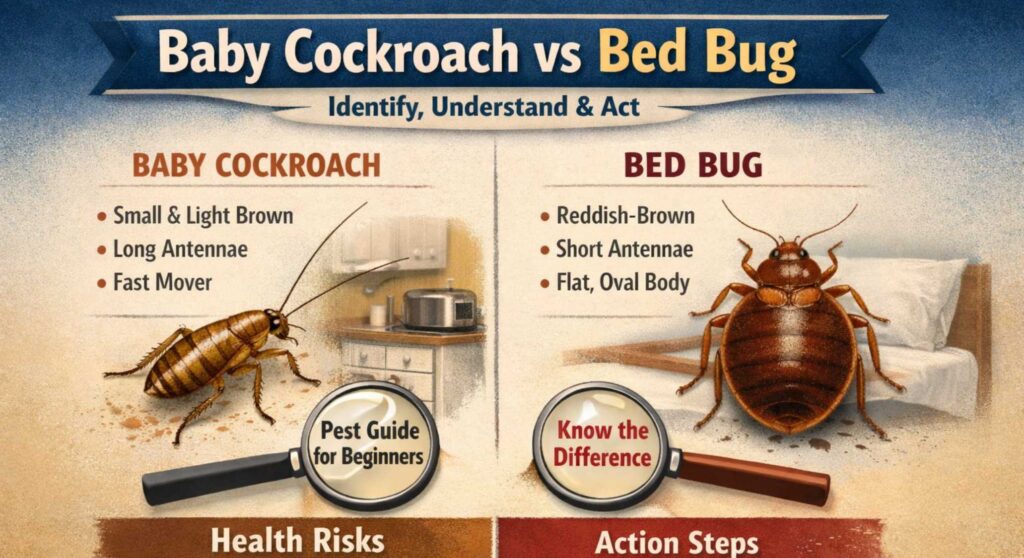
Termite nymphs sometimes get mistaken for baby roaches, though termites have softer, lighter-colored bodies. Bed bug nymphs are much smaller and rounder than baby roaches.
Book lice are tiny, pale insects that might be confused with very small roach nymphs but have different body proportions and behavior.
Do Baby Roaches Look Like Ants?
Some people wonder whether baby cockroaches resemble ants because both insects are small and brown. However, the body structure differs significantly.
Ants have a narrow waist creating three distinct body sections (head, thorax, abdomen), while baby roaches have an oval body without the segmented waist.
The movement patterns also differ dramatically. Ants typically move in organized trails and follow pheromone paths, while baby roaches scatter randomly and move much faster when disturbed. The antennae on baby roaches are longer and more prominent compared to the elbowed antennae of ants.
Other Insects Mistaken for Baby Roaches
Several insects get confused with cockroach nymphs by homeowners. Ground beetles have a similar size and dark coloration but feature hardened wing covers and different leg positioning. Carpet beetle larvae have a fuzzy, hairy appearance unlike the smooth body of roach nymphs.
Silverfish are another common source of confusion, though their teardrop shape, silvery scales and three tail-like appendages make them distinct from baby roaches.
Learning these differences helps you accurately identify pest problems and choose the right elimination methods.
Why Correct Identification Matters
Properly distinguishing baby cockroach vs ant larvae impacts your pest control strategy significantly.
Cockroach infestations require immediate attention because these pests multiply rapidly, spread diseases and contaminate food surfaces. Finding baby roaches indicates an active breeding population somewhere in your home.
Discovering ant larvae means you’ve located an active ant colony nearby. While ants can be nuisances, most species pose less health risk than cockroaches.
However, certain ants like carpenter ants can damage wooden structures, while fire ants deliver painful stings. The control methods differ substantially between roaches and ants.
Health and Safety Concerns
Cockroaches carry numerous pathogens and allergens that threaten human health. Their droppings, shed skins and body parts trigger asthma and allergies, especially in children.
Baby roaches crawling across kitchen surfaces can contaminate food preparation areas with bacteria like Salmonella and E. coli.
Most ant species present minimal health risks, though they contaminate food supplies when foraging. Fire ants pose a more serious threat with their aggressive behavior and painful, sometimes dangerous stings.
Correctly identifying which pest you’re dealing with helps you assess the health risks and respond appropriately.
Treatment Approach Differences
Eliminating cockroaches requires targeting hiding spots, eliminating food and water sources and often using baits or insecticides specifically formulated for roaches. You must address the entire infestation including eggs, nymphs and adults to prevent recurring problems.
Ant control focuses on destroying the colony and queen. Surface treatments that kill individual ants prove less effective than baits that workers carry back to the nest.
The treatment strategy, products and application methods vary significantly between these two pest types.
Prevention and Control Strategies
Preventing baby cockroach infestations starts with eliminating attractants. Keep kitchens clean, store food in sealed containers and fix water leaks promptly. Seal cracks and crevices where roaches hide and enter your home. Remove clutter that provides harborage areas.
For ant larvae prevention, focus on stopping ants from establishing colonies near or inside your home. Maintain a barrier treatment around your foundation, eliminate moisture problems and seal entry points. Remove outdoor debris and wood piles near your house that could harbor ant colonies.
Early Detection Methods
Regular inspections help you catch pest problems before they escalate. Check under sinks, behind appliances and in storage areas for signs of cockroach activity. Look for droppings, shed skins and egg cases in addition to live insects.
For ants, watch for trails leading to and from your home. If you see workers carrying larvae or pupae, they’re relocating their colony. Follow ant trails to locate nest sites. Addressing pest issues at the first signs prevents larger infestations that become harder to control.
When to Call Professionals
Severe infestations of either pest often require professional pest control services. If you’re finding baby roaches regularly despite your cleaning efforts, or if ant colonies keep reappearing after treatment attempts, expert help becomes necessary.
Professional exterminators have access to stronger products and specialized knowledge about pest behavior.
They can identify the specific species you’re dealing with and apply targeted treatments. For recurring problems or large-scale infestations, professional intervention provides the most effective solution.
Frequently Asked Questions
Does a baby roach look like an ant?
No, a baby roach does not look like an ant. Baby cockroaches have an oval, flattened body without the segmented waist that gives ants their distinctive shape.
While both insects are small and brown, baby roaches have much longer antennae and move with a characteristic scurrying motion rather than the organized trail behavior of ants.
What can be mistaken for a baby roach?
Several insects can be mistaken for baby roaches including ground beetles, bed bug nymphs, carpet beetle larvae and book lice.
Termite nymphs also cause confusion due to their similar size. The key distinguishing features are the long antennae, oval body shape and fast movement that characterize true baby cockroaches.
What do ant larvae look like?
Ant larvae look like tiny white or cream-colored grubs with soft, curved bodies. They have no legs, eyes, antennae or other appendages and cannot move on their own.
Their worm-like appearance differs completely from mobile insects. When comparing baby cockroach vs ant larvae, the immobile, legless nature of ant larvae makes them easy to distinguish from independently moving baby roaches.
Do baby roaches look like worms?
Baby roaches do not look like worms. They have a distinct insect body structure with six legs, long antennae and a segmented, flattened body.
Unlike worms or larvae which are legless and soft-bodied, baby roaches are mobile insects that walk and run quickly. The confusion sometimes arises because ant larvae do have a worm-like appearance, but this is a key difference between baby cockroach vs ant larvae.
How can I tell if I have a roach or ant problem?
The easiest way to determine whether you have roaches or ants is by observing behavior and location.
If you see fast-moving brown insects scurrying away when lights turn on, especially in kitchens or bathrooms, these are likely roaches. If you see organized trails of insects following specific paths or carrying food items, these are ants.
Finding legless, worm-like creatures grouped together with adult ants indicates ant larvae, while finding mobile nymphs with legs and antennae indicates baby roaches.
Where do baby cockroaches typically hide?
Baby cockroaches hide in dark, warm and moist areas close to food and water sources. Common hiding spots include behind kitchen appliances, under sinks, inside cabinets, in wall cracks, behind baseboards and in bathroom spaces.
They prefer tight spaces where their bodies contact surfaces on multiple sides, making them feel secure.
Conclusion
Understanding the differences when comparing baby cockroach vs ant larvae empowers you to correctly identify household pests and take appropriate action.
Baby roaches are mobile nymphs with legs, antennae and the ability to move independently, while ant larvae are immobile, legless grubs that depend entirely on worker ants for care.
These fundamental differences affect appearance, behavior and where you encounter each pest.
Correct identification leads to effective pest control strategies tailored to the specific problem you’re facing.
Whether dealing with a cockroach infestation that threatens your family’s health or an ant colony requiring elimination, knowing exactly what pest you’re confronting ensures you choose the right treatment approach.
Stay vigilant with regular inspections and maintain cleanliness to prevent both pests from becoming problems in your home.

Mateen Cee is a dedicated pest control writer who specializes in cockroach identification, prevention, and removal techniques. He creates clear, practical content to help homeowners manage infestations effectively and maintain a clean, pest-free environment with simple, reliable solutions.